Free download

40 free 4K and 8K wallpapers.

Real space and real dinosaurs, made by The Ancient Cosmos. Every picture was checked against the science, and each one says what is known and what is reconstructed, with a source you can read. Pick one, press 4K or 8K, and it saves straight to your device.

  • 20 space · 20 prehistoric
  • 4K = 3840 × 2160
  • 8K = 7680 × 4320
  • JPG · free · no sign-up
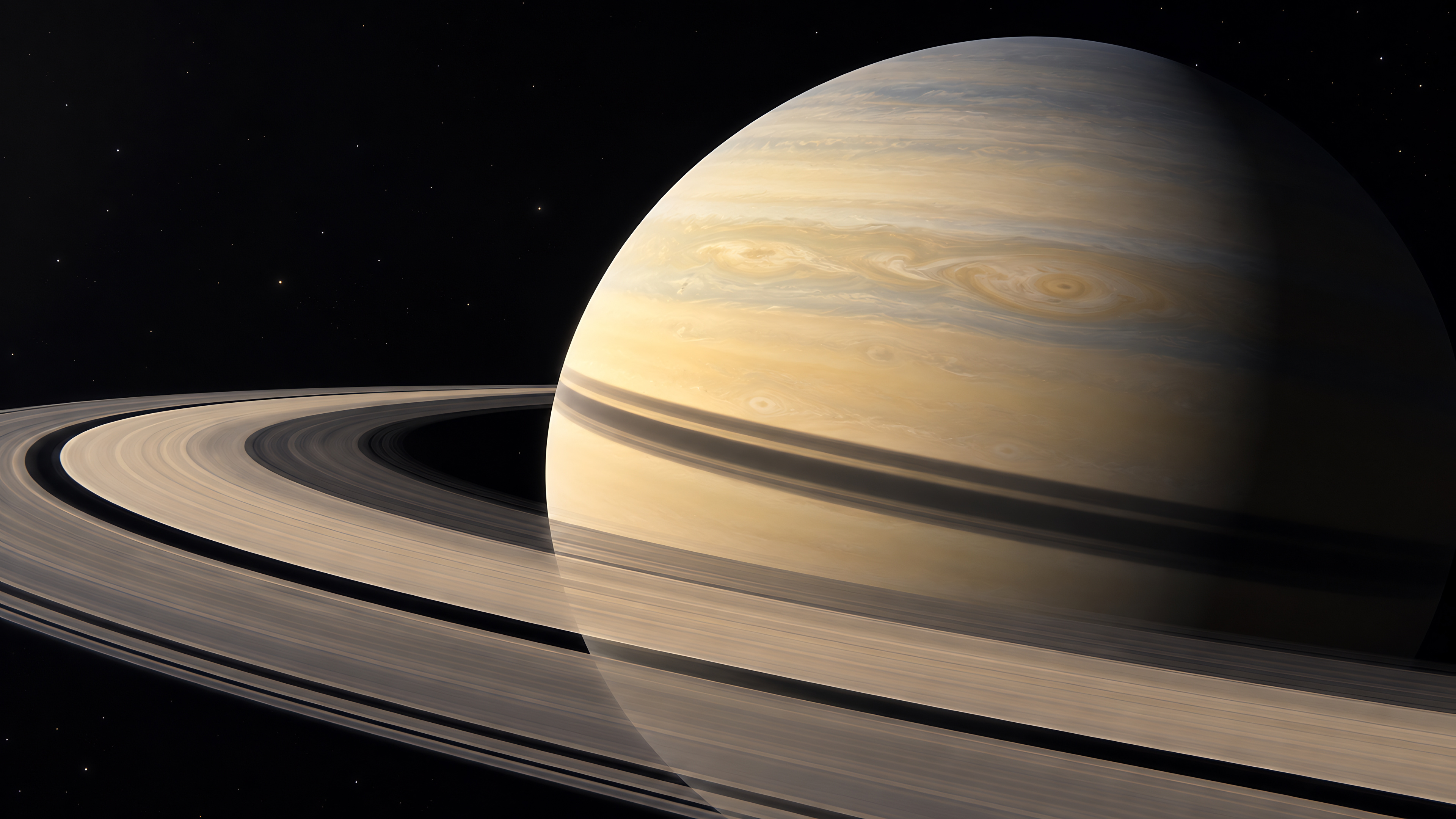
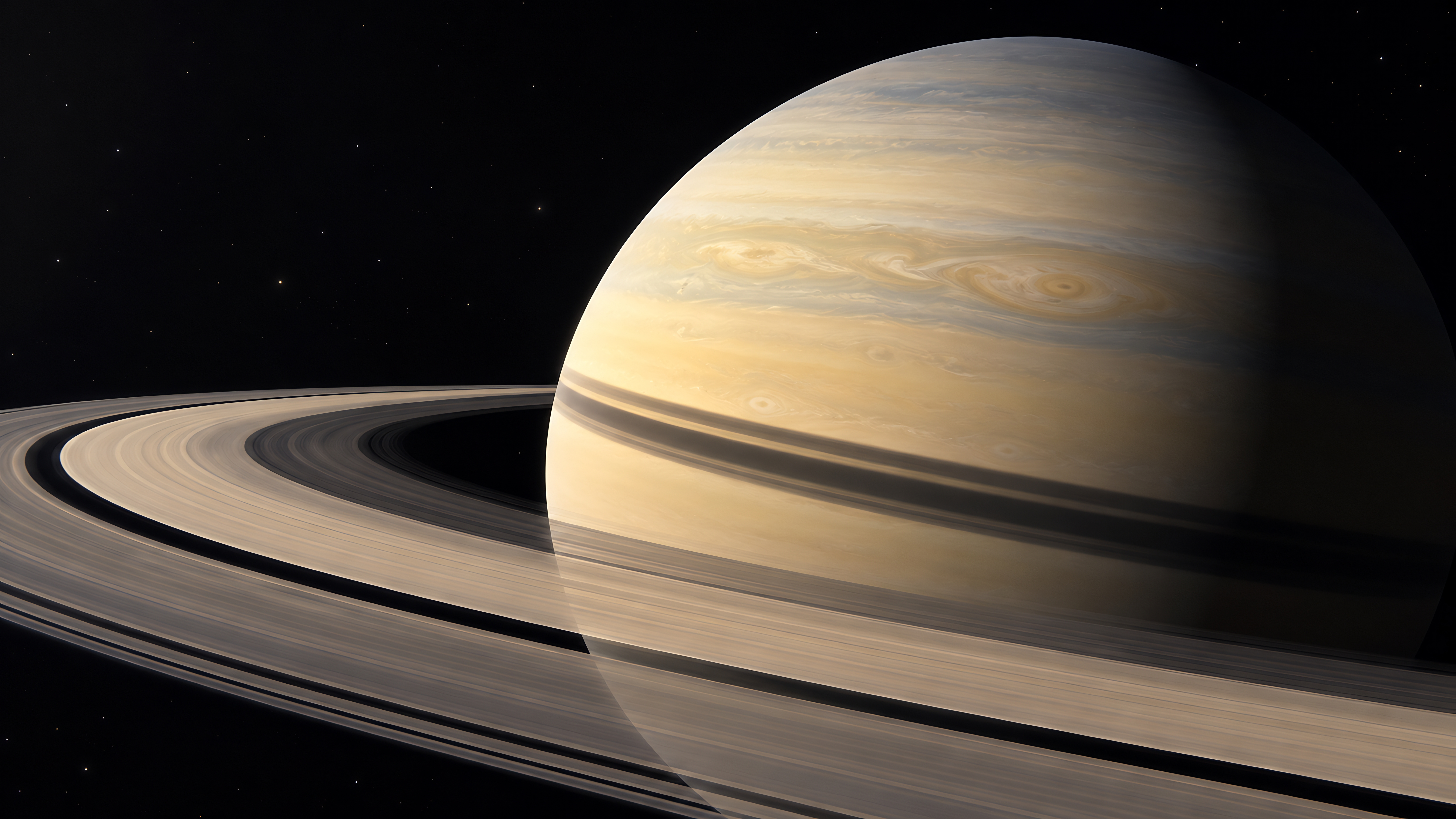
Saturn's Ring Shadow

Saturn's rings really do cast bands of shadow across its cloud tops. The exact clouds and viewpoint are reconstructed. Source ↗

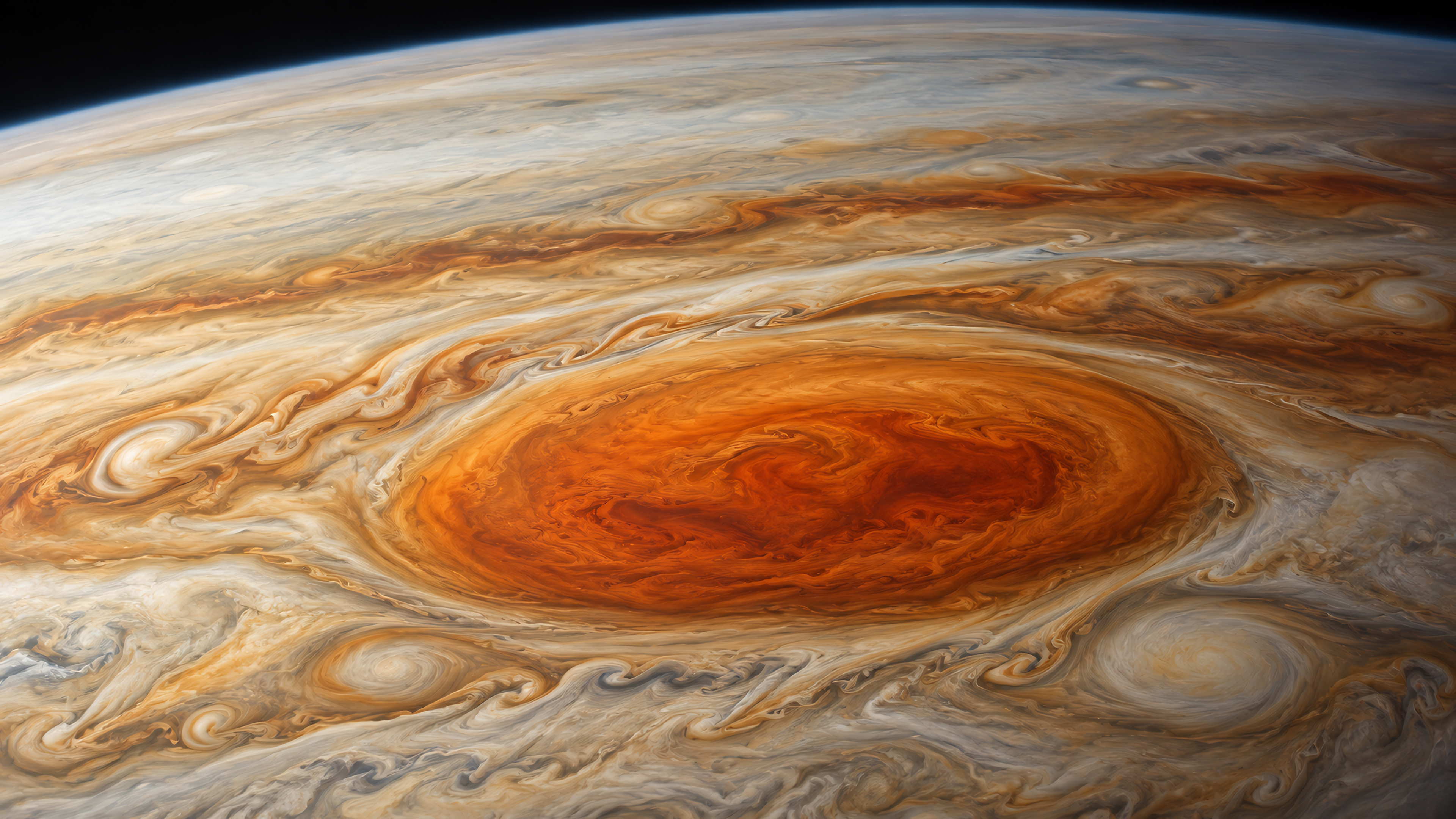
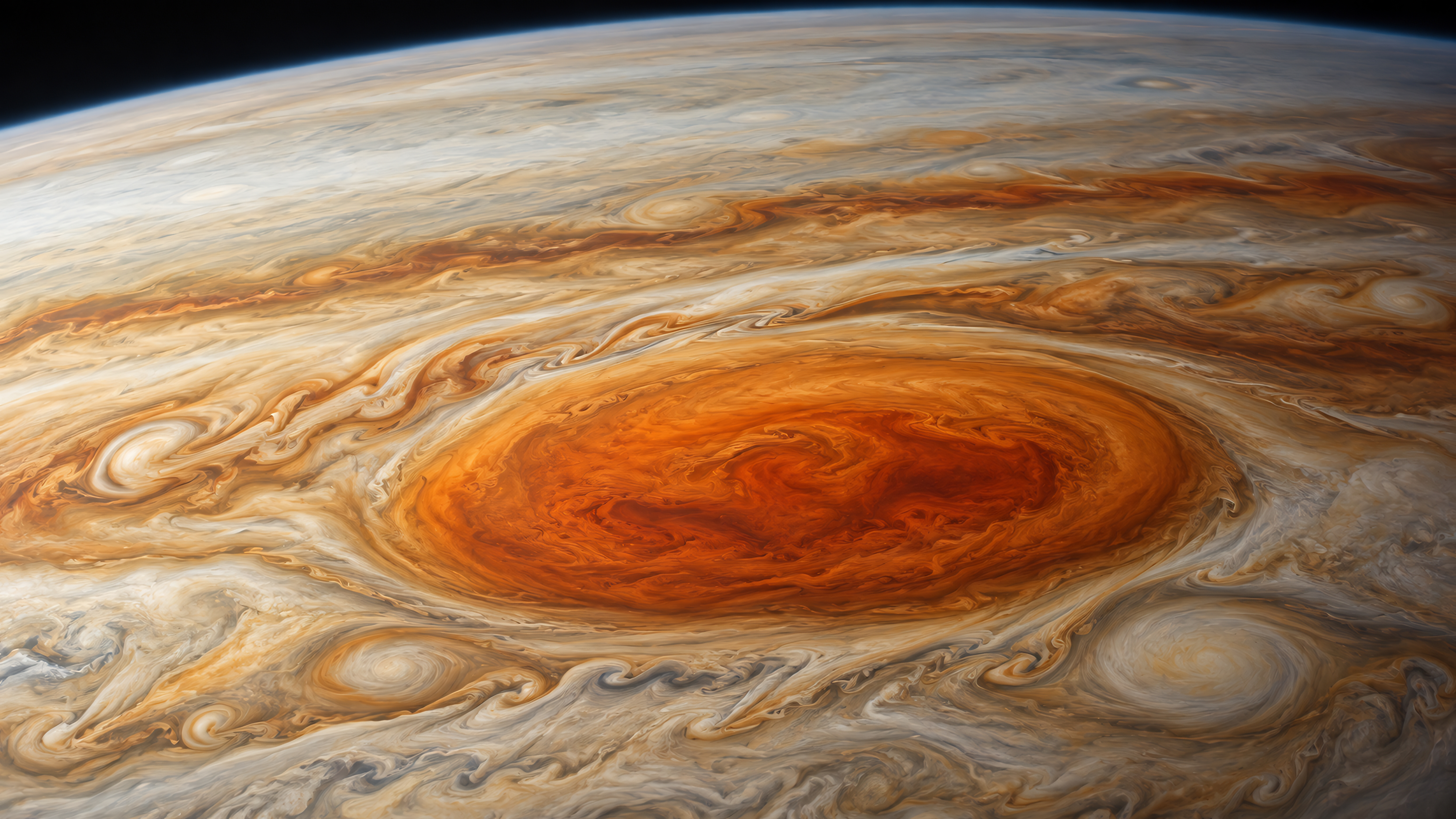
The Great Red Spot

A giant storm that has spun in Jupiter's cloud bands for centuries. Colour and cloud relief are boosted, the way Juno pictures are. Source ↗

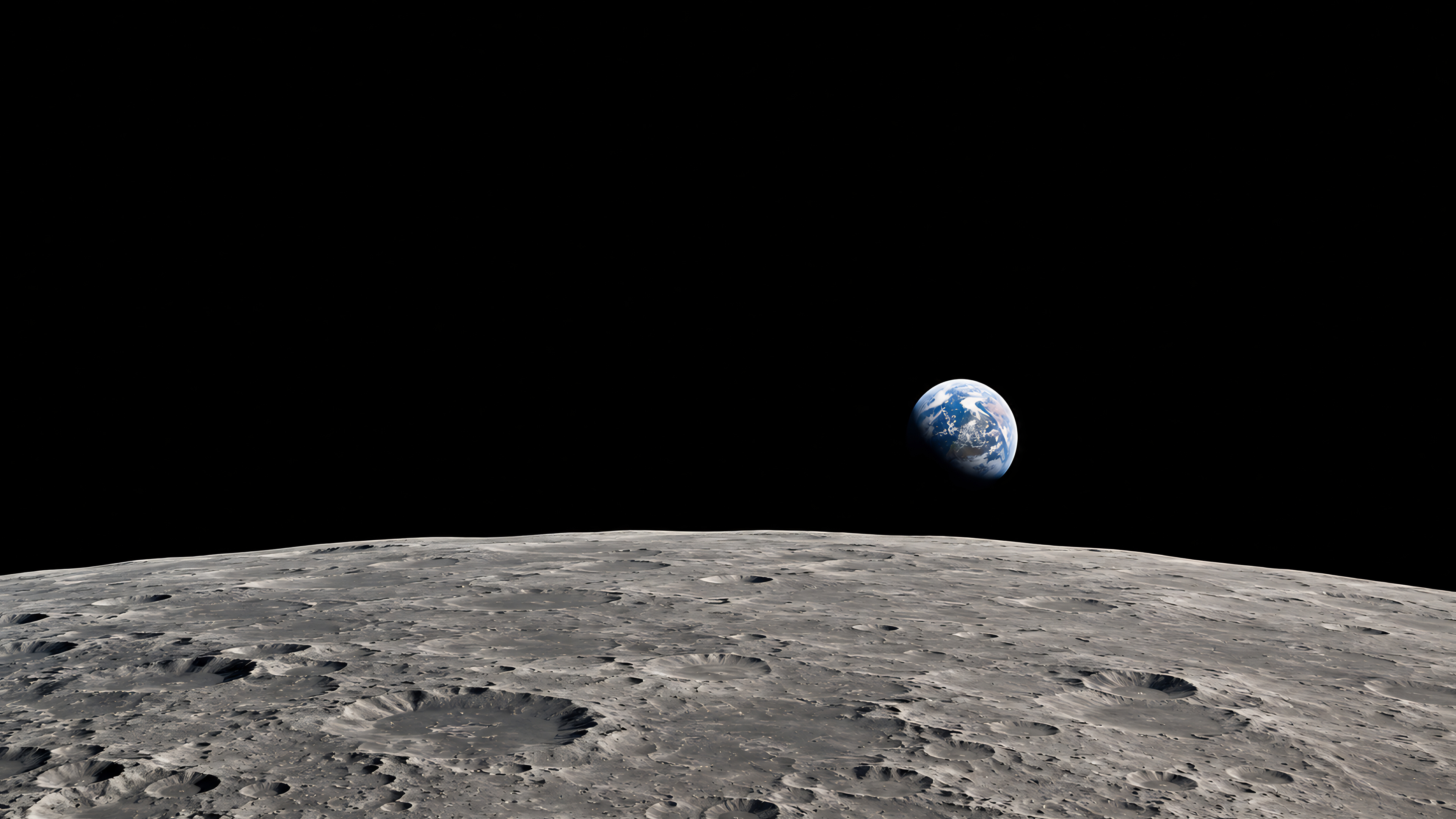
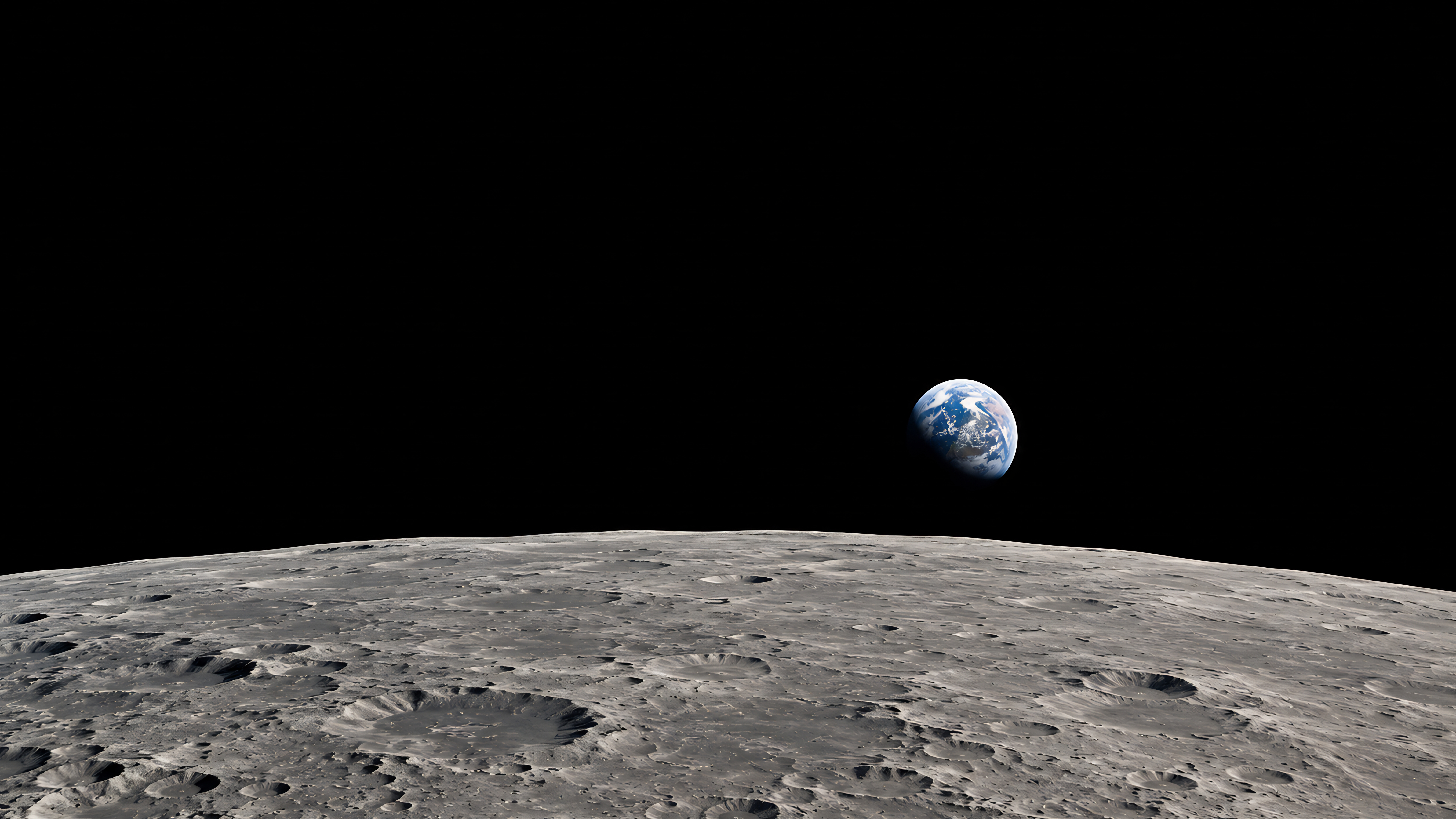
Earthrise

Earth rising over the Moon, as Apollo 8 first saw it on 24 December 1968. The Moon's surface and Earth's clouds are reconstructed. Source ↗

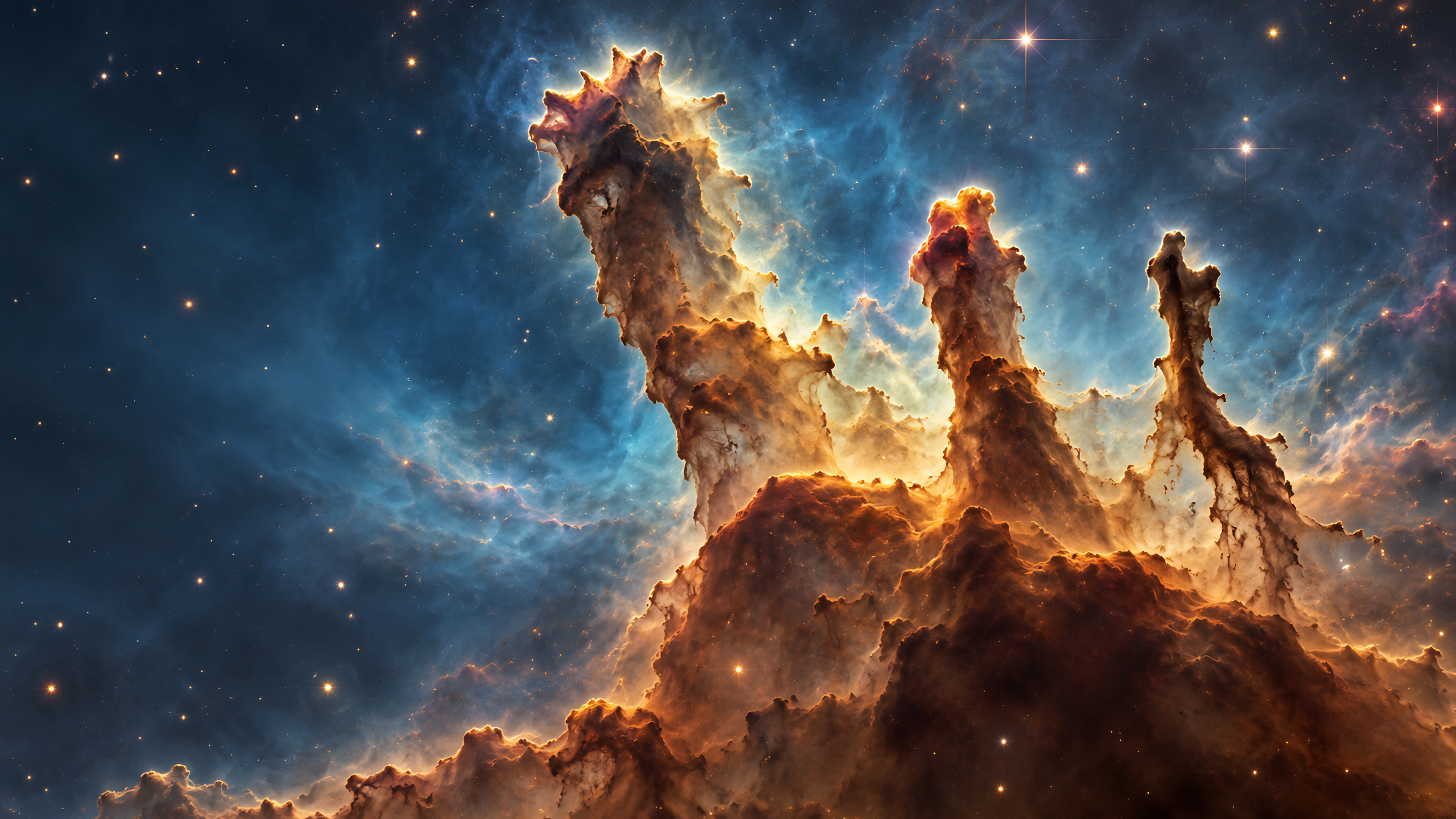
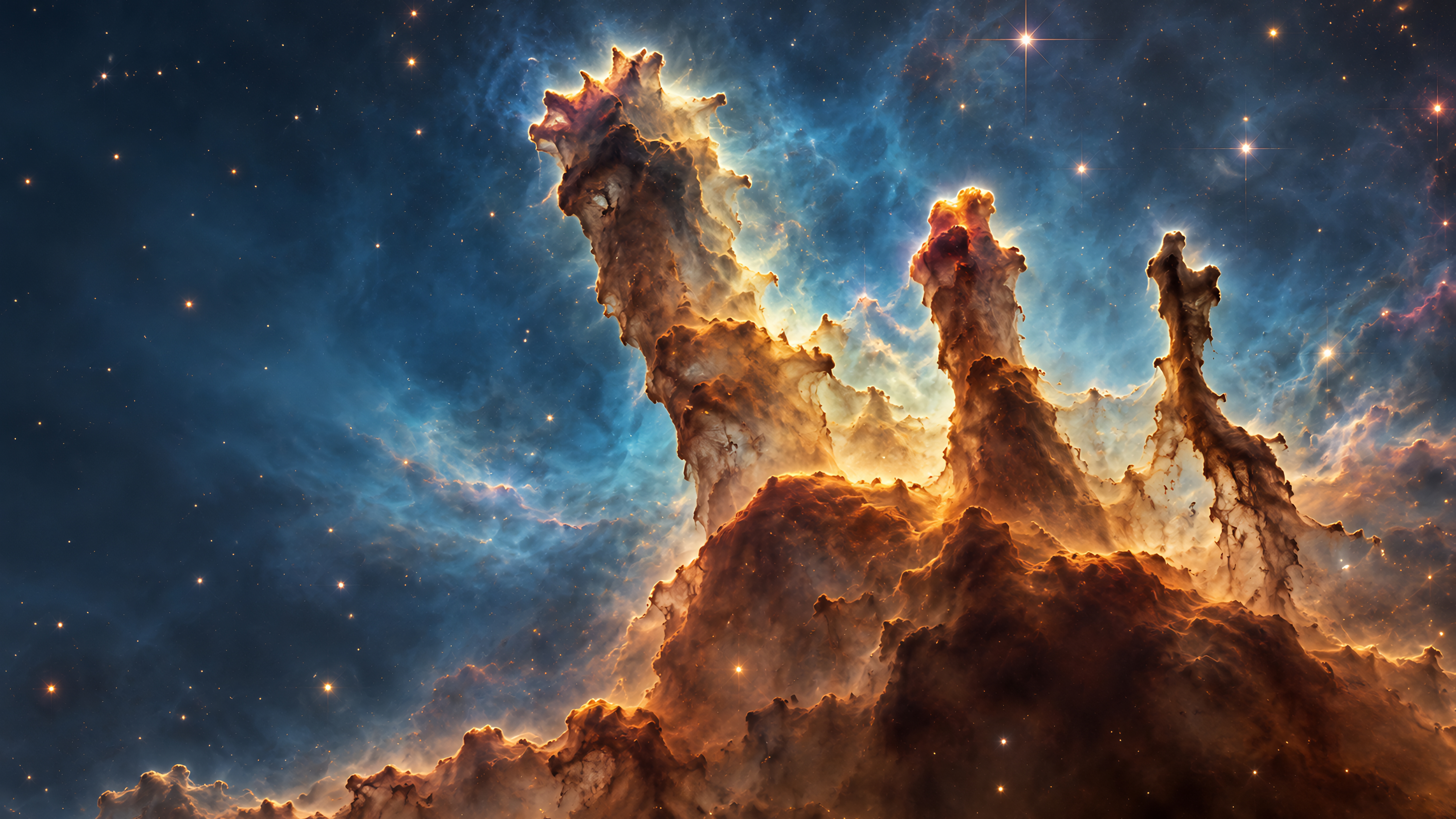
Pillars of Creation

Towers of gas and dust in the Eagle Nebula with newborn stars inside, in the infrared look of the Webb telescope. Source ↗

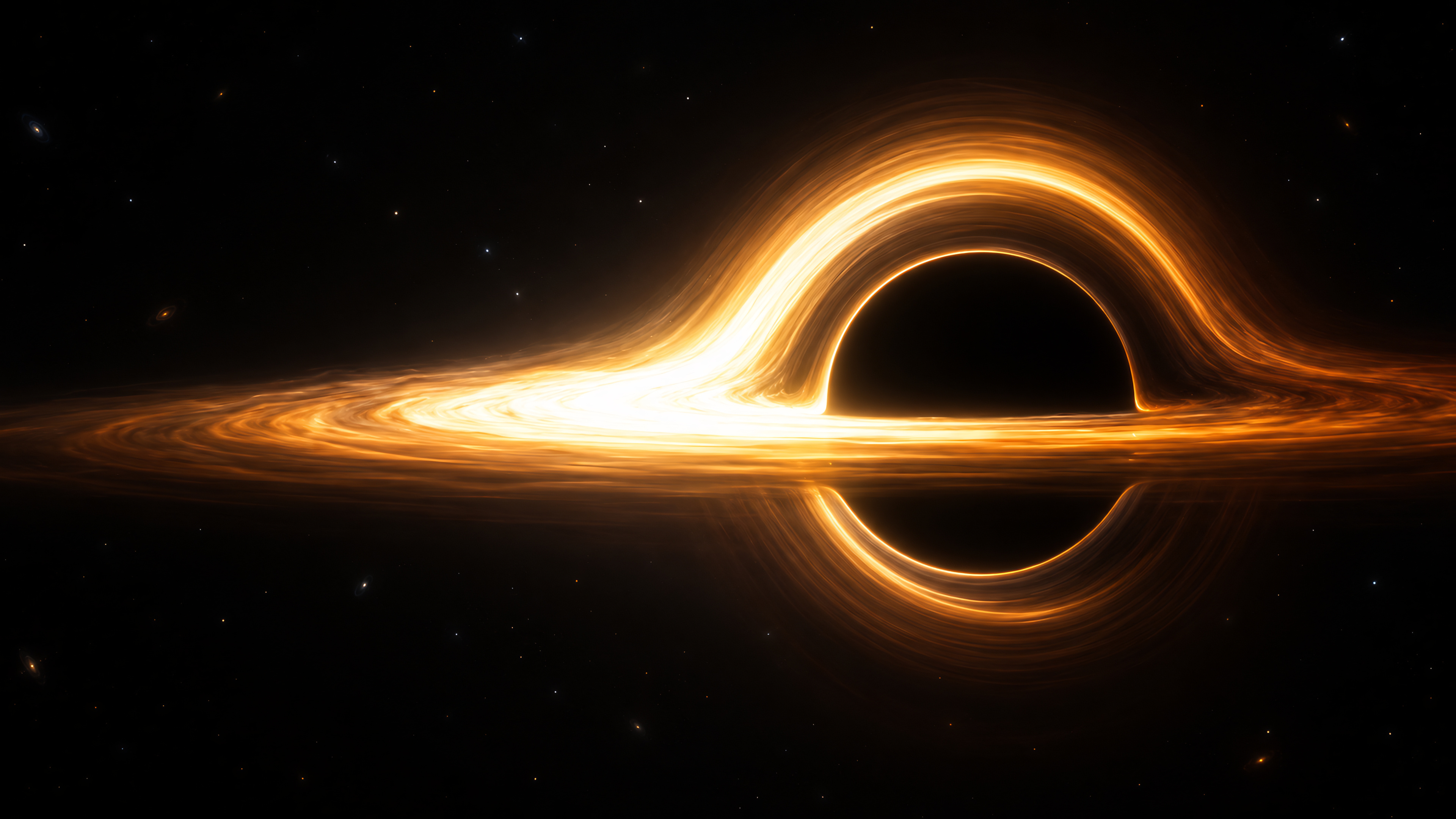
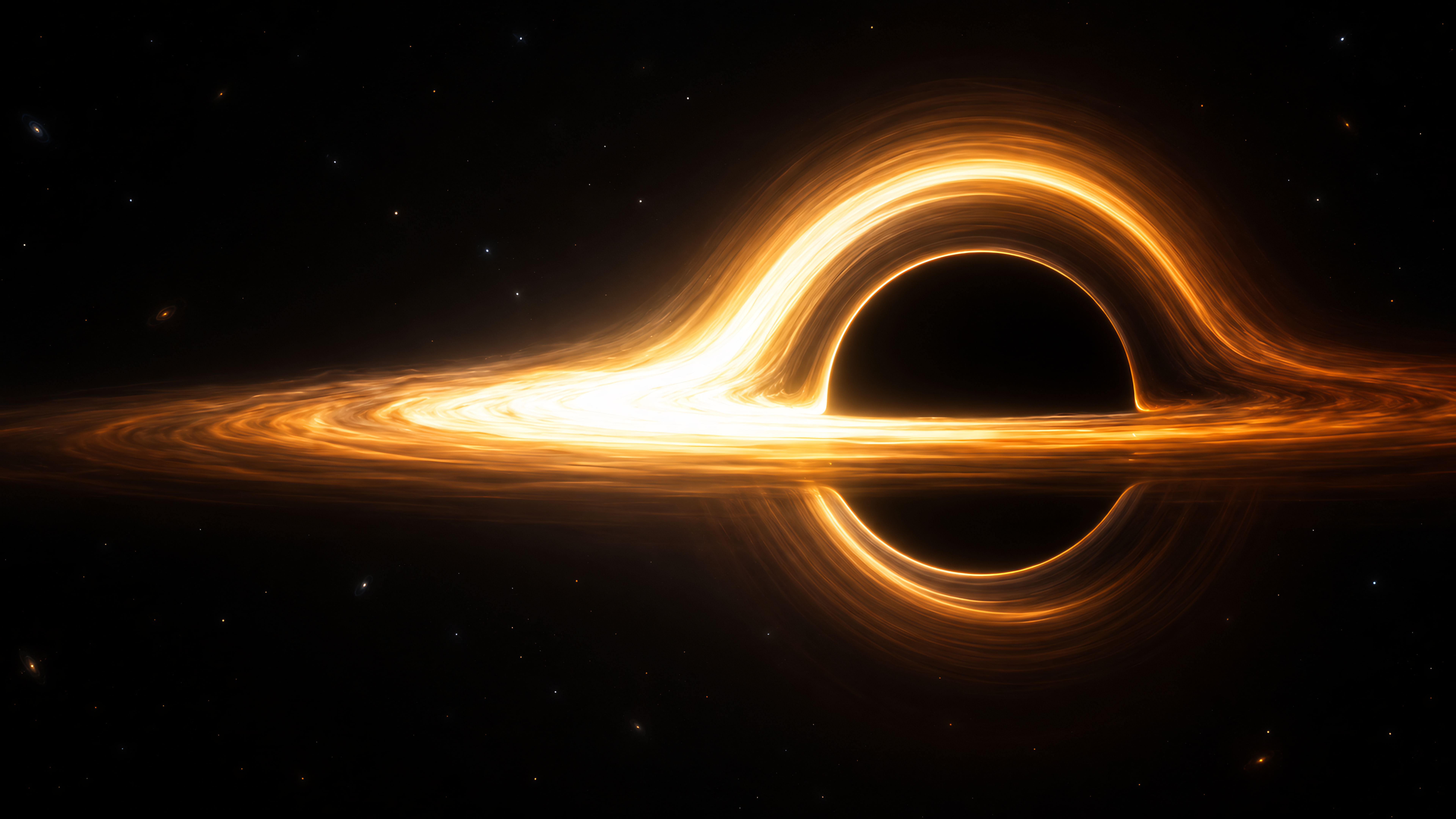
Lensed Black Hole

Gravity bends light from the far side of the disc over and under the black hole, as relativity predicts. Not a photograph. Source ↗

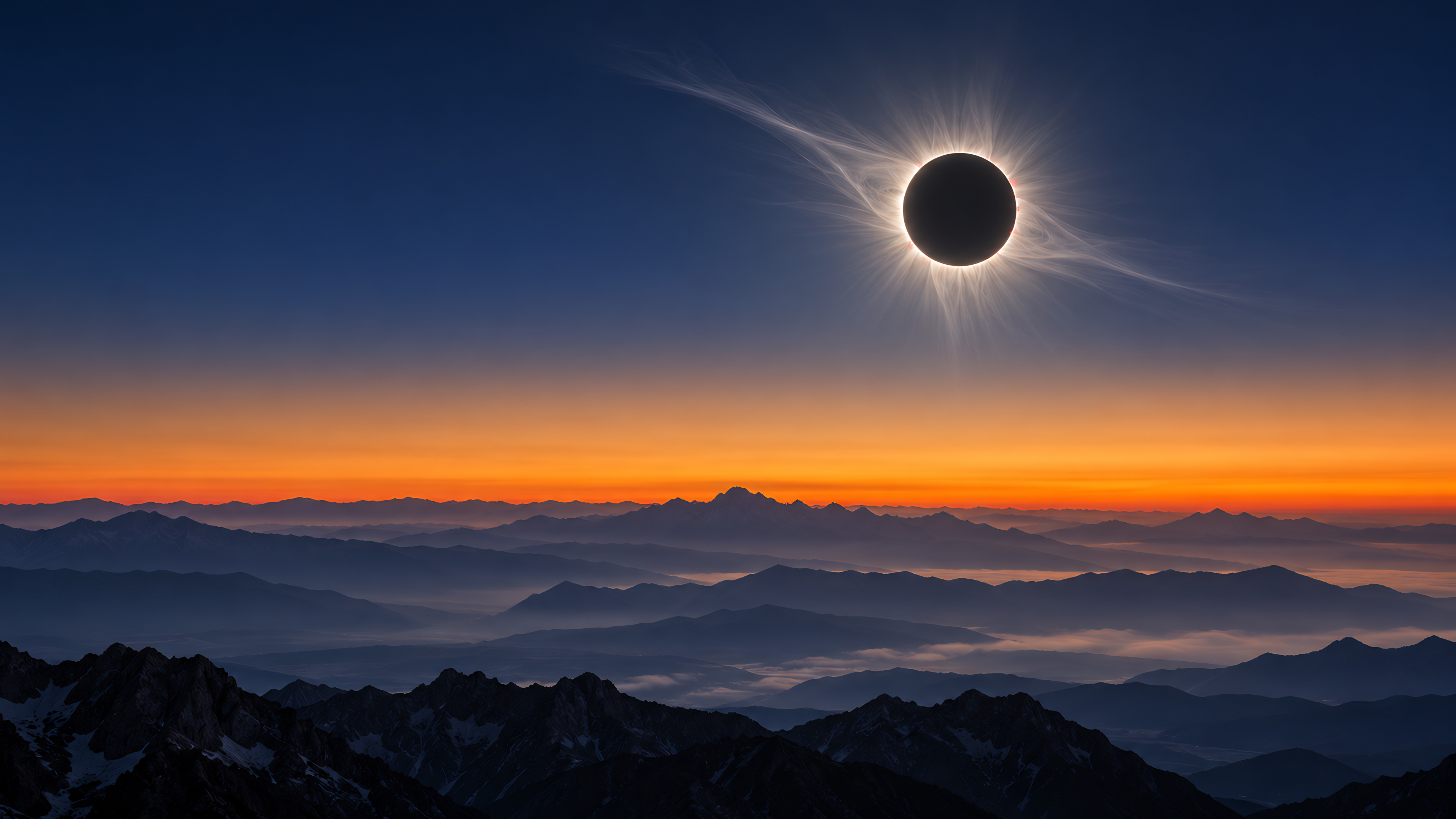
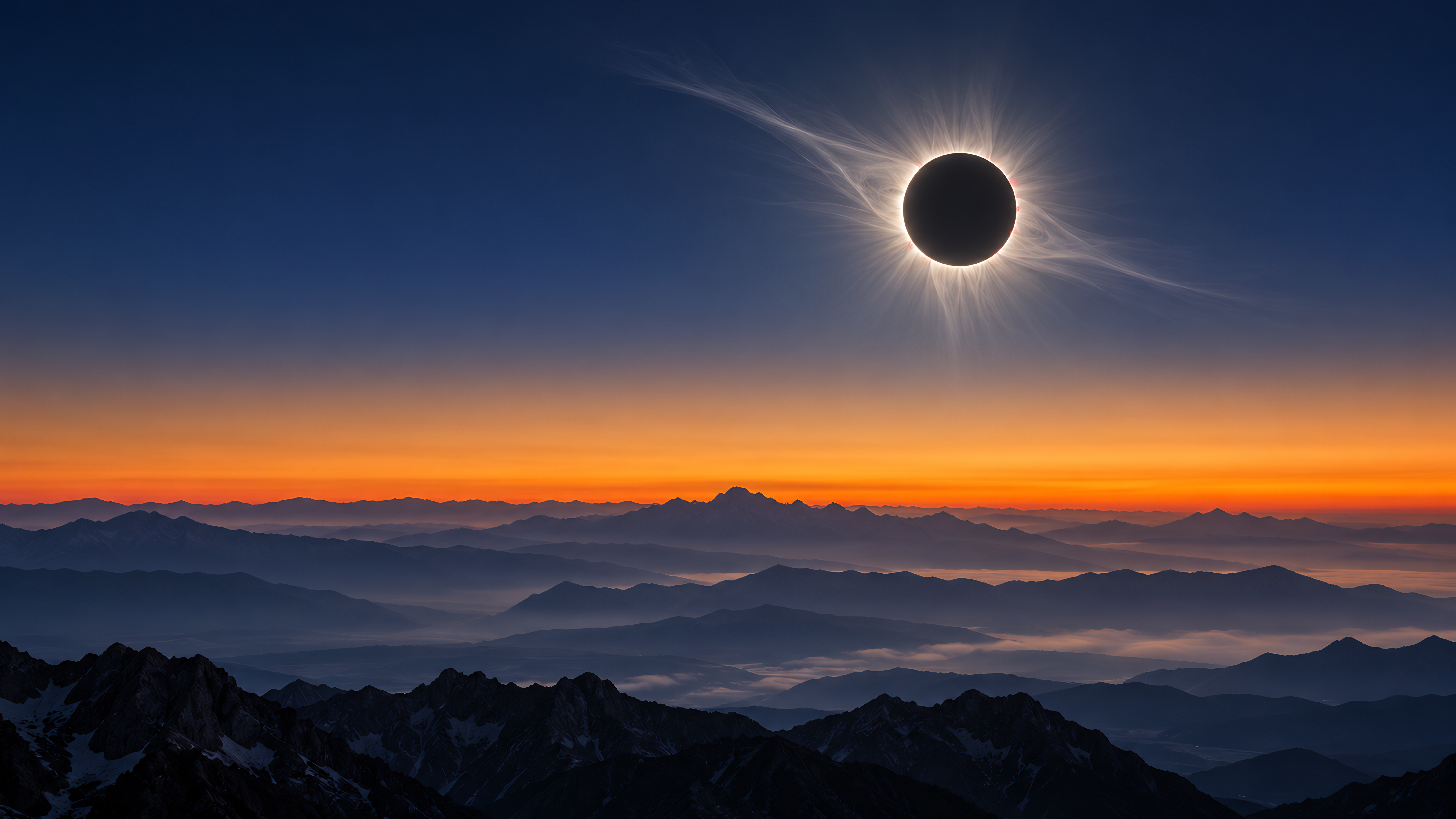
Corona Over the Ridge

In a total eclipse the Moon hides the Sun's face and the white corona and red prominences appear. Seen as if through a long lens. Source ↗

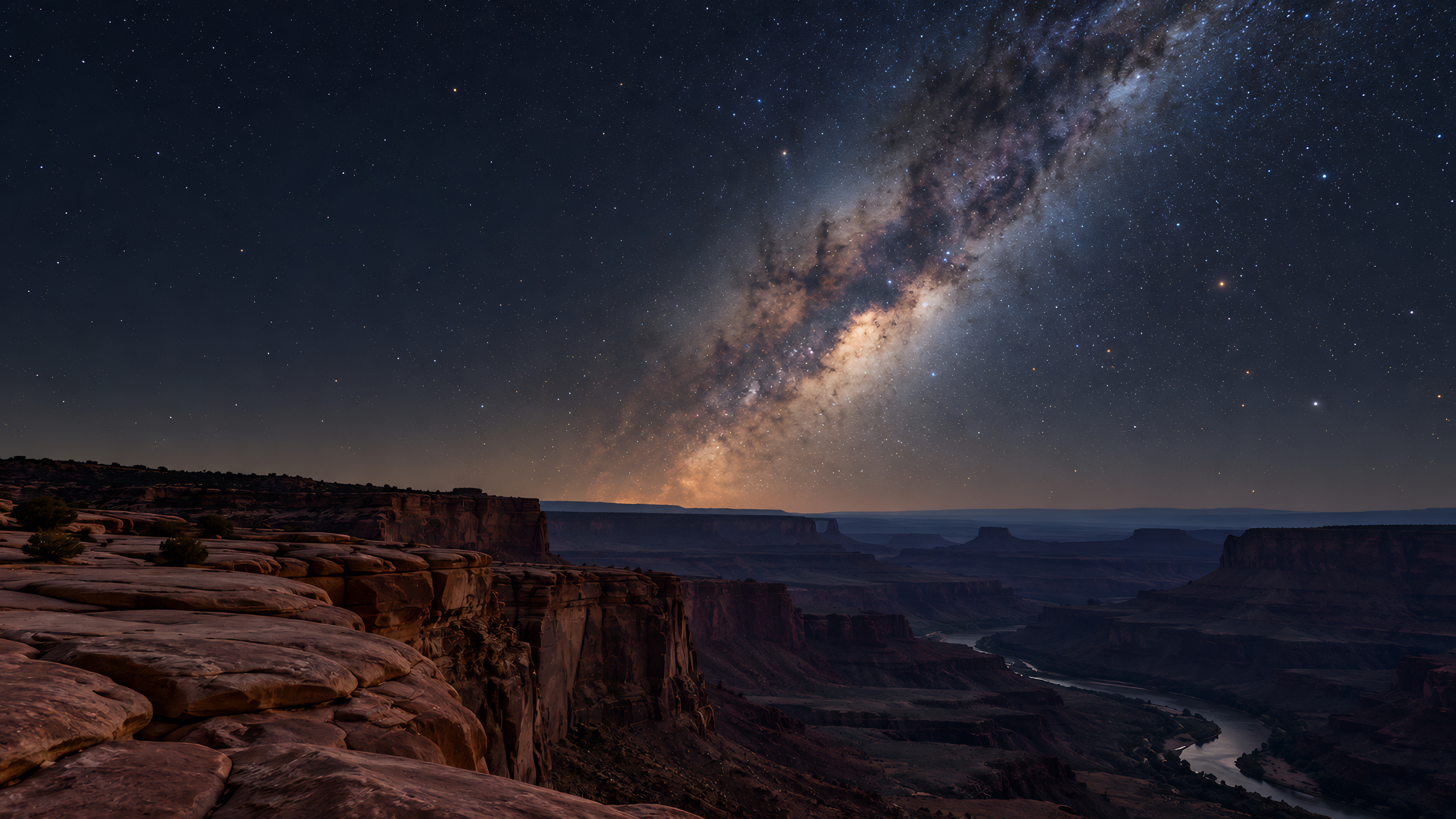
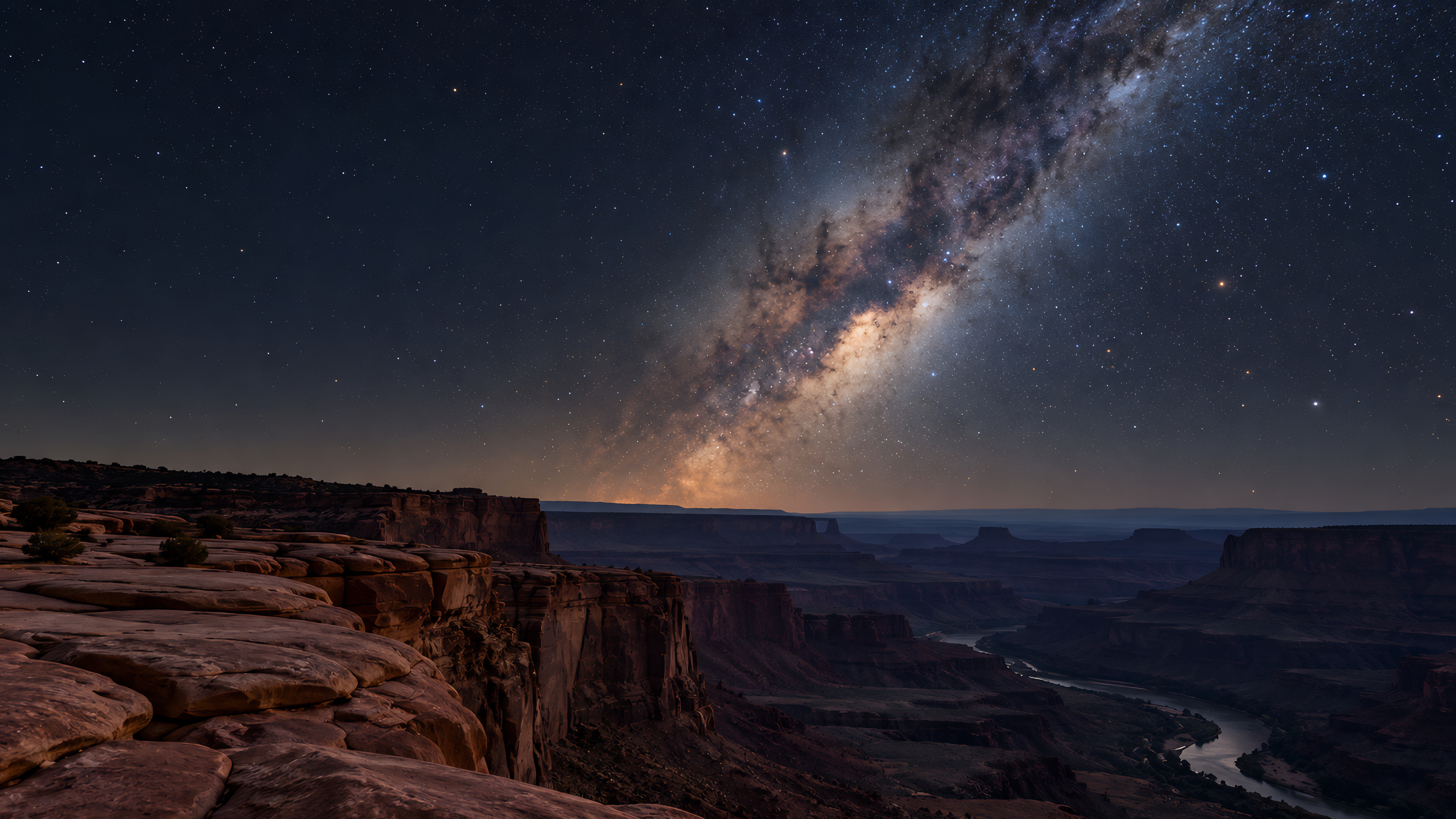
Galactic Canyon

The bright centre of our galaxy, in Sagittarius, sits low in the southern sky from a northern desert. A long-exposure look. Source ↗

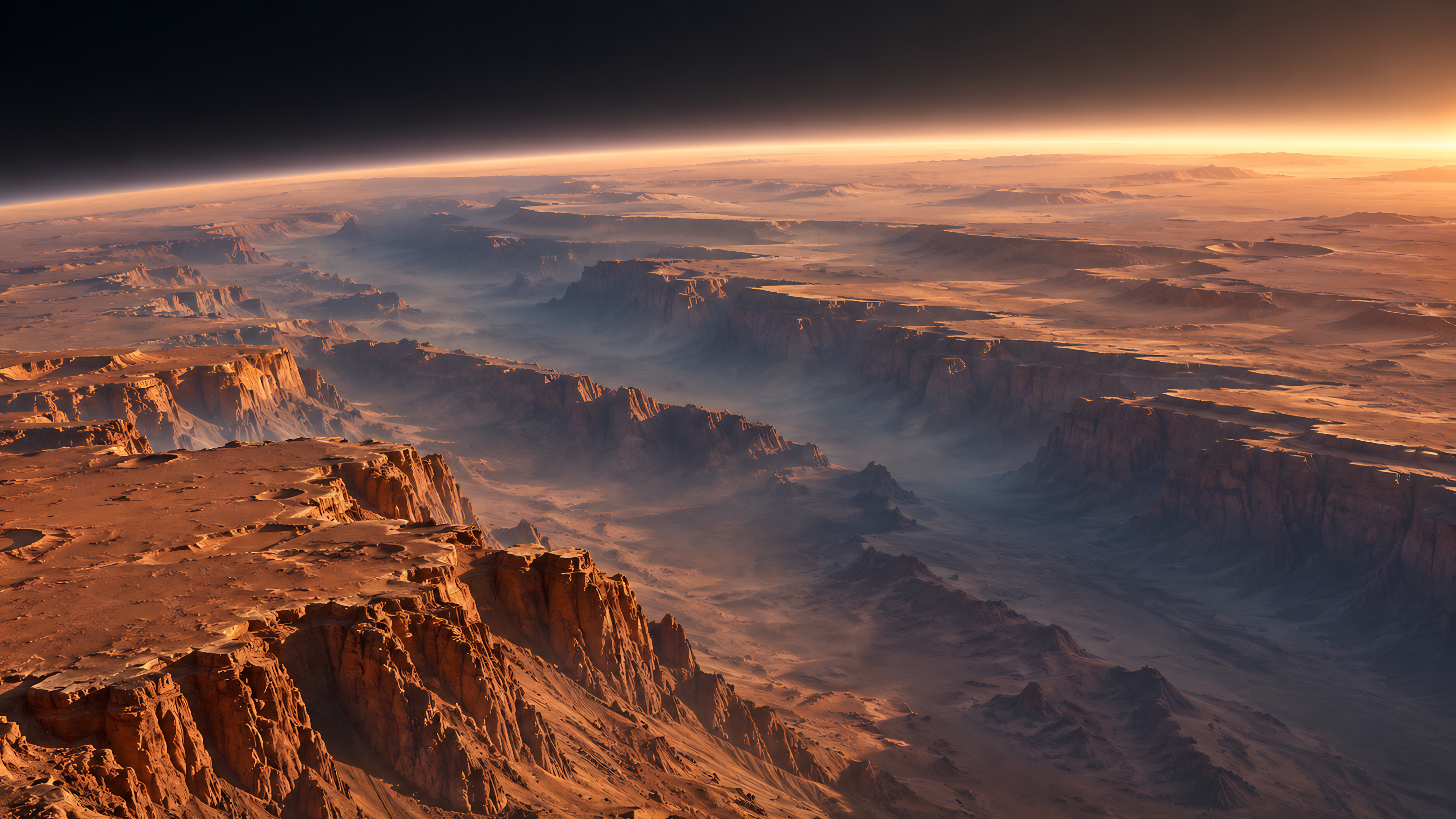
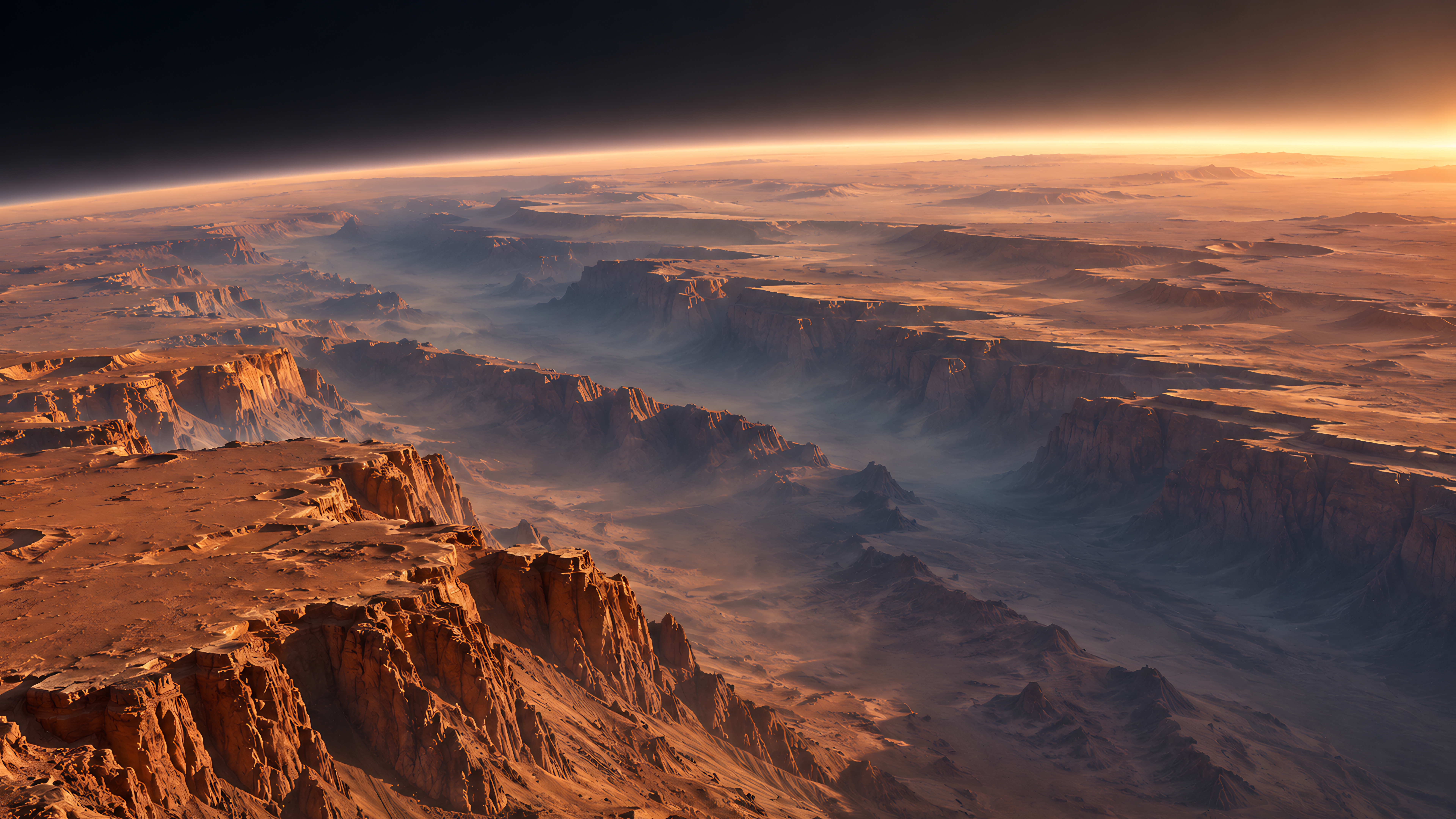
Dawn over Valles Marineris

A real canyon system on Mars, thousands of kilometres long, with layered walls and dust haze. No liquid water. Source ↗

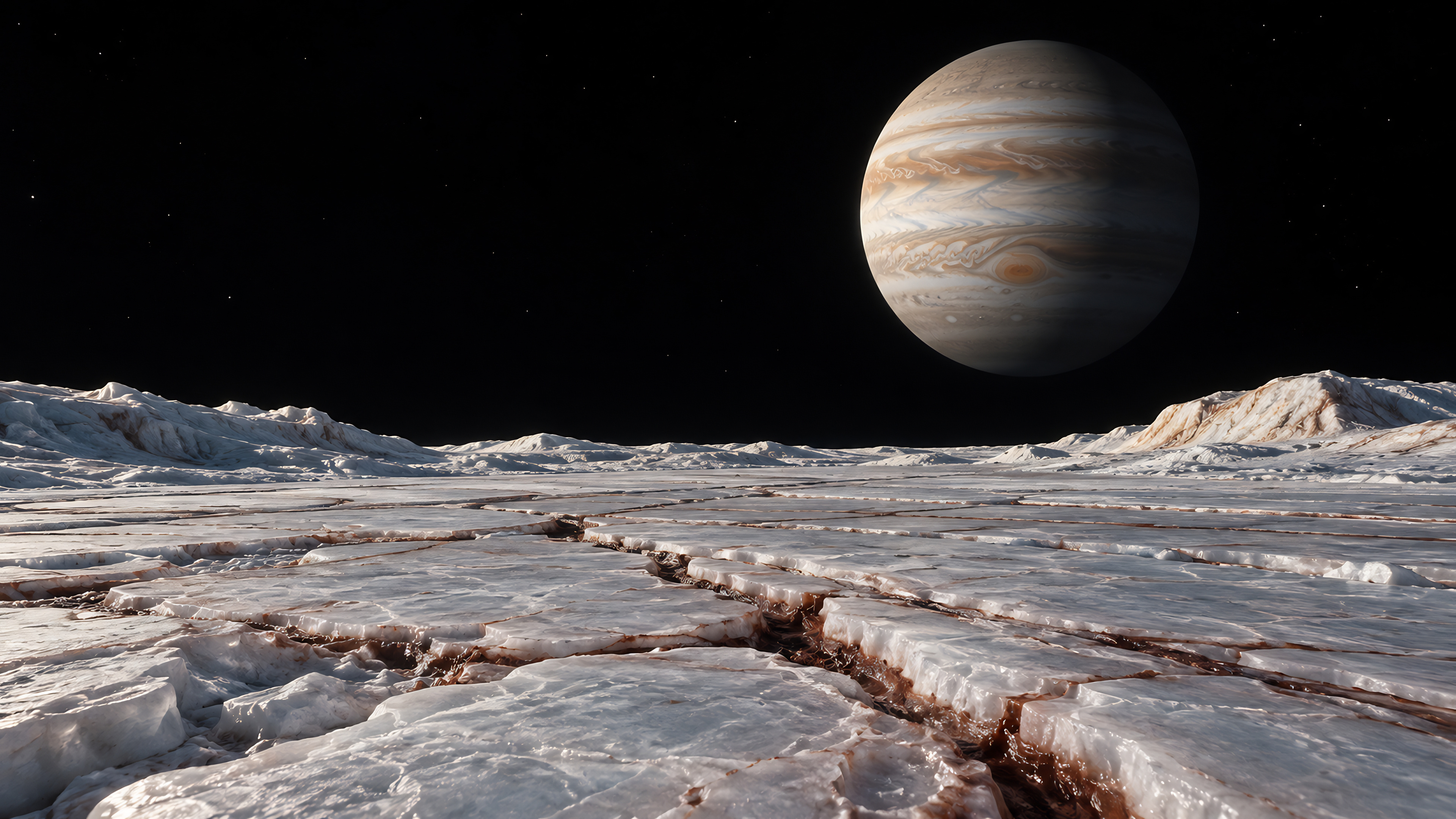
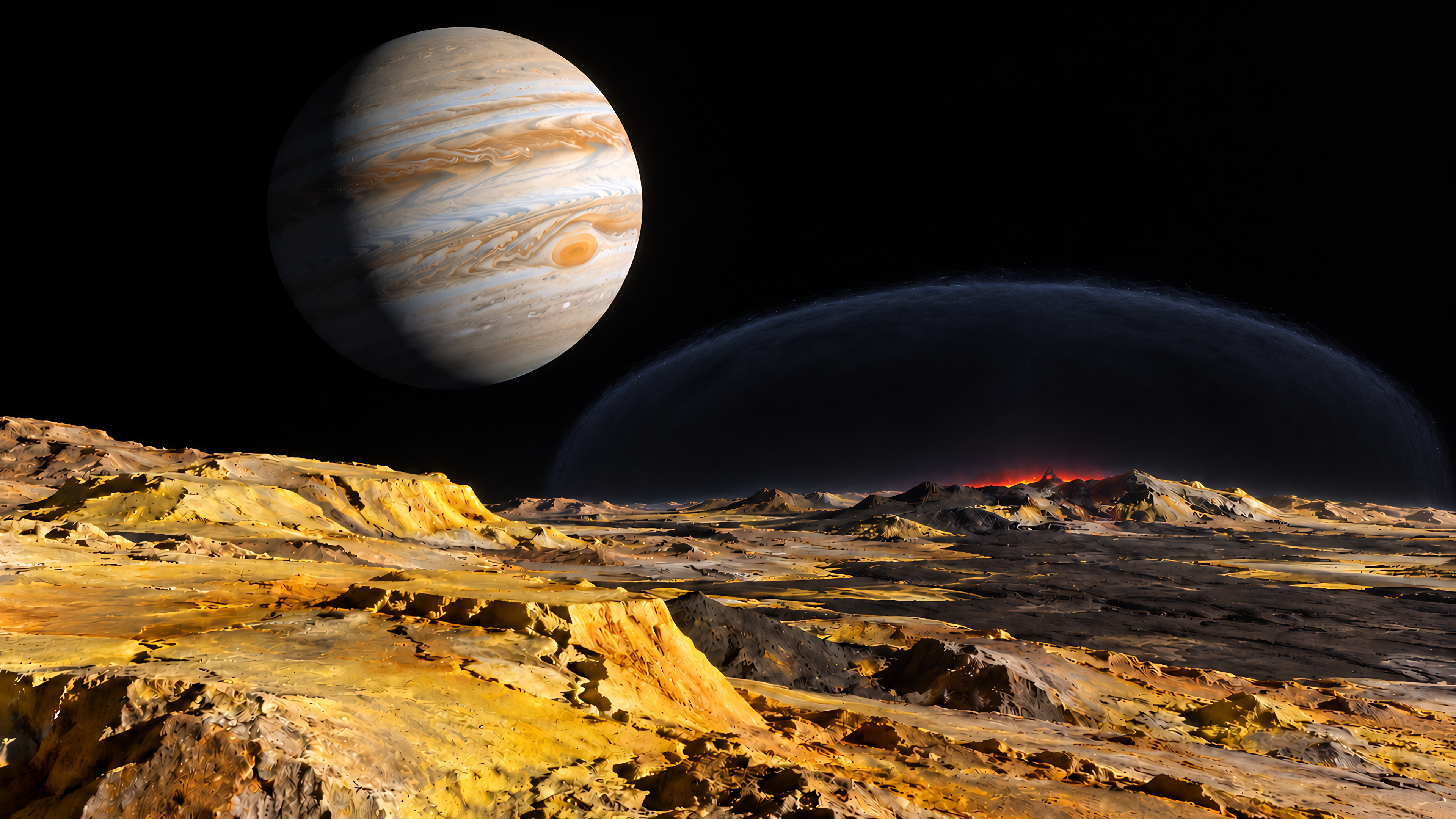
Europa and Jupiter

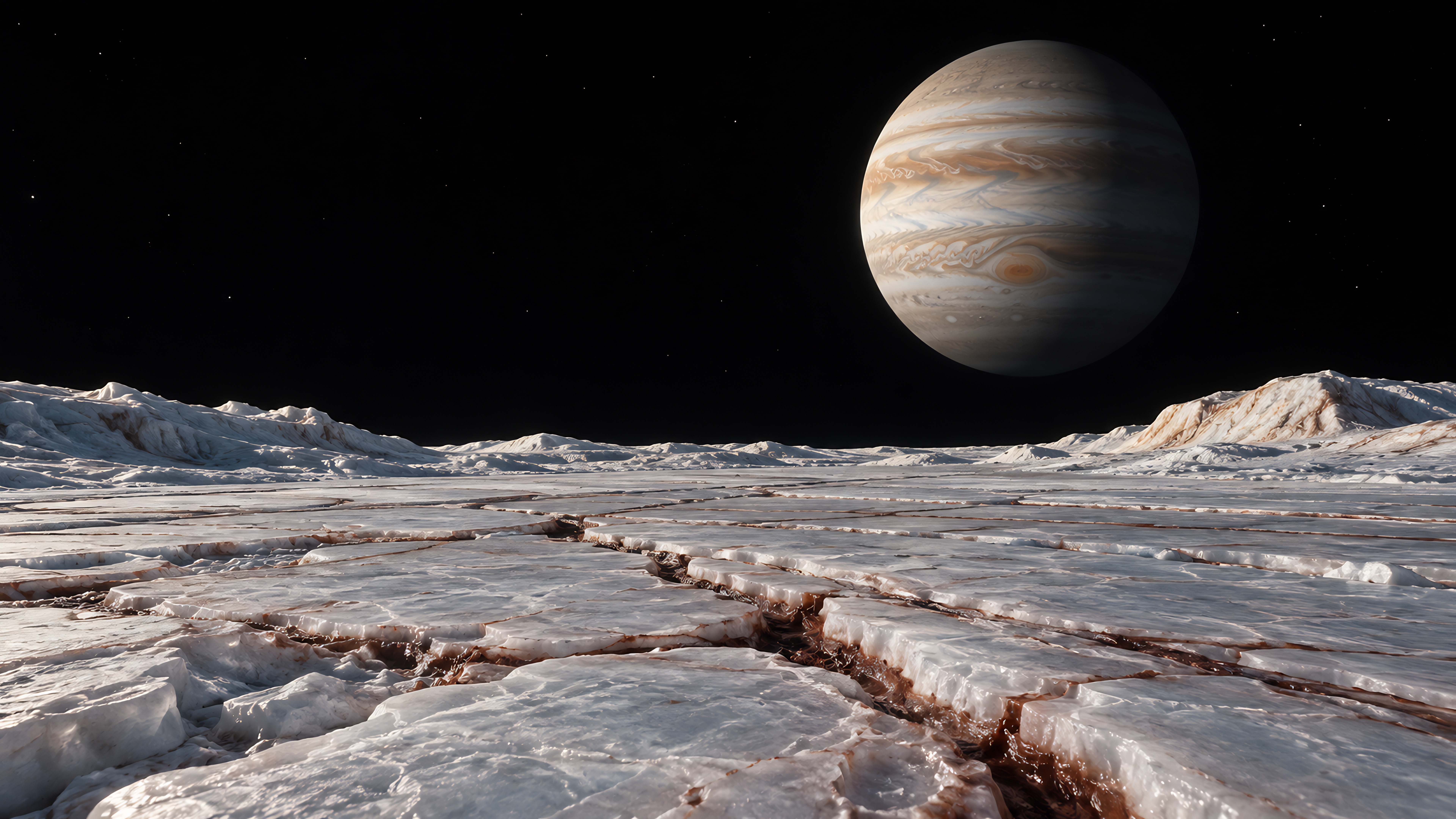
Europa's ice is cut by reddish cracks and ridges, and Jupiter spans about 12 degrees of its sky. Source ↗

The Lakes of Titan

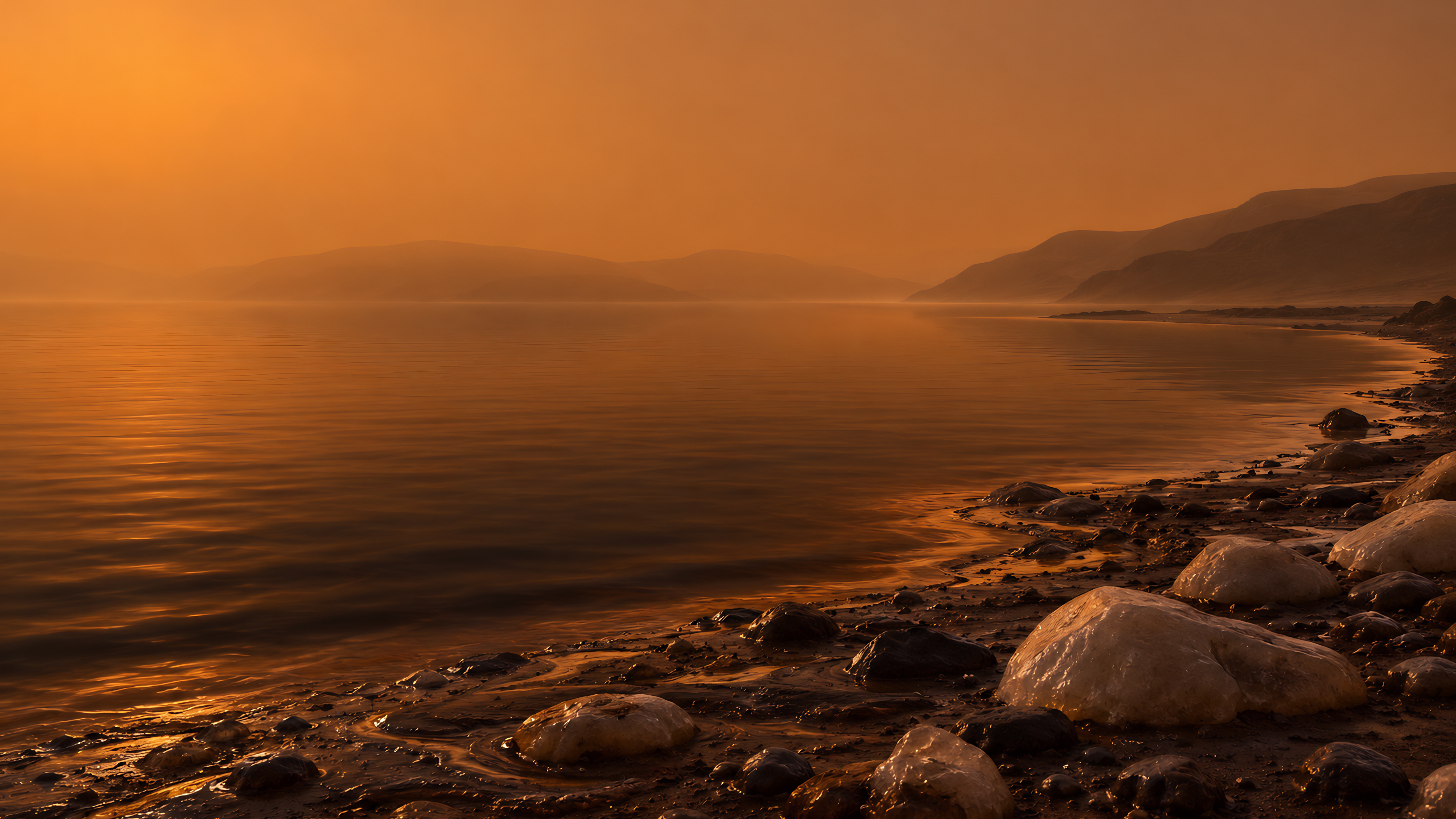
Titan has lakes of liquid methane and ethane under a thick orange haze. The shoreline itself is reconstructed. Source ↗

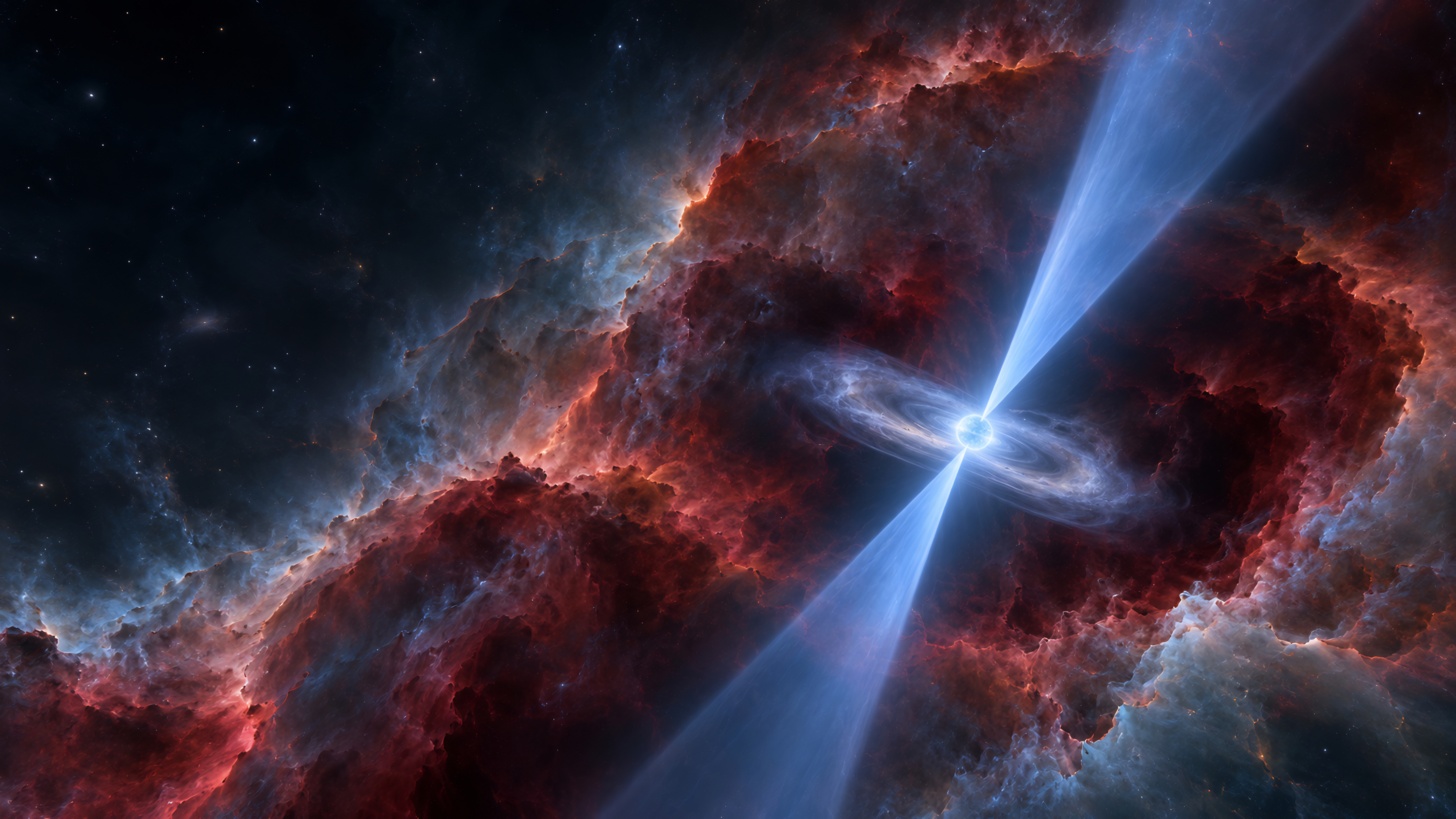
Pulsar Beacons

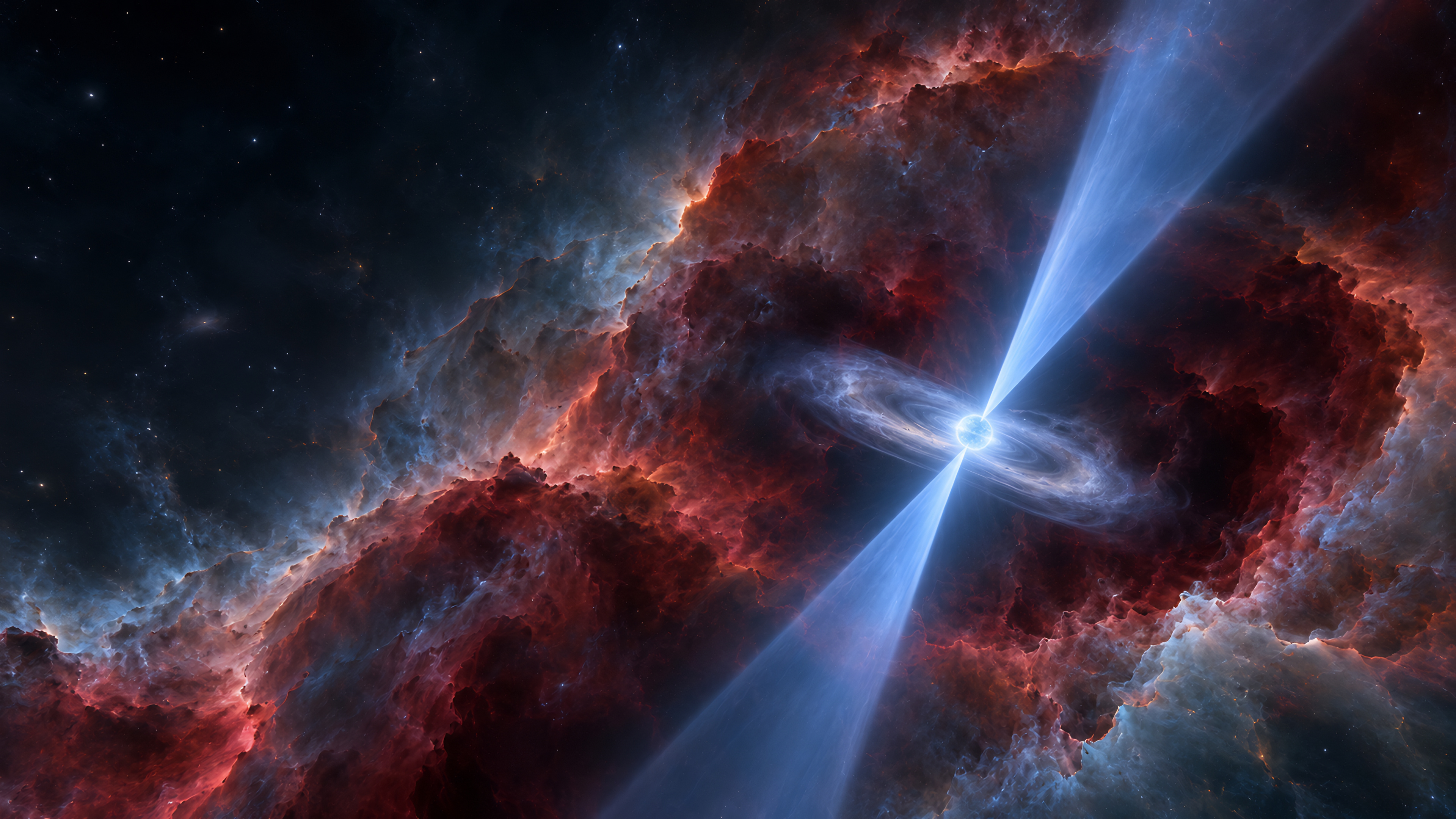
A spinning neutron star sweeps beams from its magnetic poles across space. The beams are drawn visible to show how it works. Source ↗

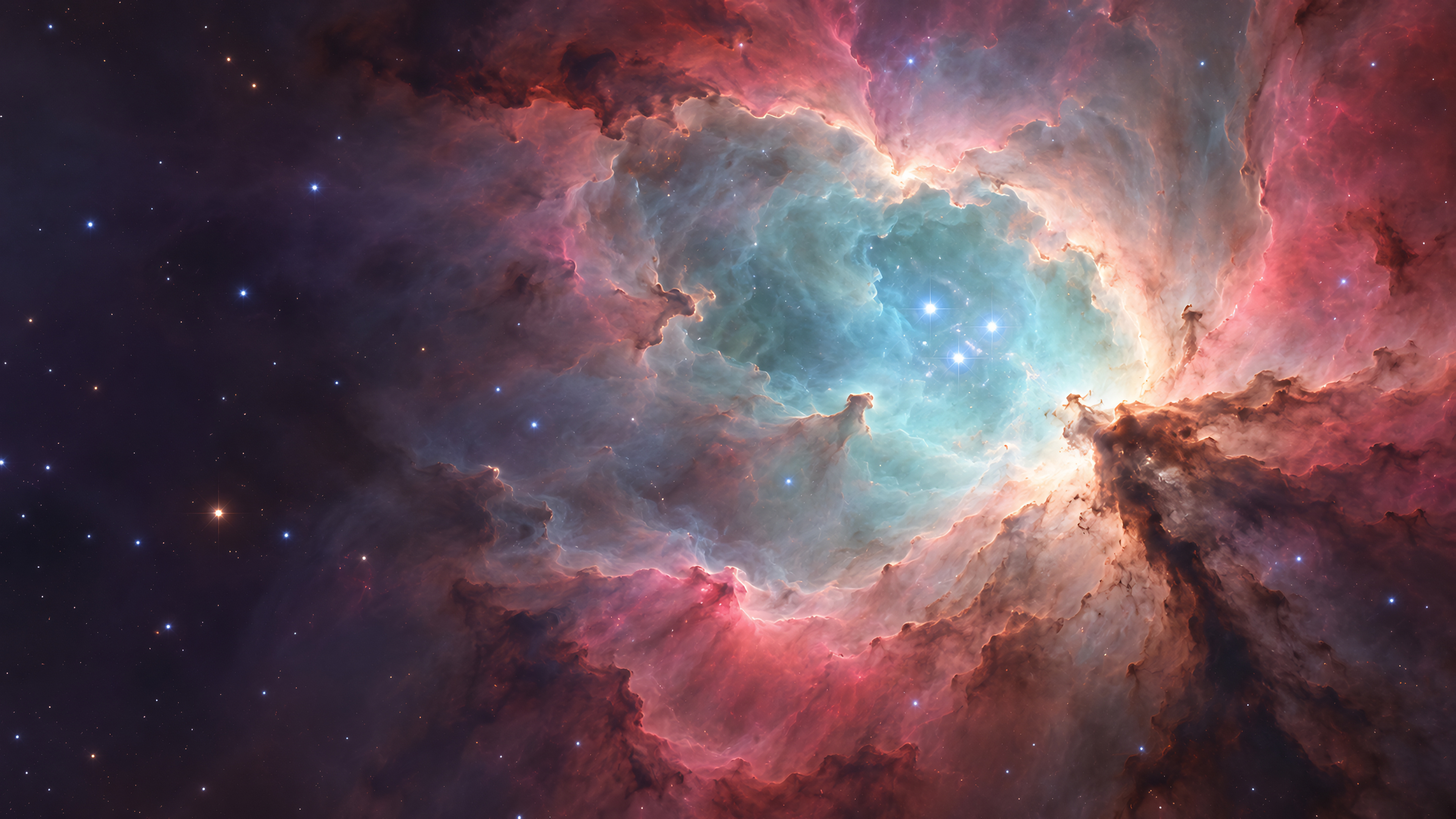
The Heart of Orion

The four bright Trapezium stars light up the hollow at the centre of the Orion Nebula. Colours are mapped from telescope light. Source ↗
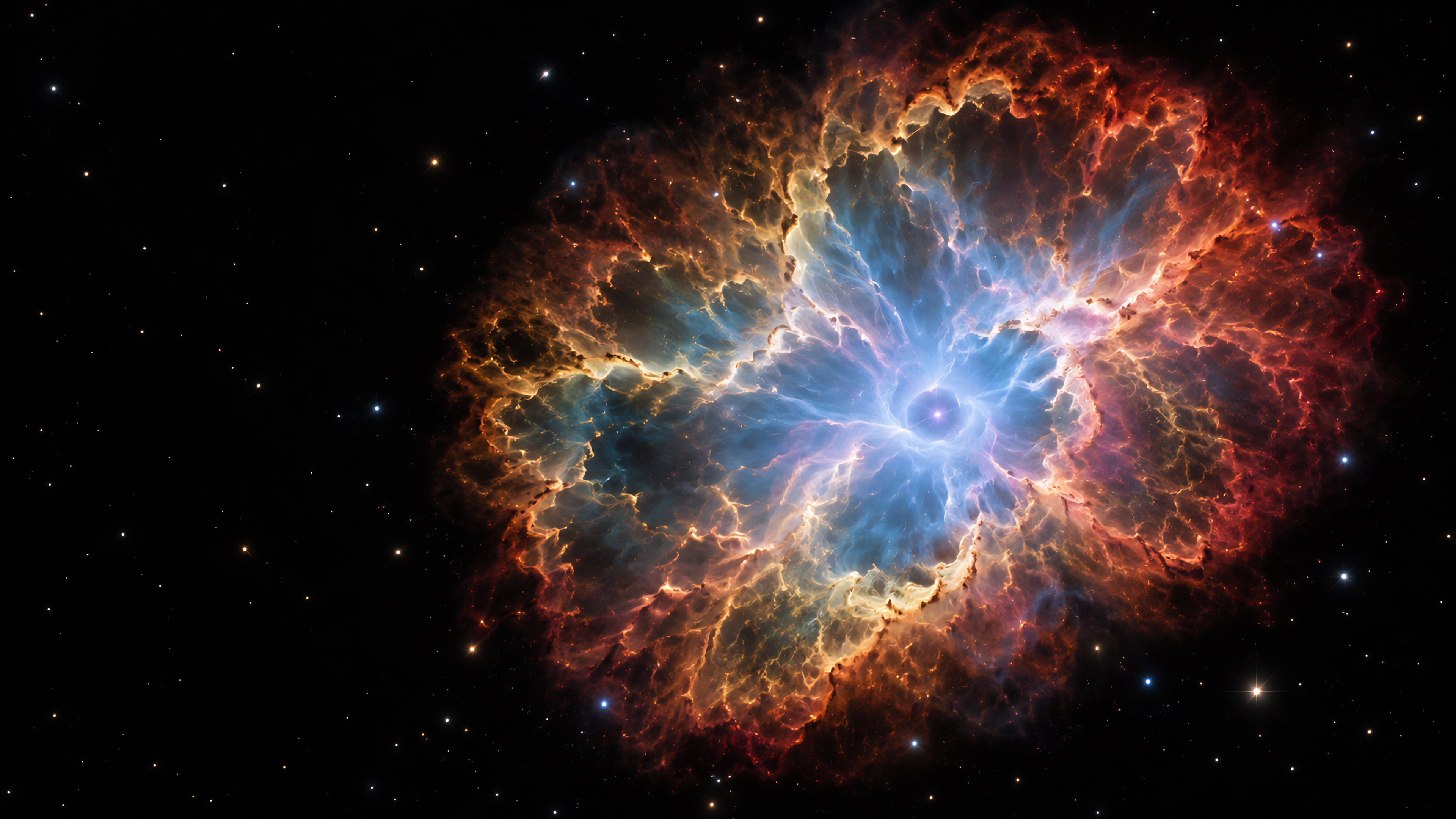
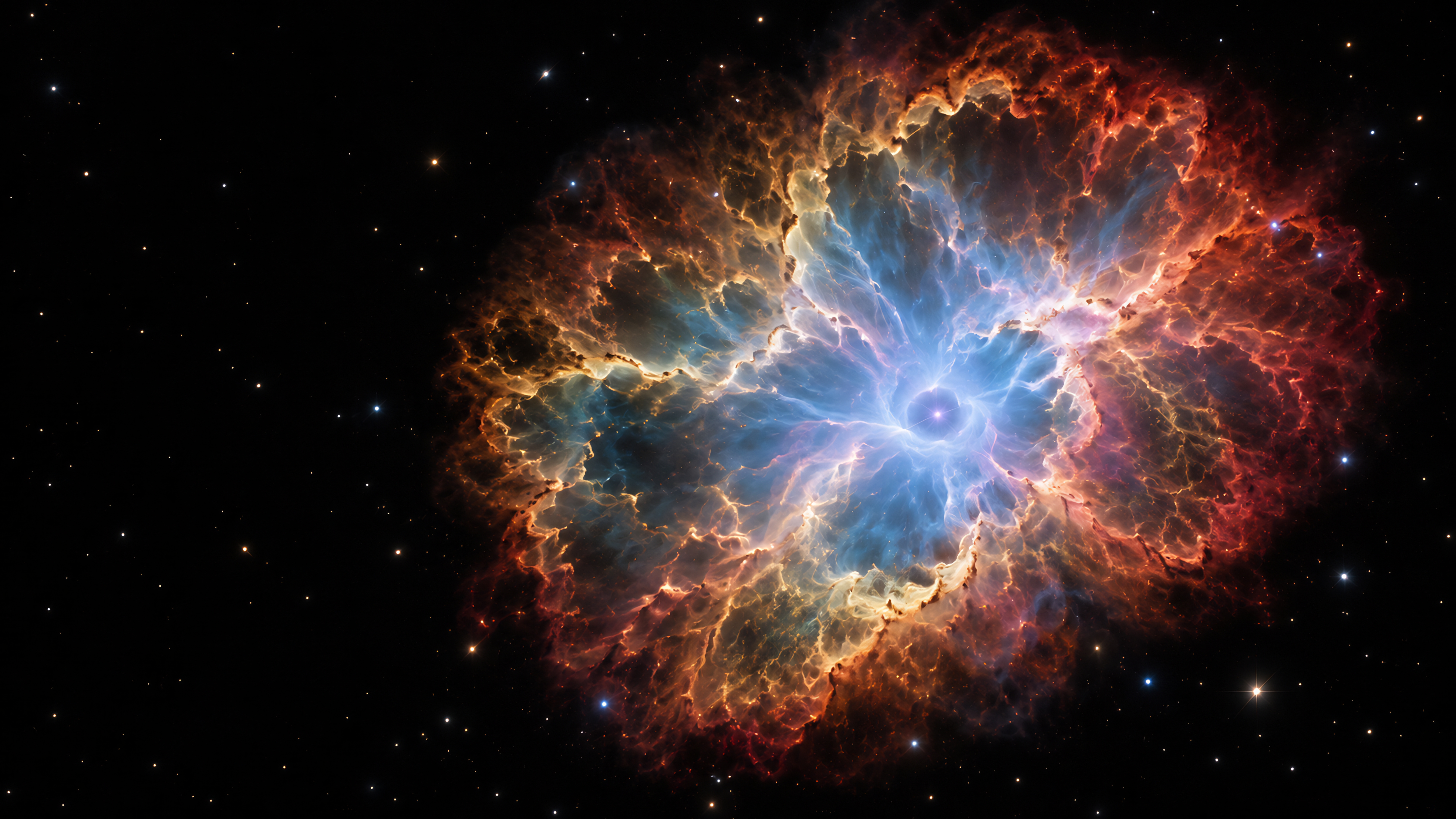
The Crab Nebula

What is left of an exploded star, lit from inside by the spinning pulsar at its centre. Colours are mapped from telescope light. Source ↗

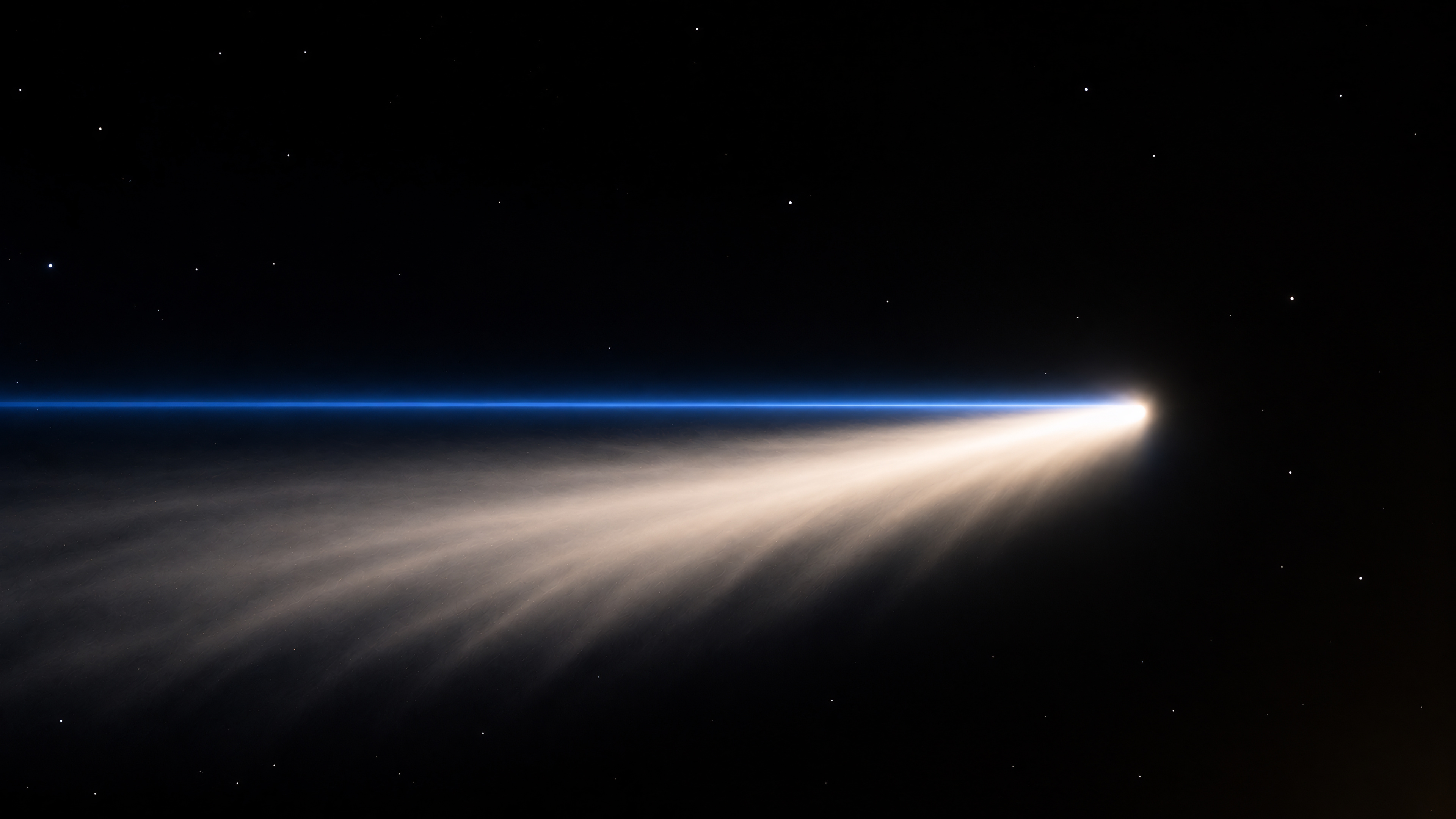
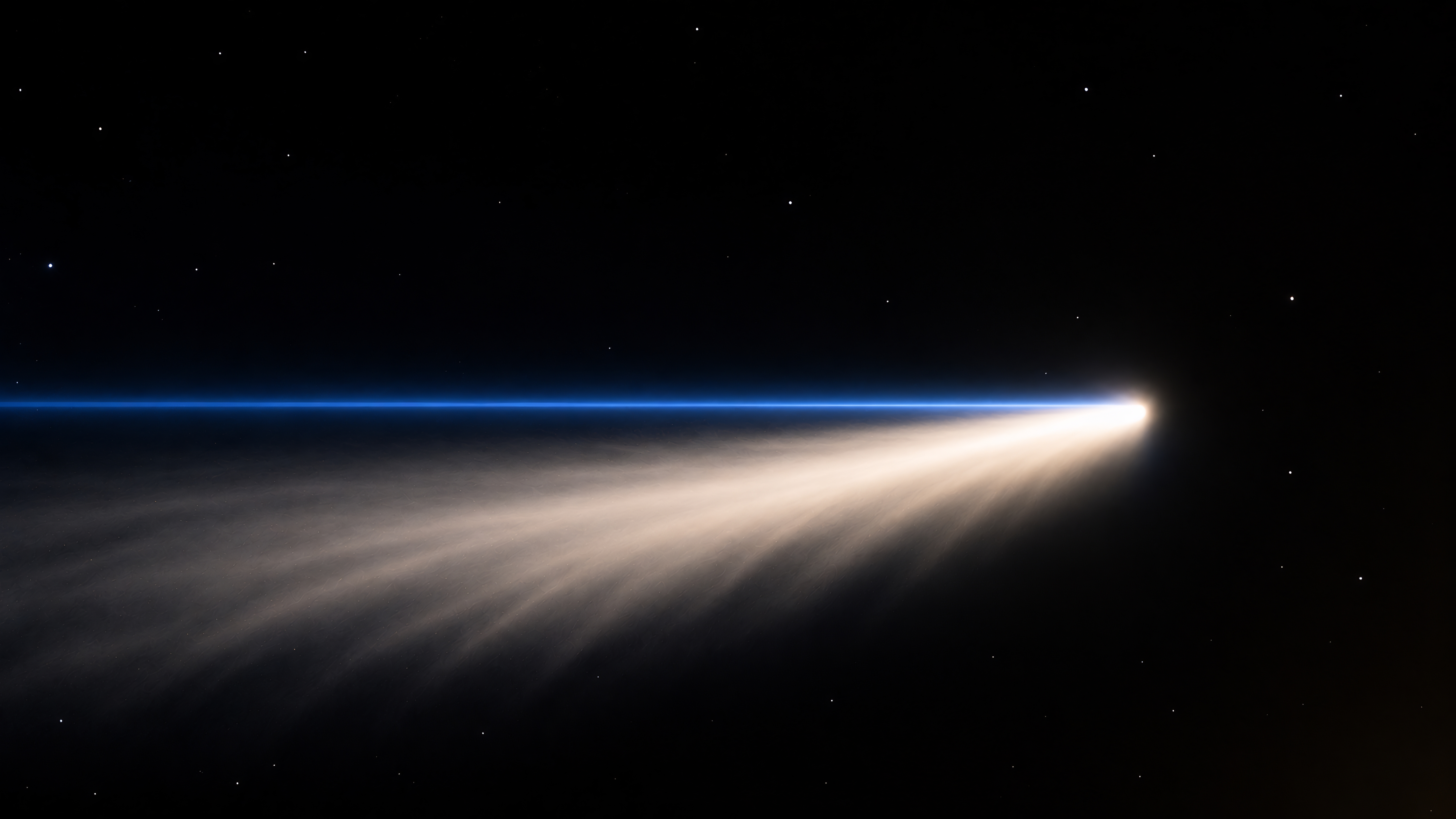
A Comet's Two Tails

A comet's blue gas tail points straight away from the Sun, while its dusty tail curves off on a path of its own. Source ↗

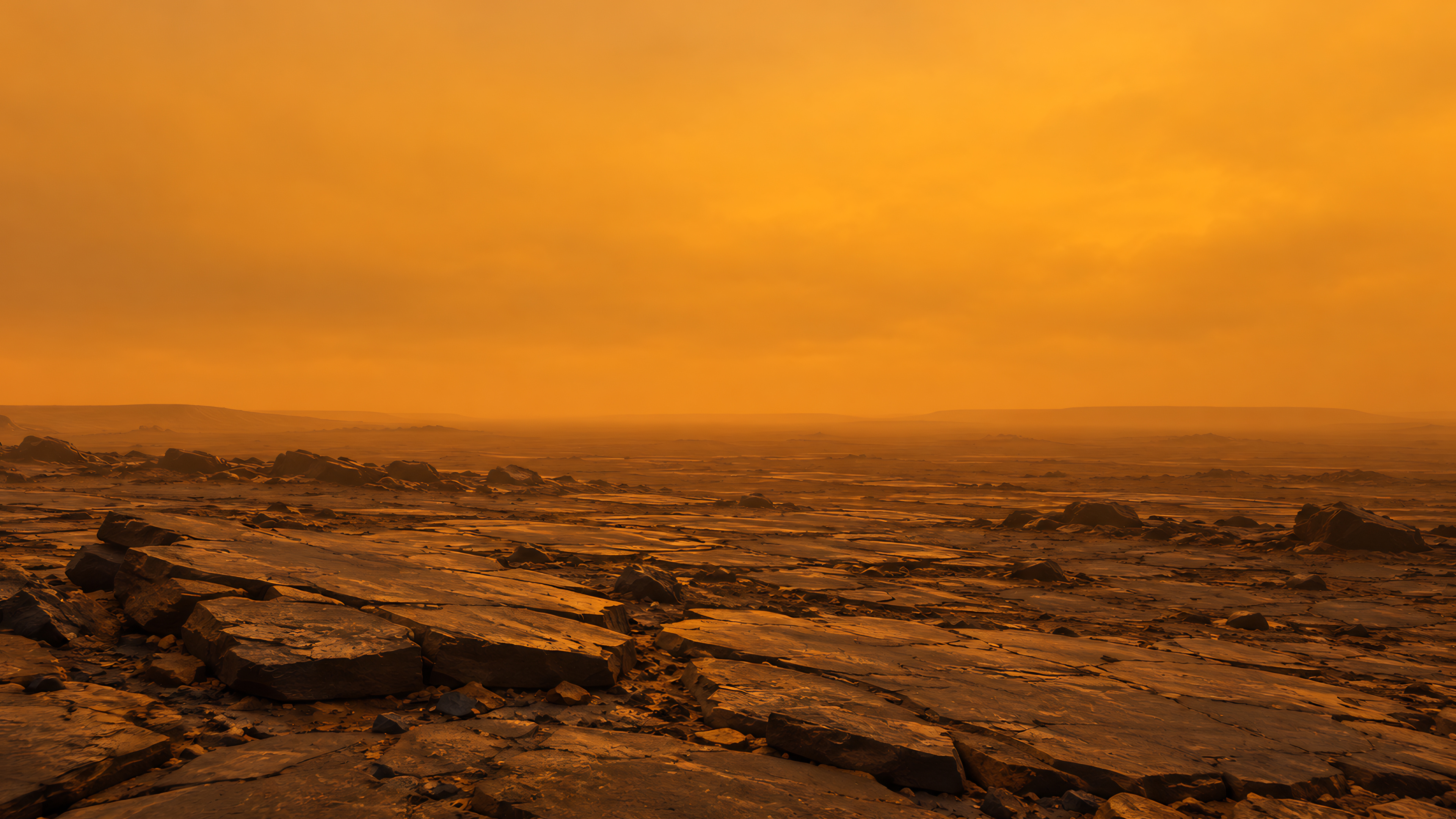
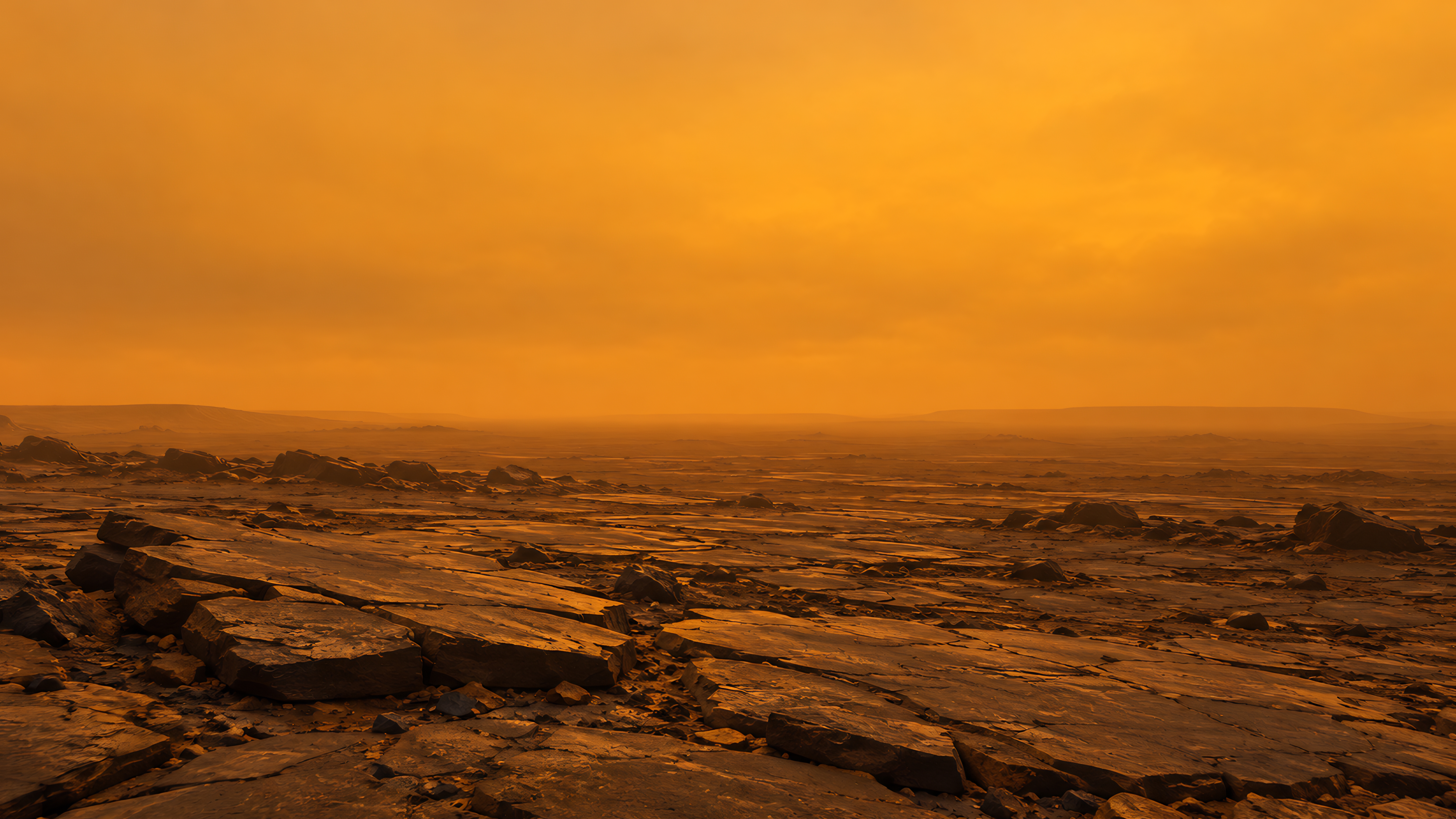
The Plains of Venus

Rocky volcanic plains under thick clouds, as the Venera landers photographed them. Venus is not a lava ocean. Source ↗

Io's Tvashtar Plume

Io's Tvashtar volcano throws up an umbrella-shaped plume. New Horizons saw one about 330 km high in 2007. Source ↗
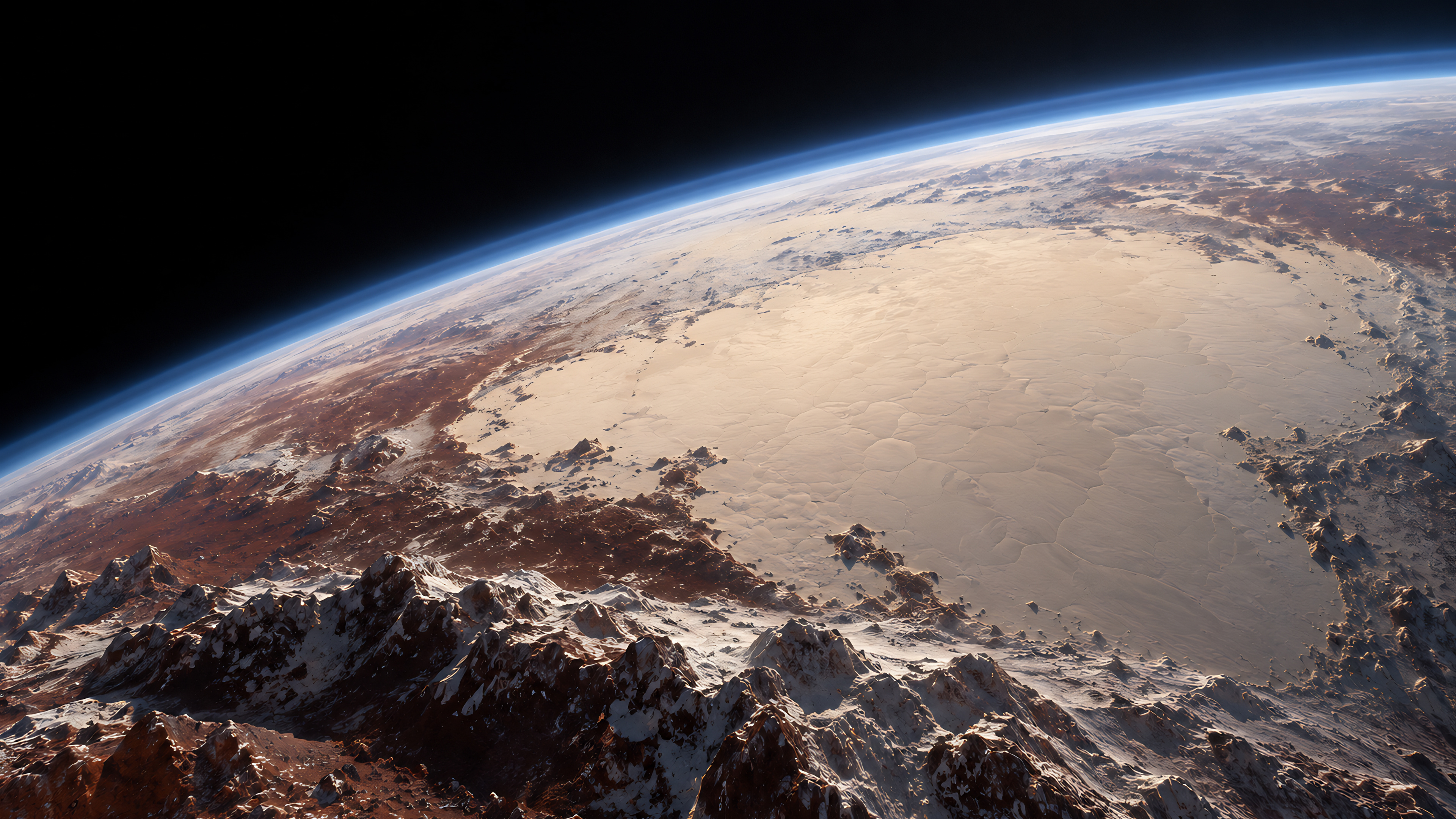
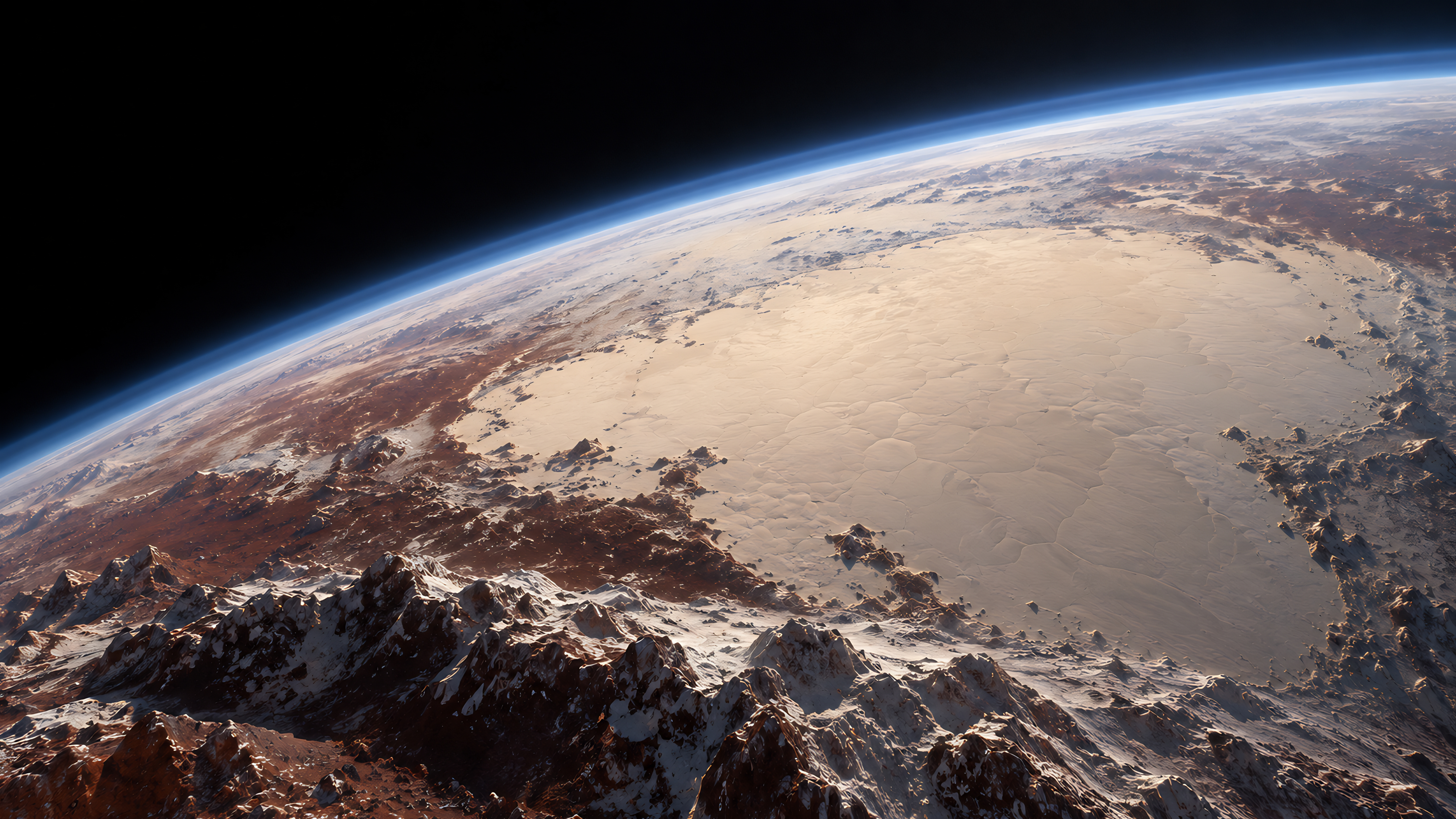
Pluto's Heart

Pluto's heart is a vast plain of nitrogen ice ringed by water-ice mountains, under the thin blue haze New Horizons found. Source ↗

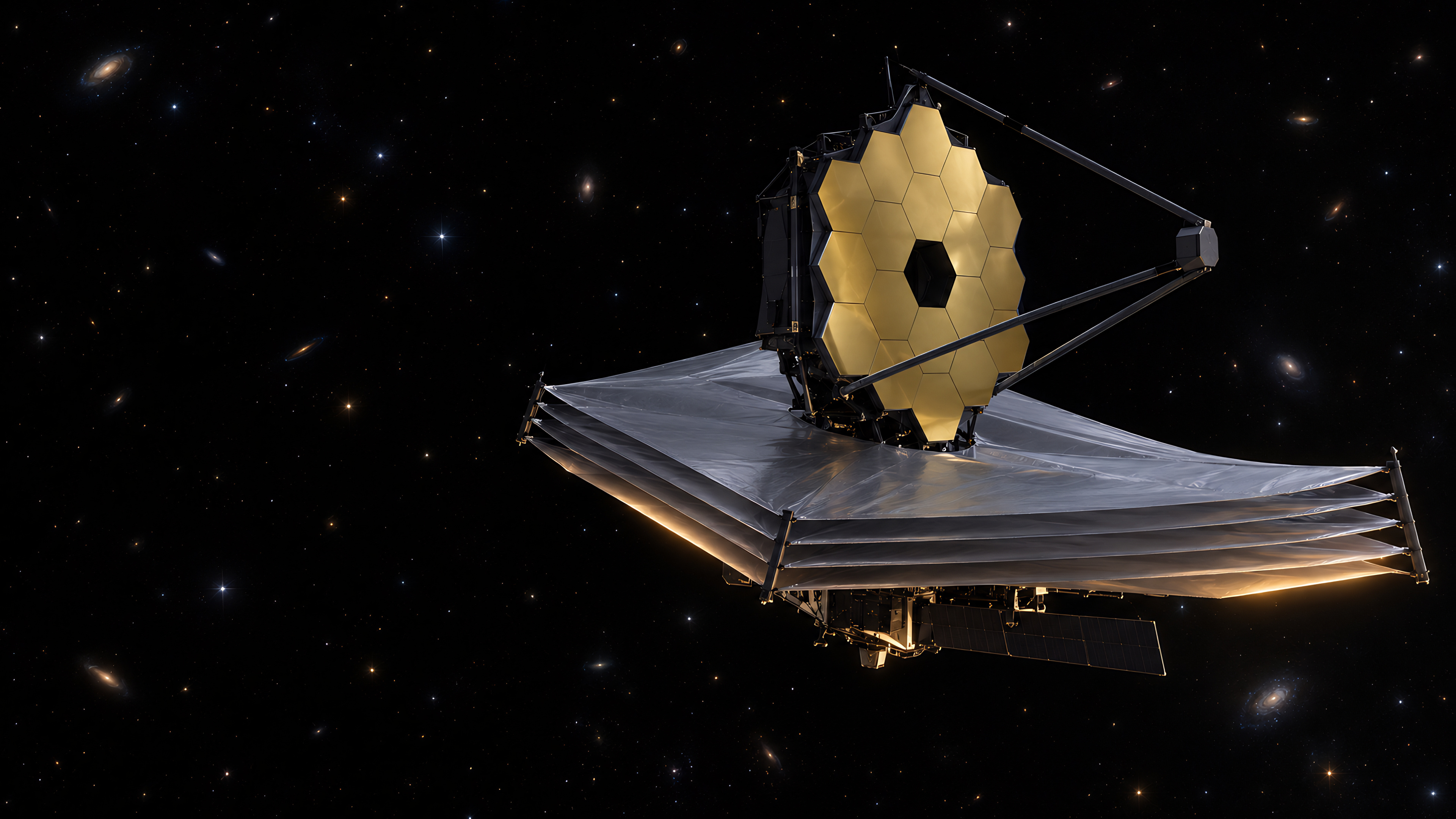
Webb at L2

The Webb telescope: 18 gold mirror segments and a five-layer sunshield that keeps its optics in the cold. Source ↗

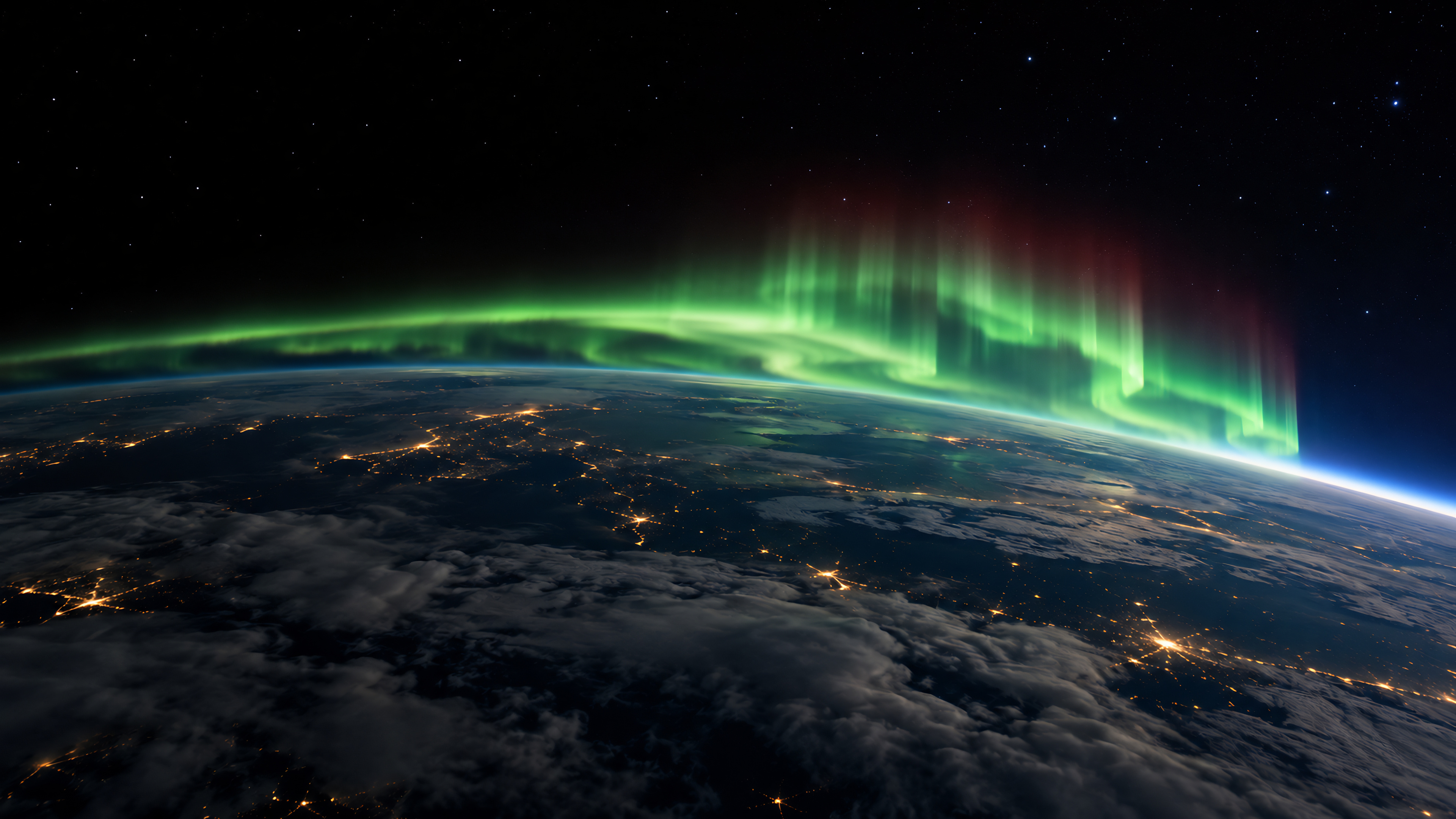
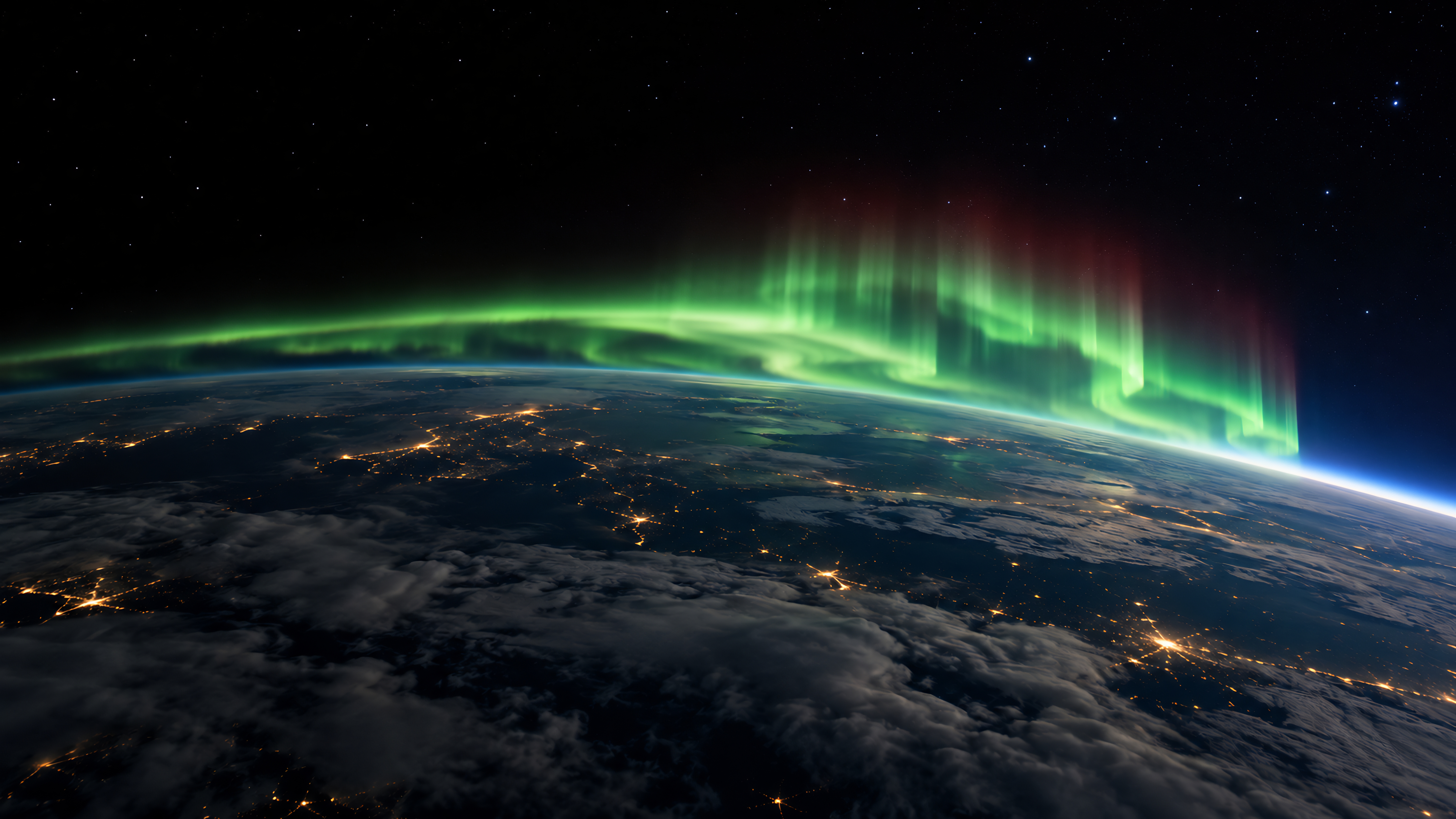
Aurora from Orbit

Green aurora curtains over Earth's night side, seen from the height of the Space Station, about 400 km up. Source ↗

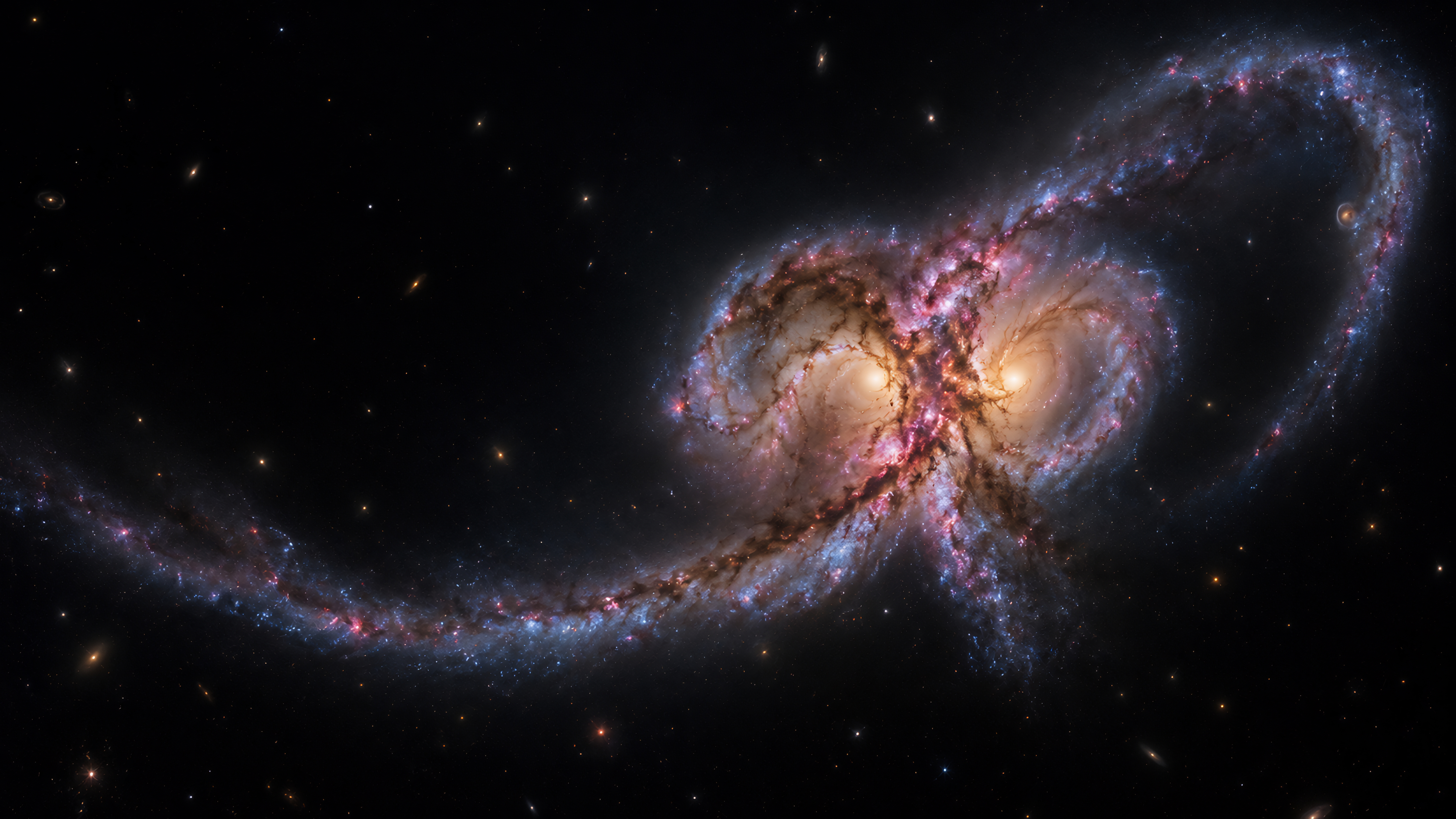
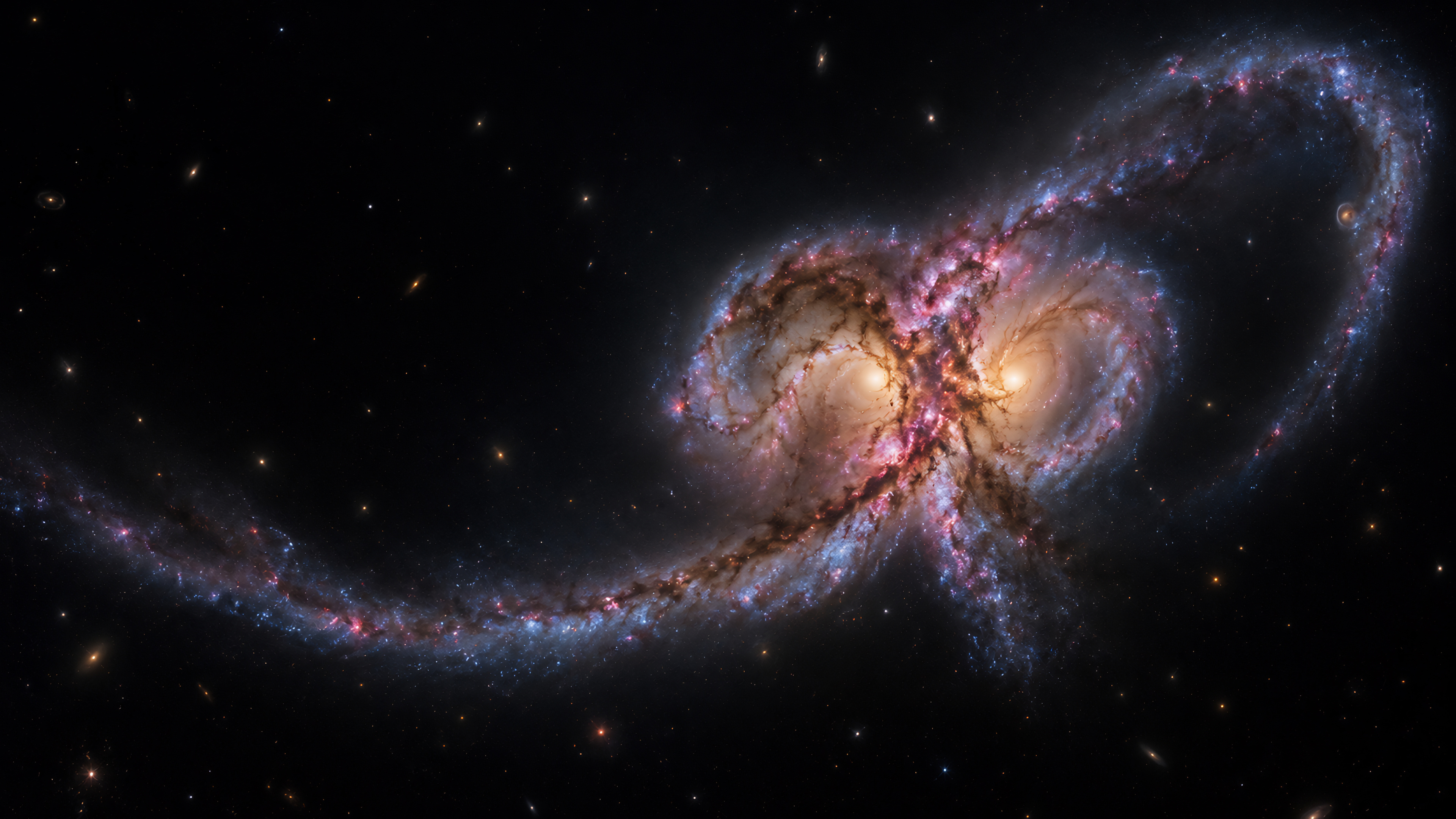
Galactic Embrace

Two merging galaxies pulled into long tails that spark new blue star clusters, modelled on the Antennae galaxies. Source ↗

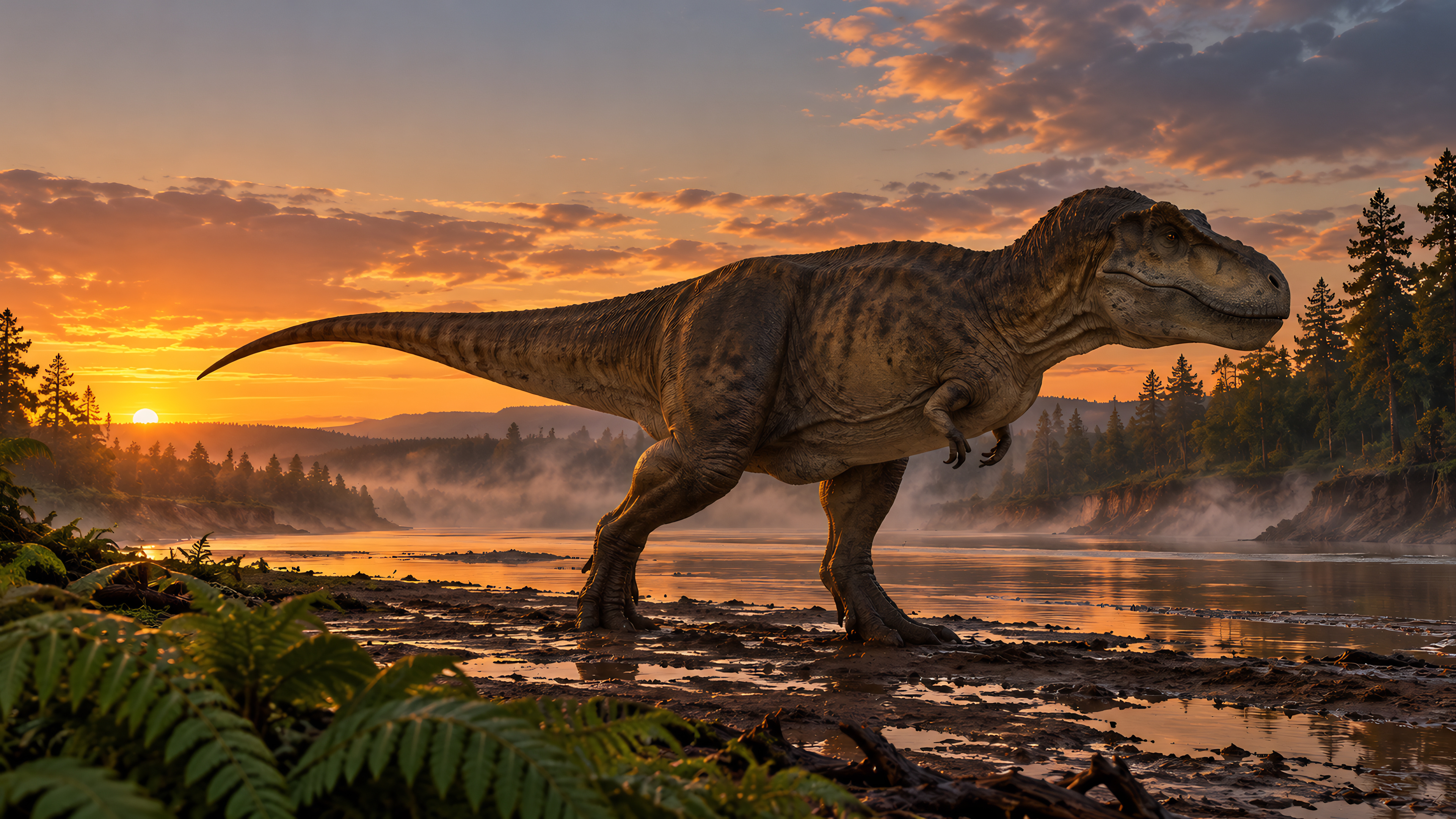
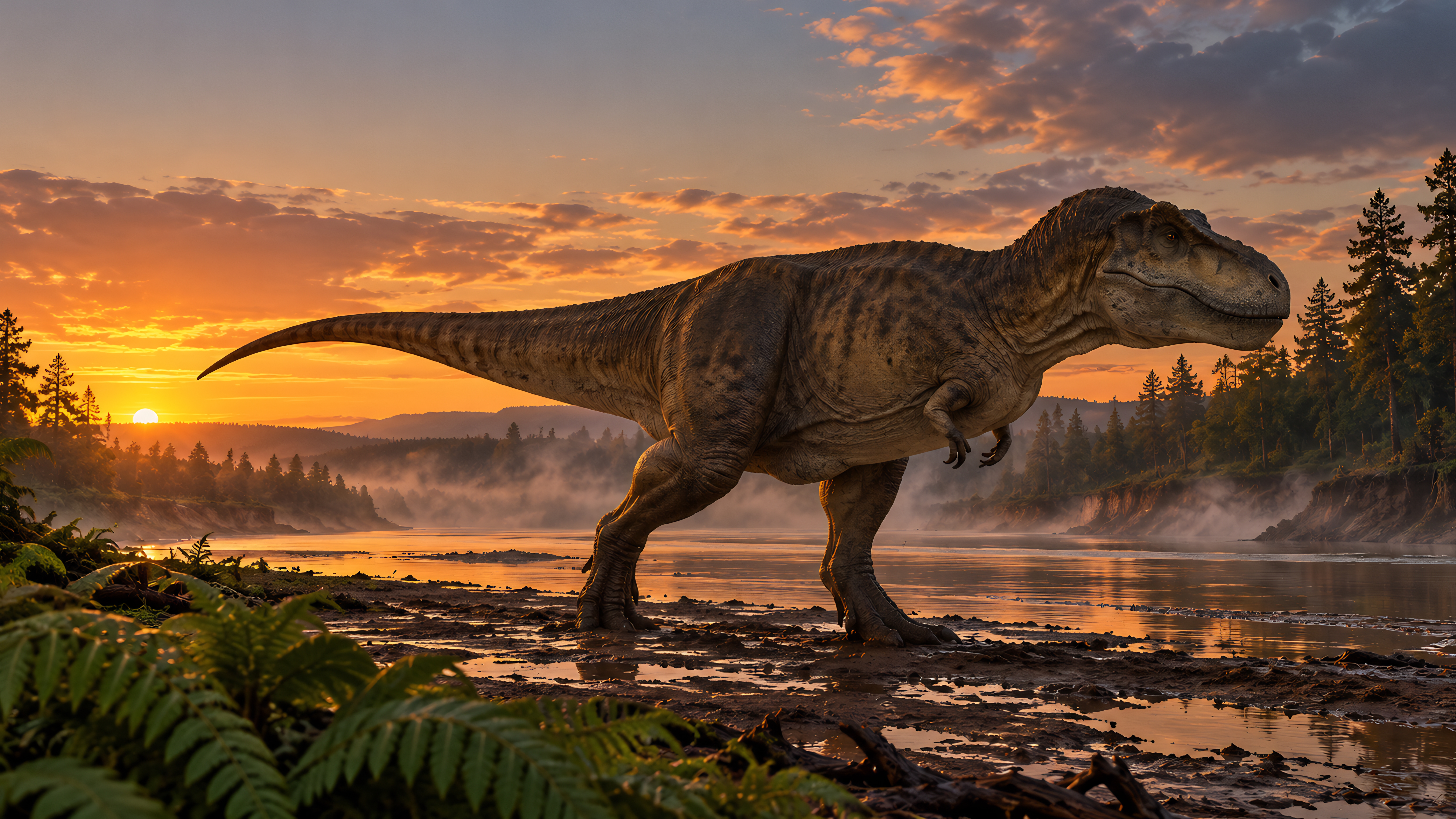
T. rex at Hell Creek

Tyrannosaurus at the very end of the age of dinosaurs, with lips covering its teeth as a 2023 study suggests. Colours are a best guess. Source ↗

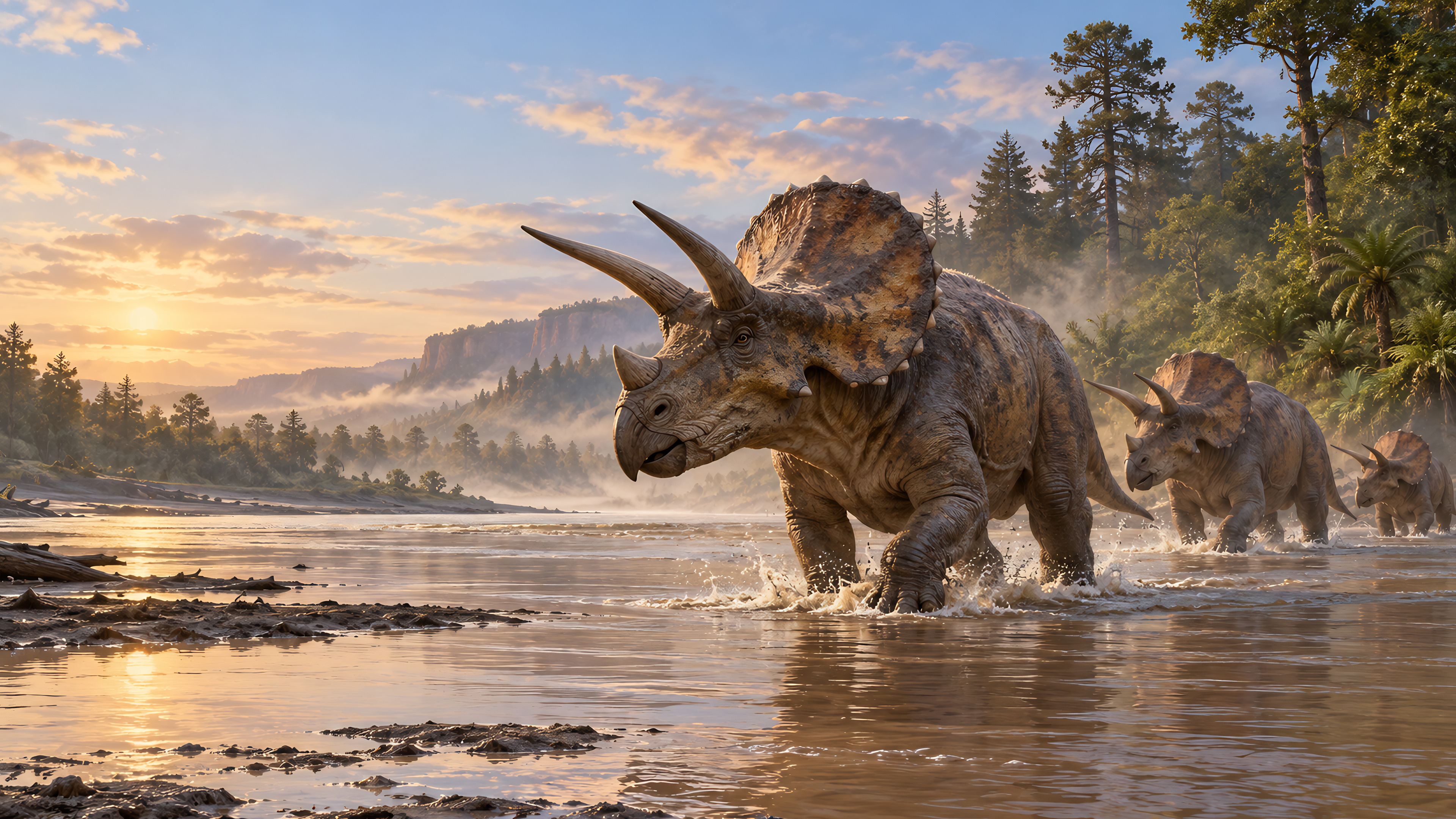
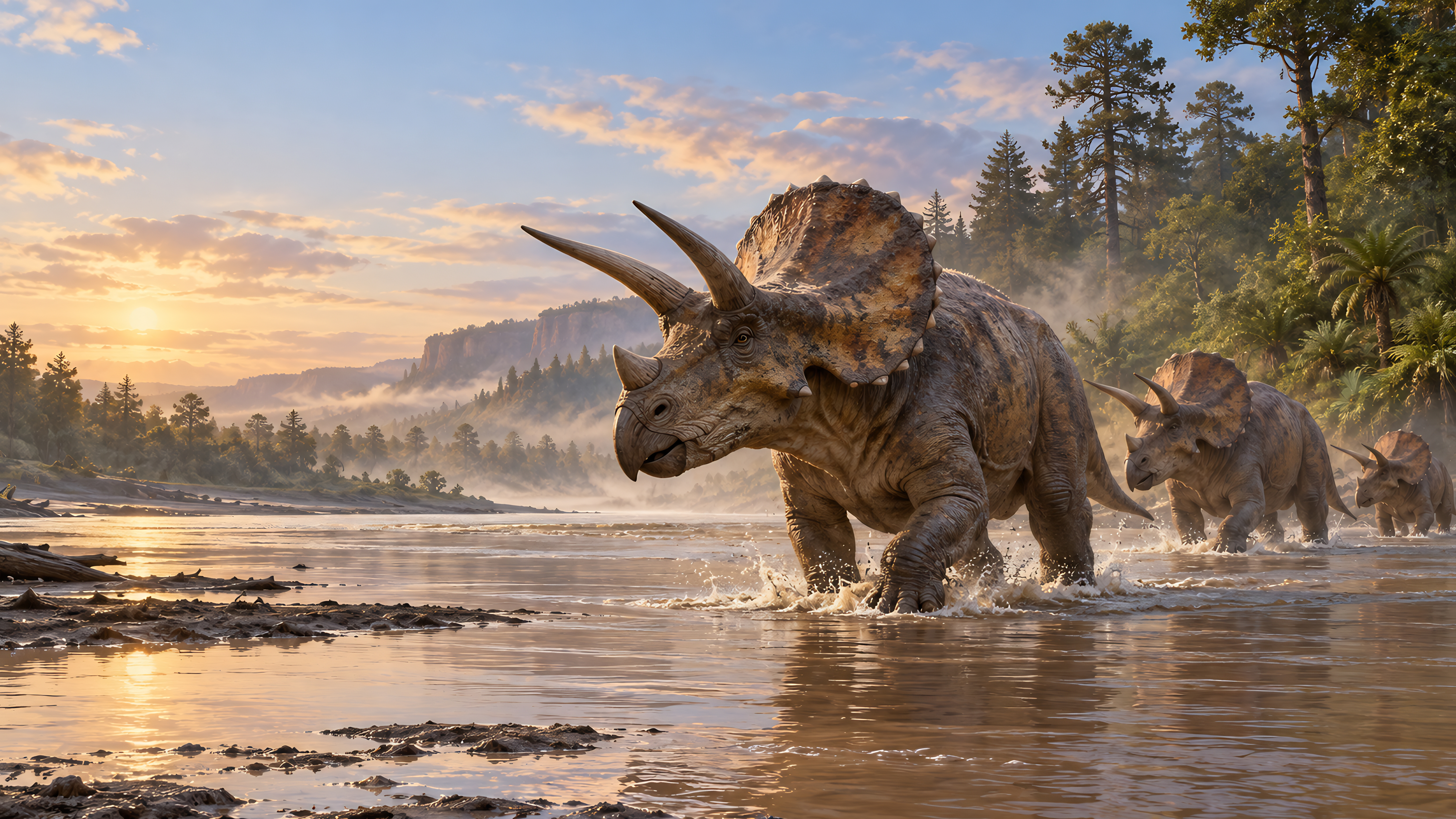
Triceratops Crossing

Triceratops had two brow horns, a nose horn and a solid frill, and lived in western North America at the very end of the Cretaceous. Source ↗

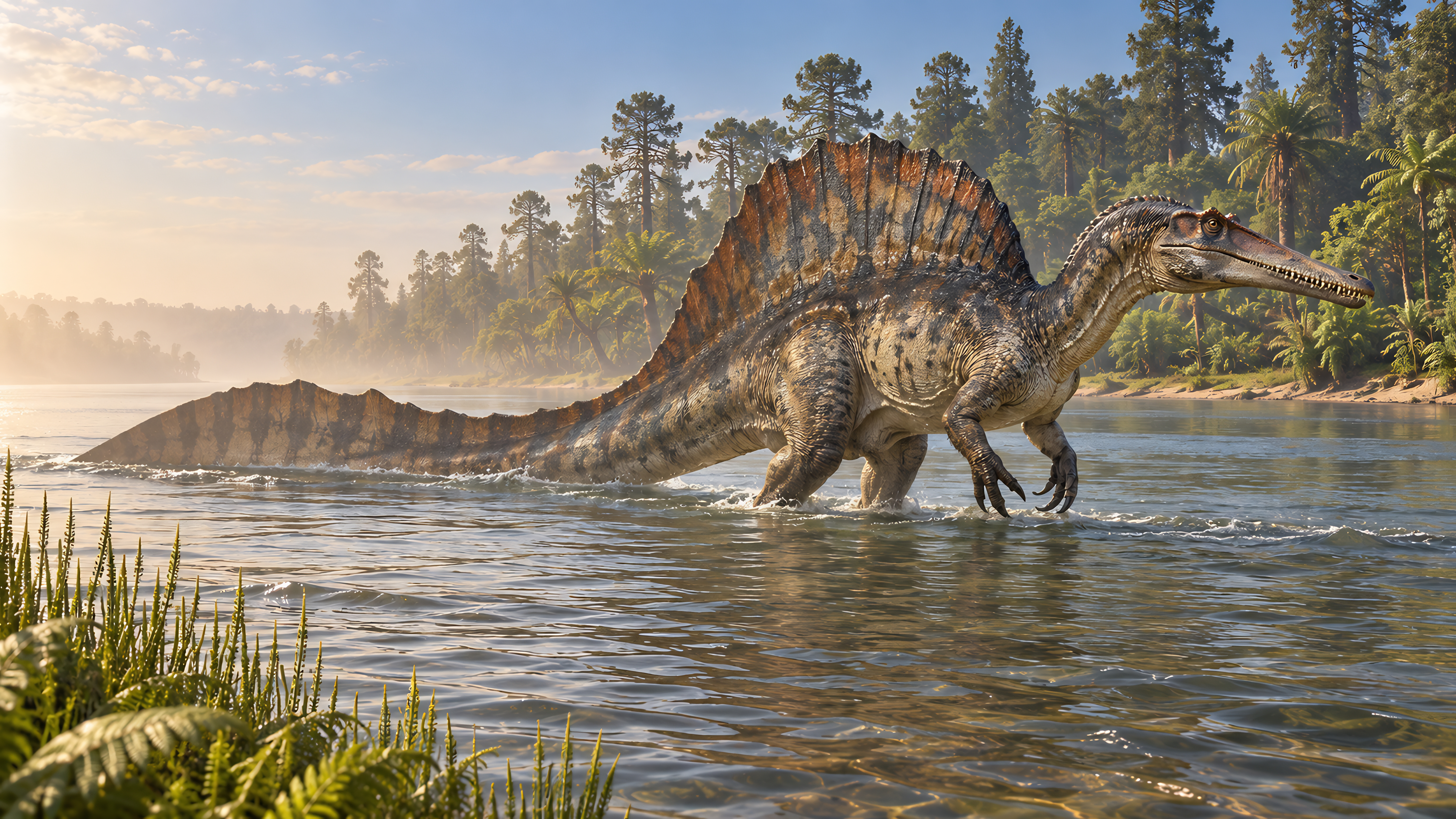
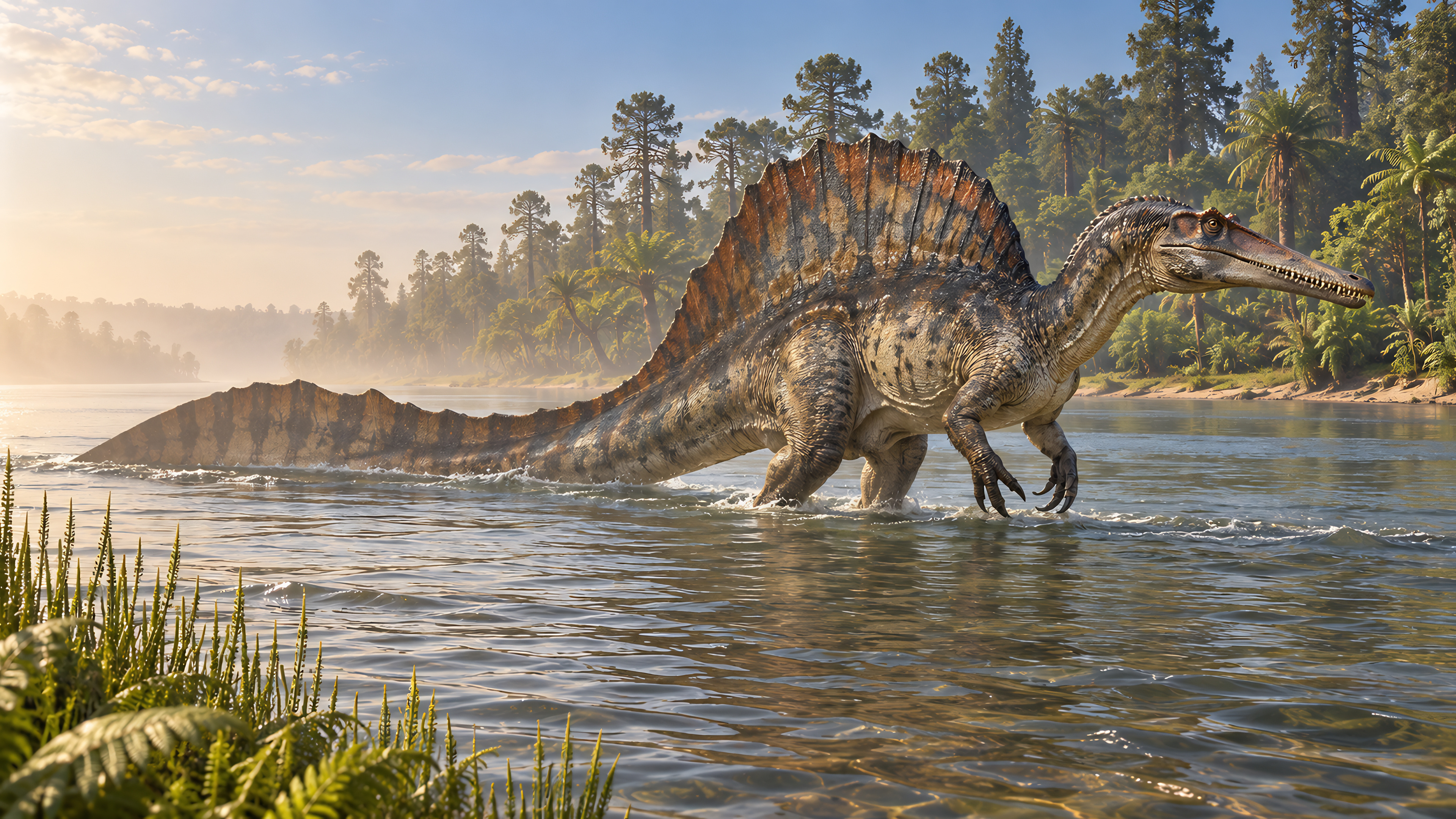
Spinosaurus Wading

Spinosaurus with the deep paddle tail and short hind legs of modern reconstructions. How well it swam is still debated. Source ↗
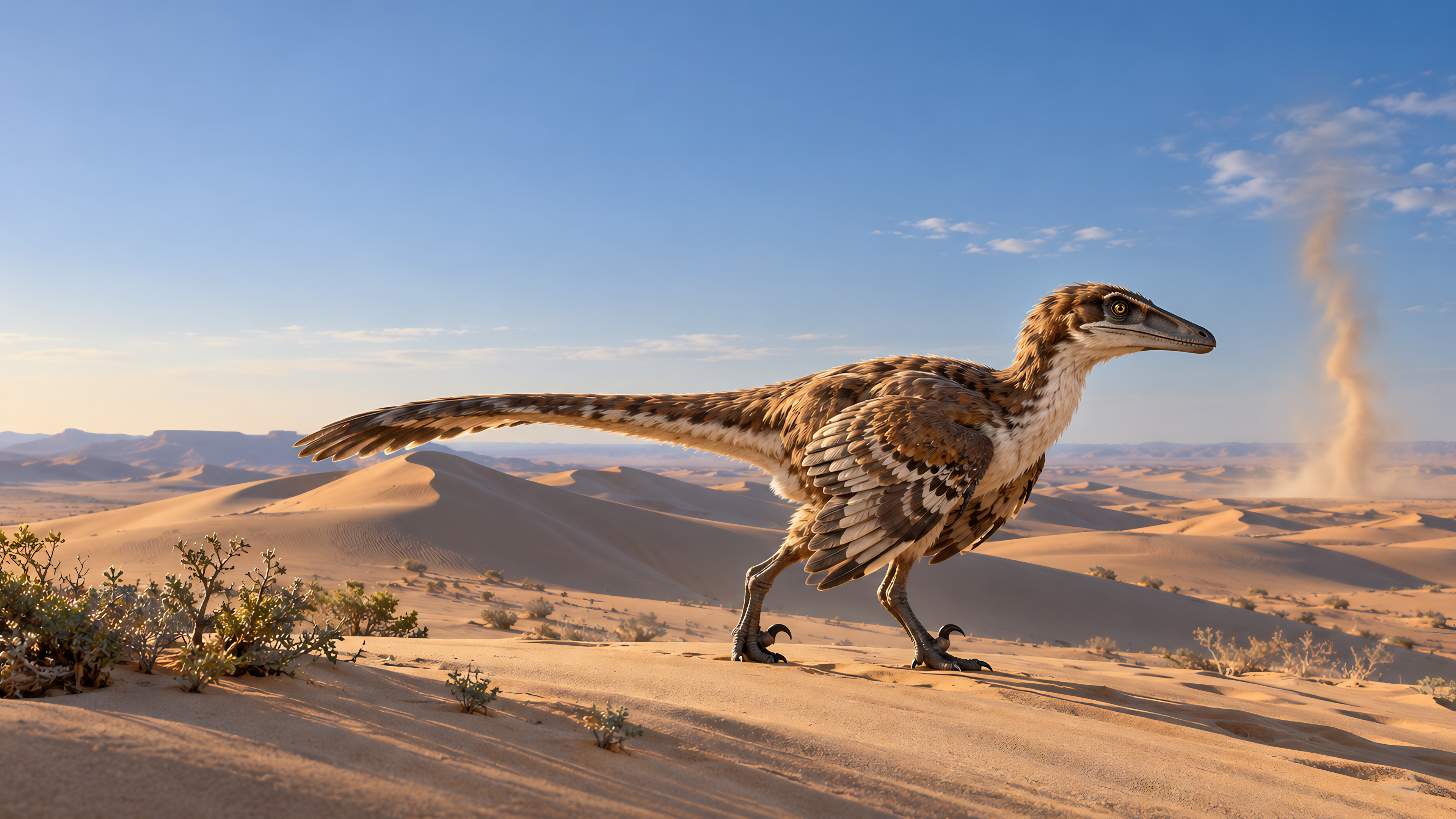
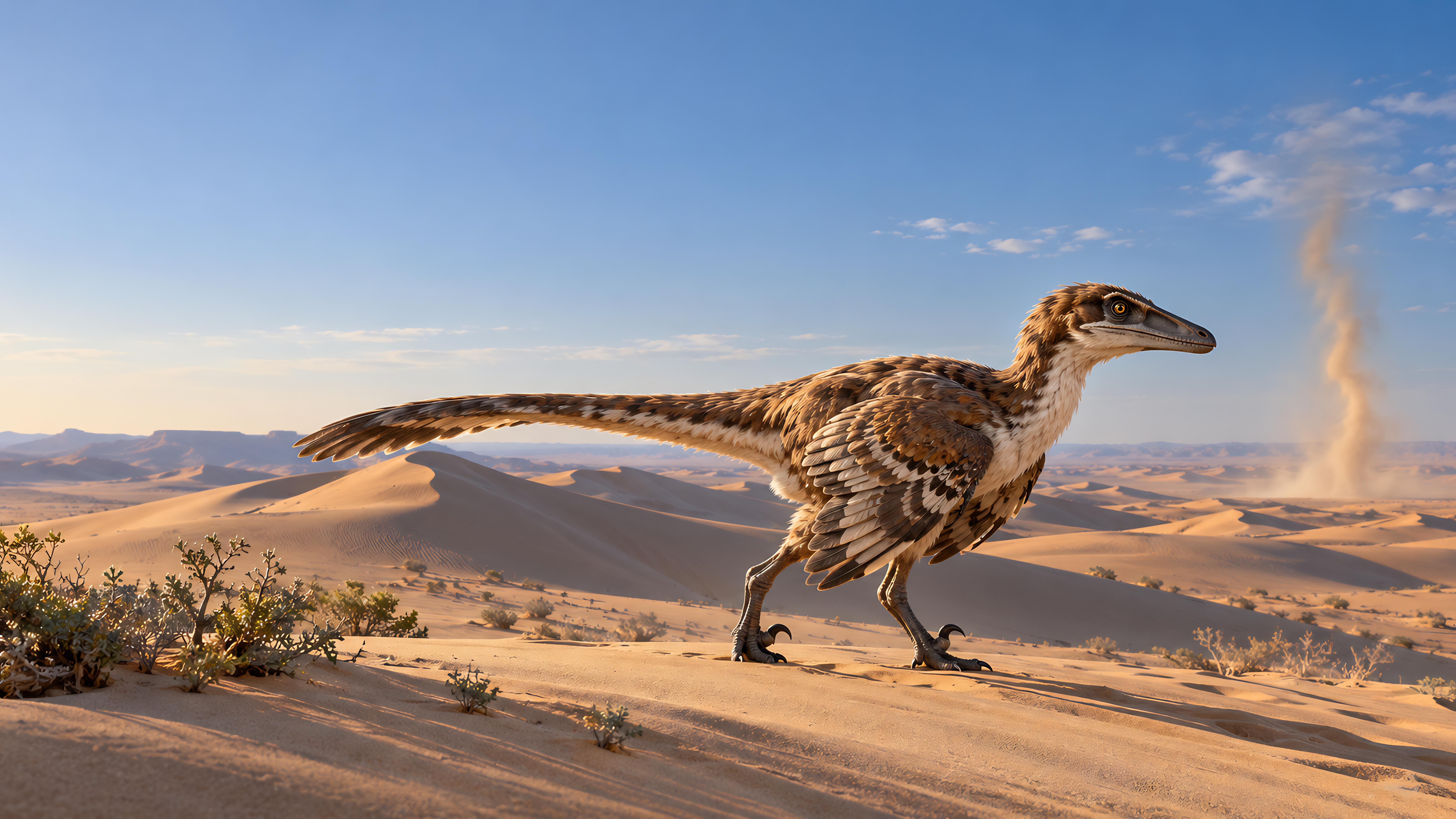
Velociraptor in the Dunes

The real Velociraptor was feathered and turkey-sized, about 2 m long with its tail, and lived in the deserts of Mongolia. Source ↗

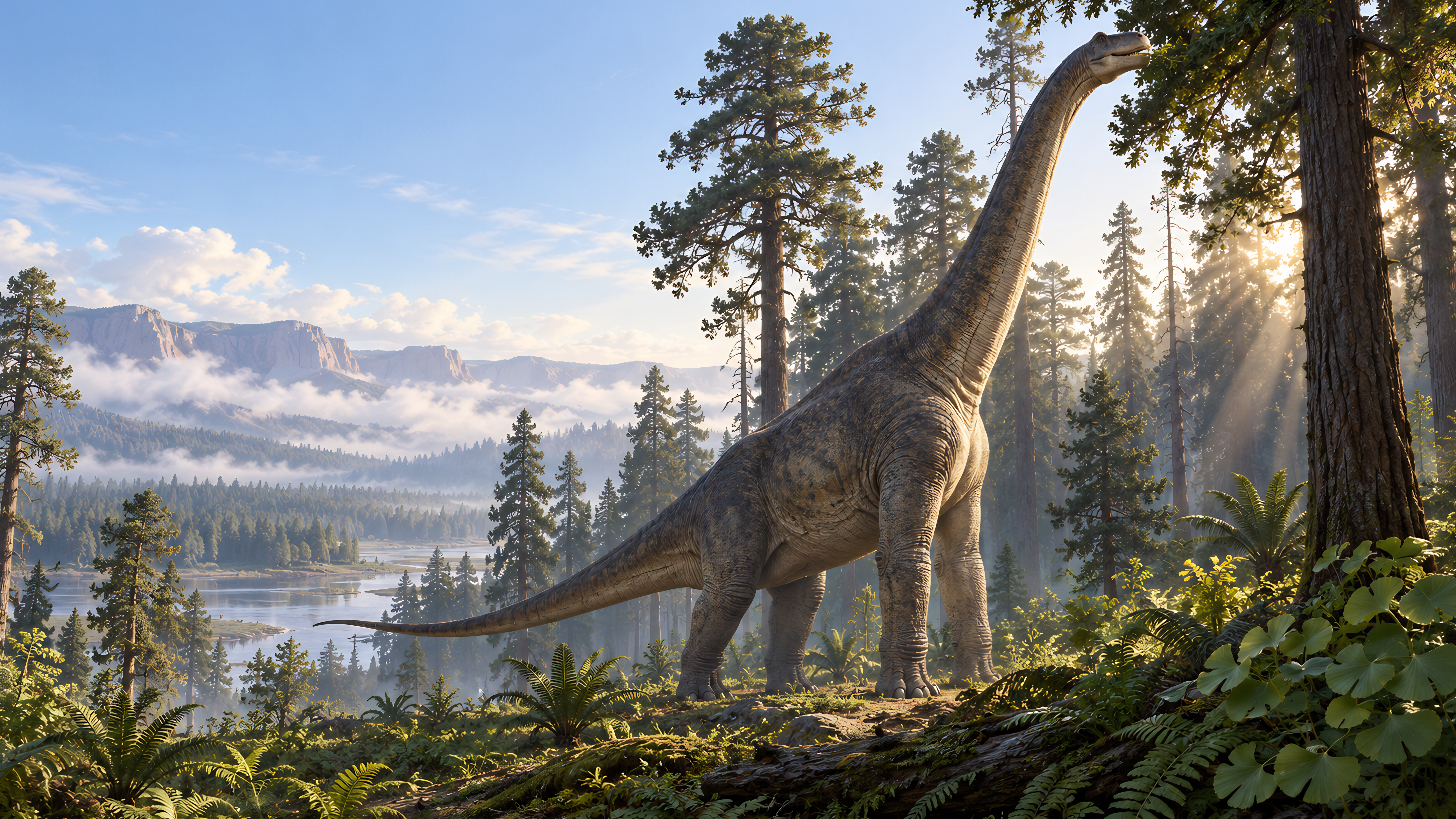
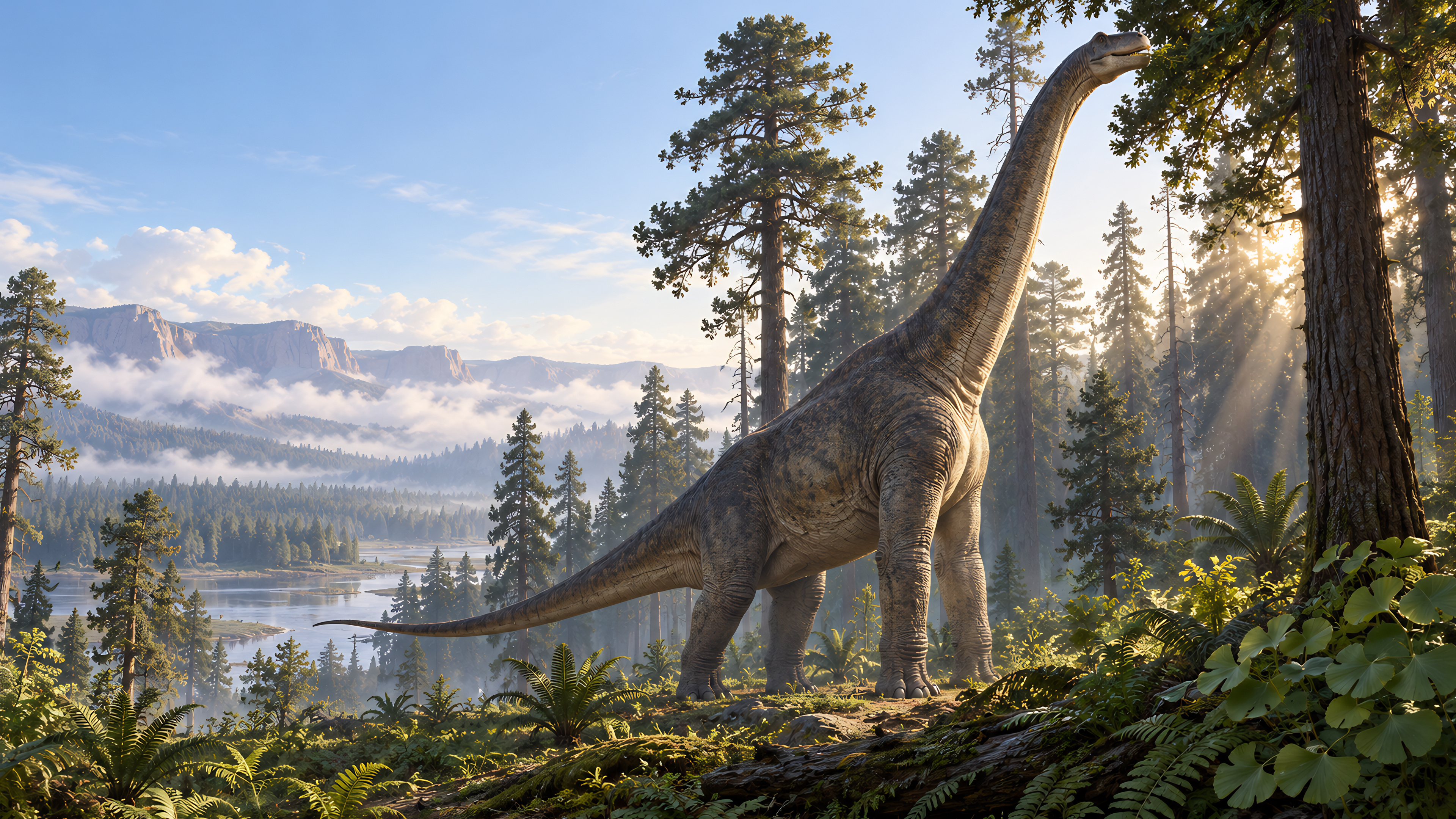
Brachiosaurus in the Canopy

Brachiosaurus had longer front legs than back legs, lifting its shoulders high to browse the Jurassic treetops. Source ↗
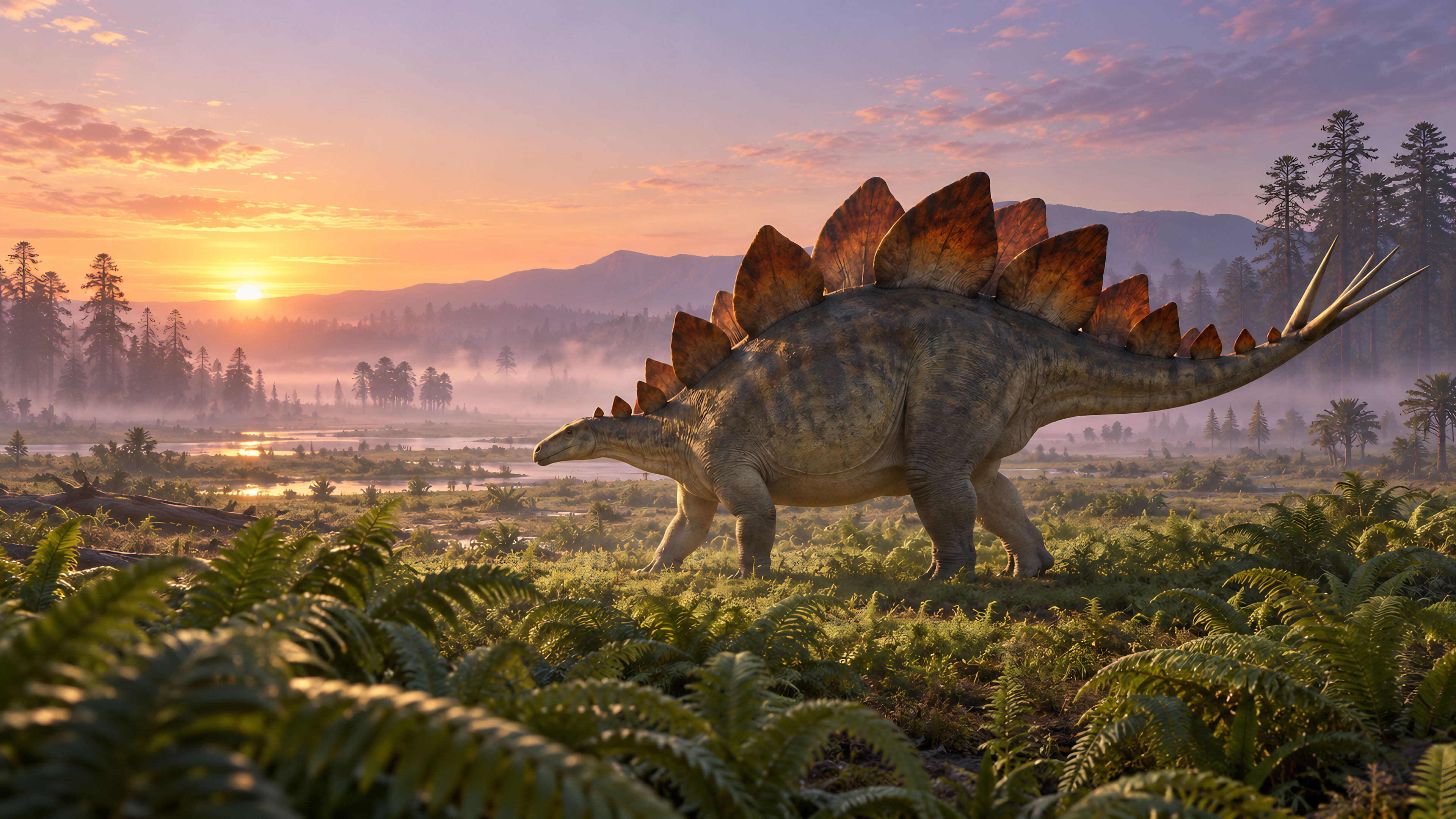
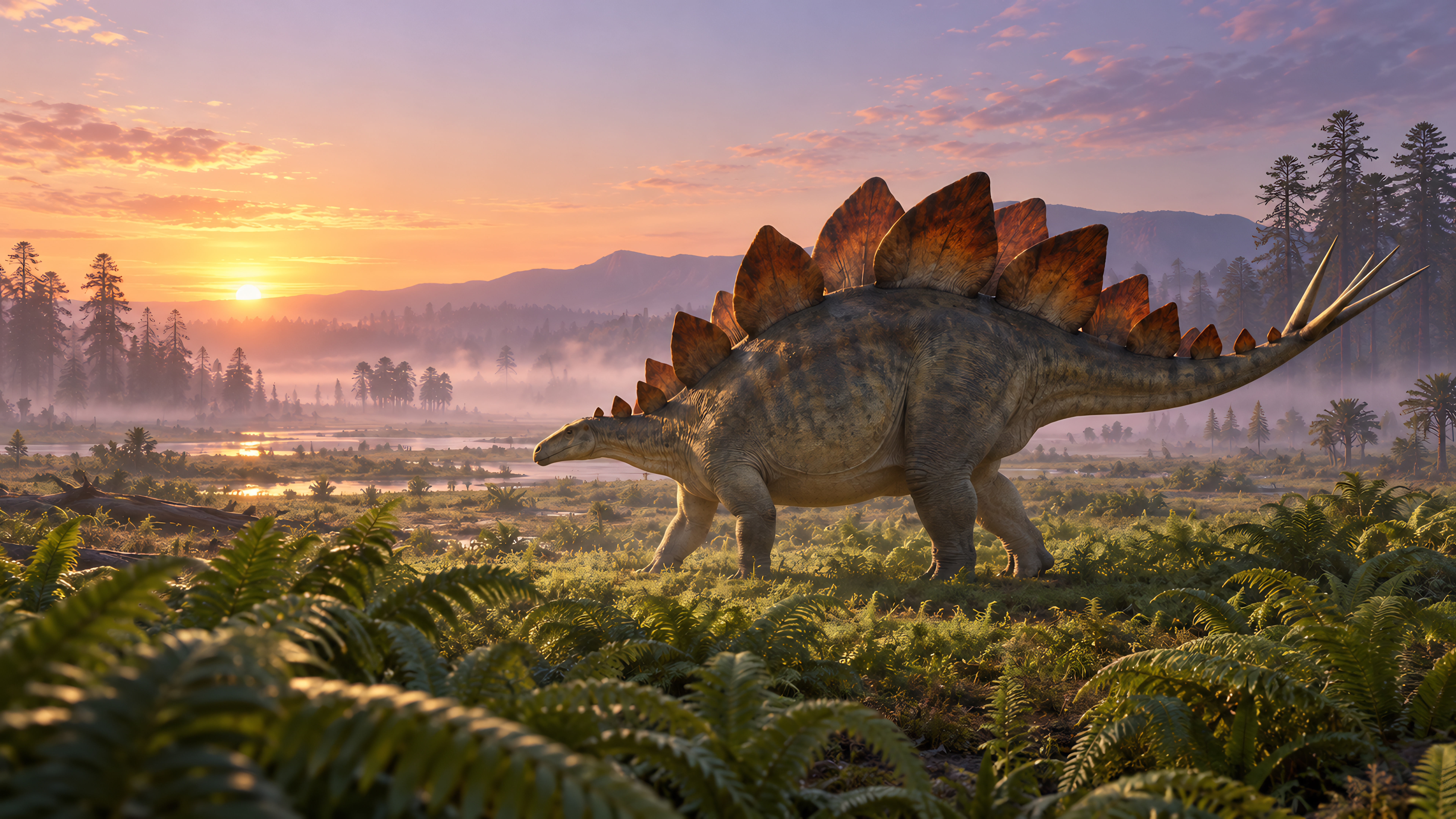
Stegosaurus at Sunrise

Stegosaurus with alternating back plates and paired tail spikes, among ferns: grass lawns did not exist yet. Source ↗

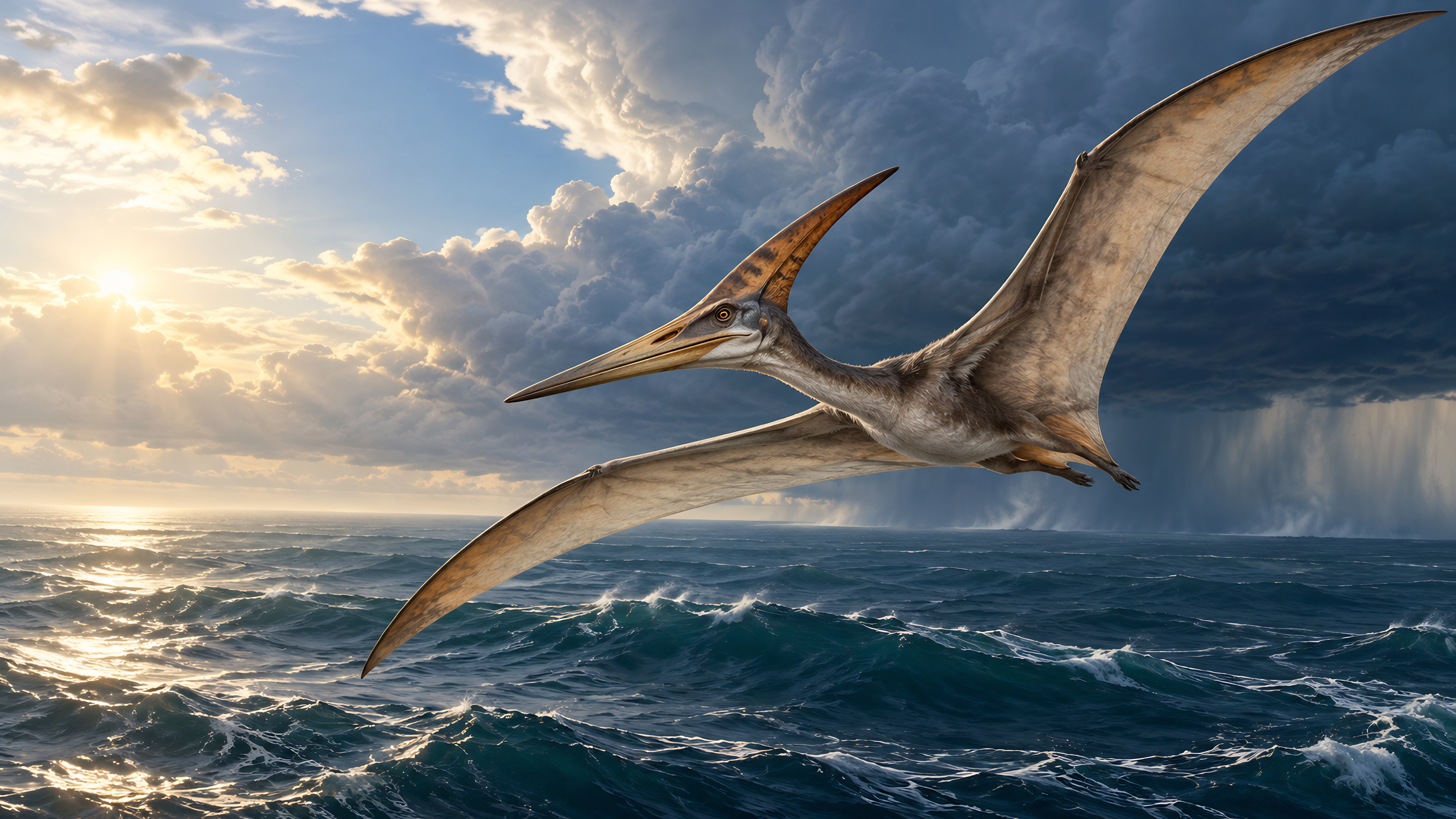
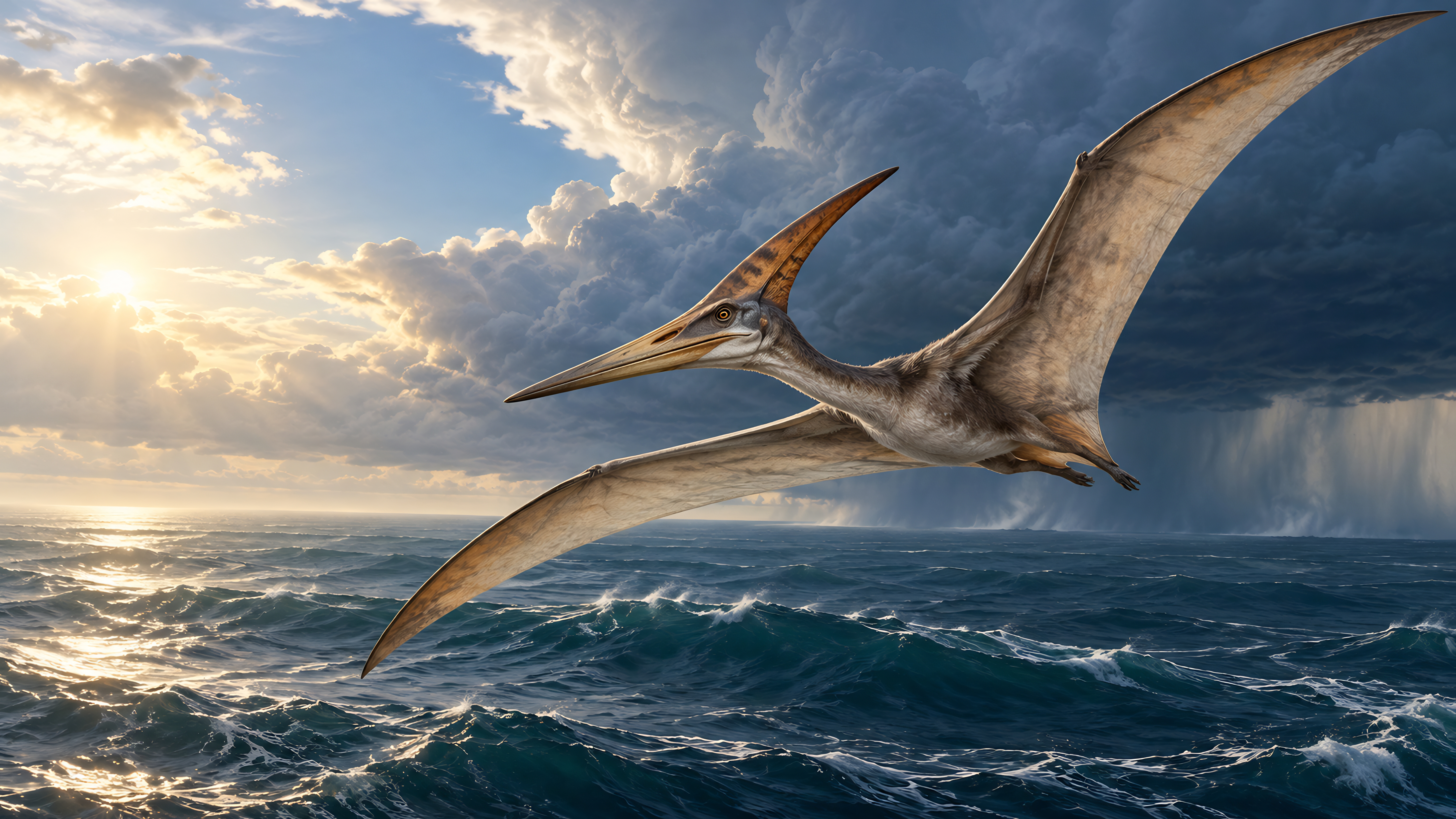
Pteranodon over the Seaway

Pteranodon was a toothless flying reptile, not a dinosaur, over the inland sea that once split North America. Source ↗

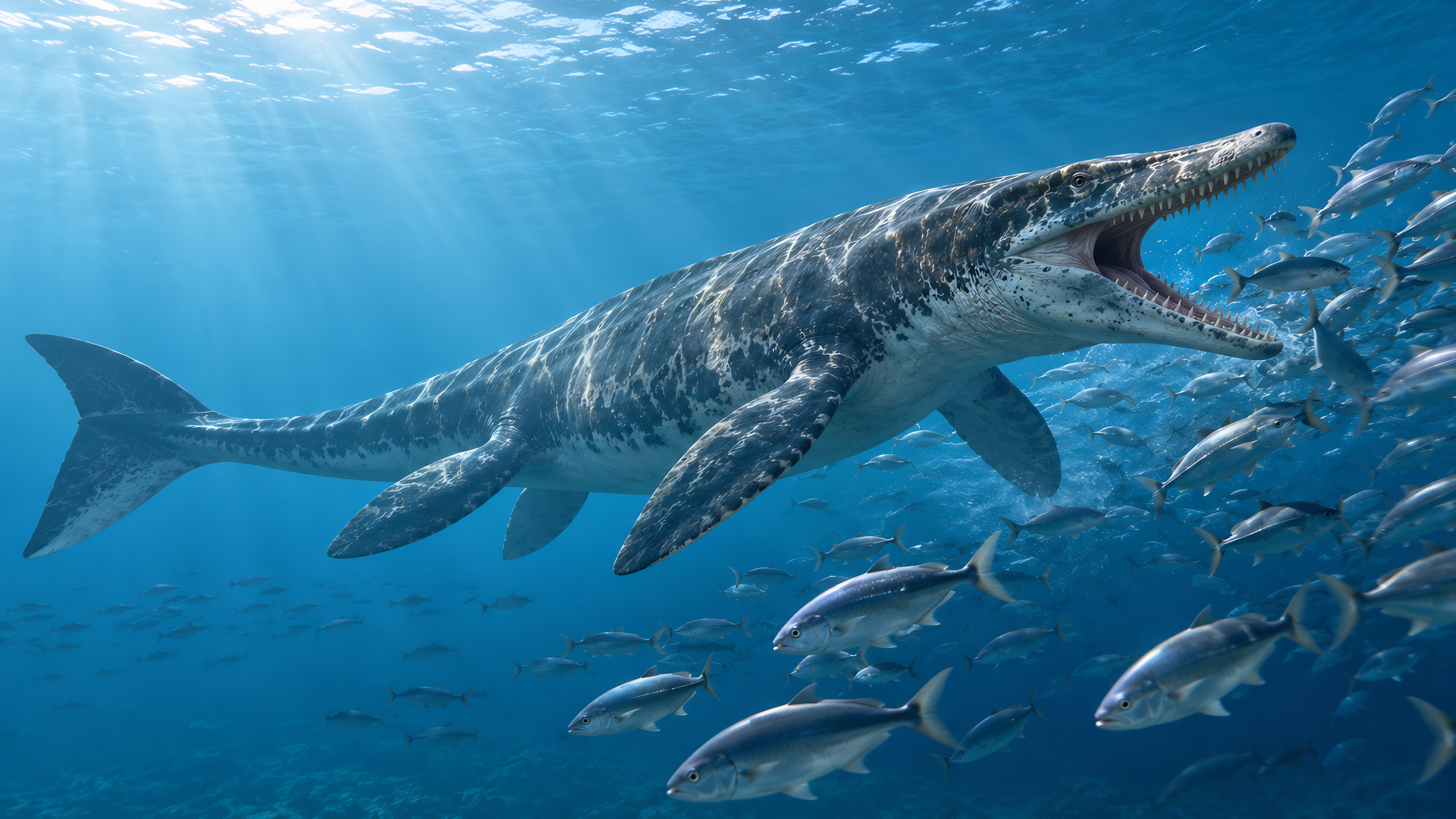
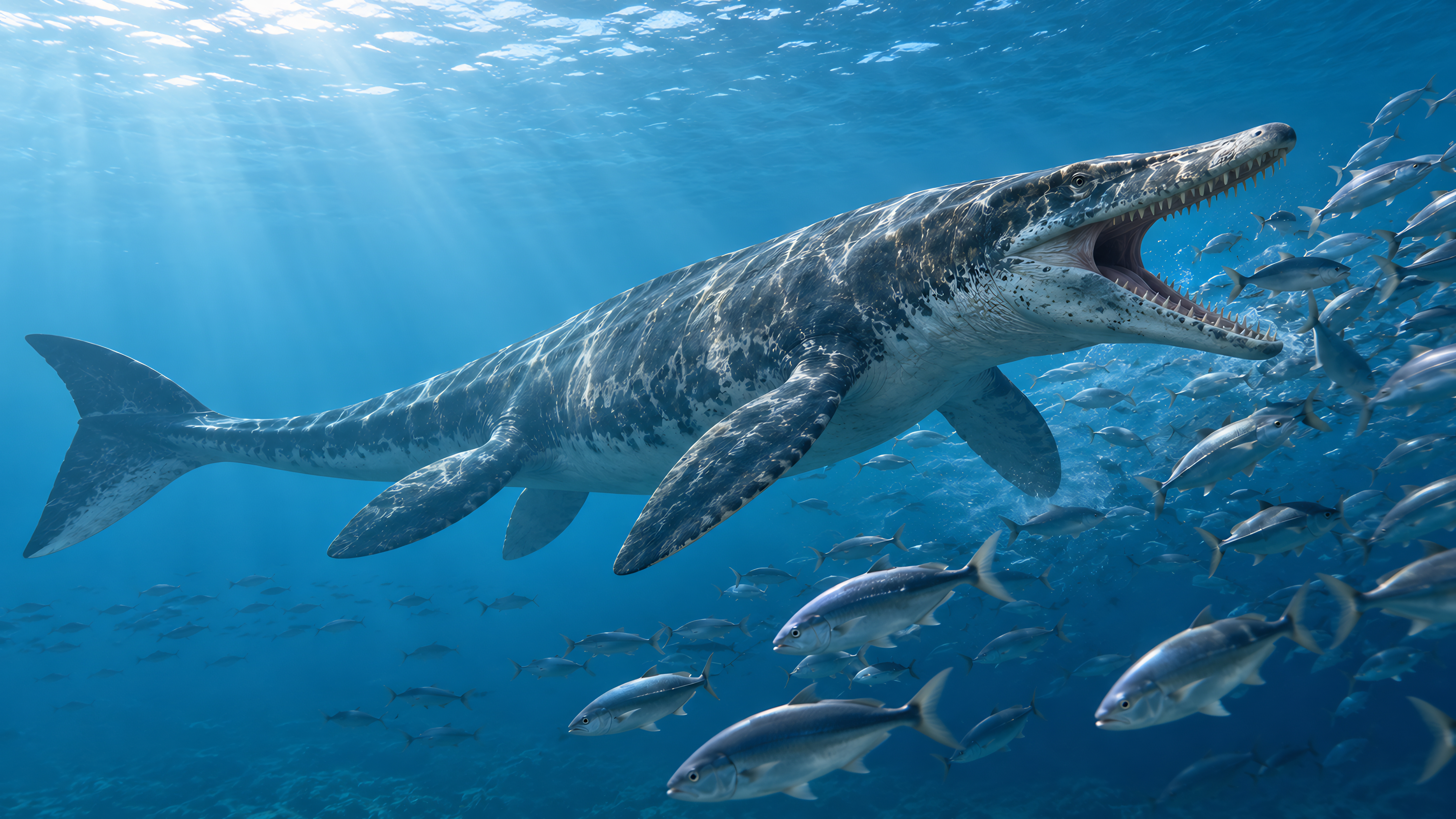
Tylosaurus Hunting

Tylosaurus was a giant sea-going lizard with four paddles. Its tail fin is inferred from fossils of close relatives. Source ↗

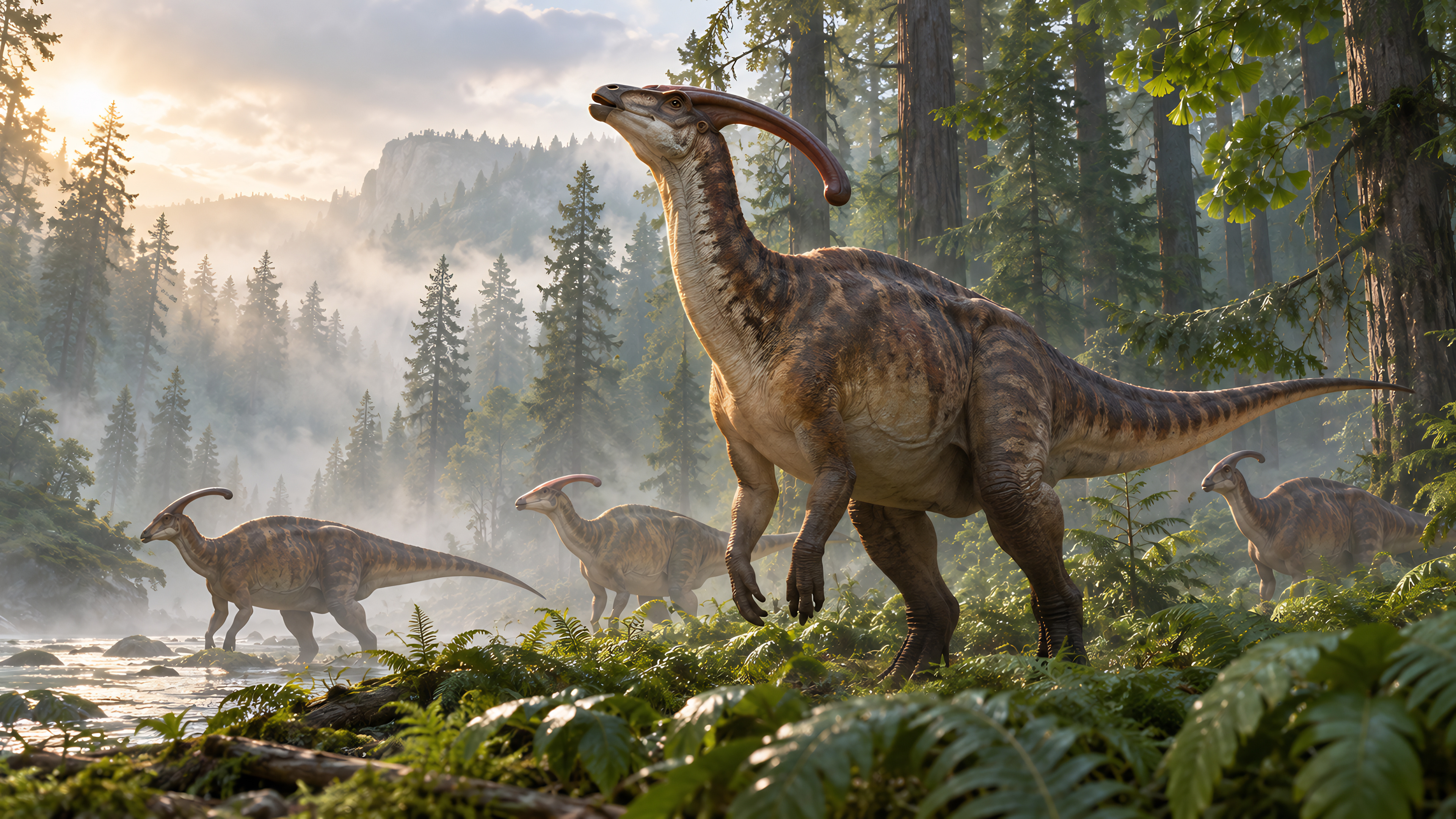
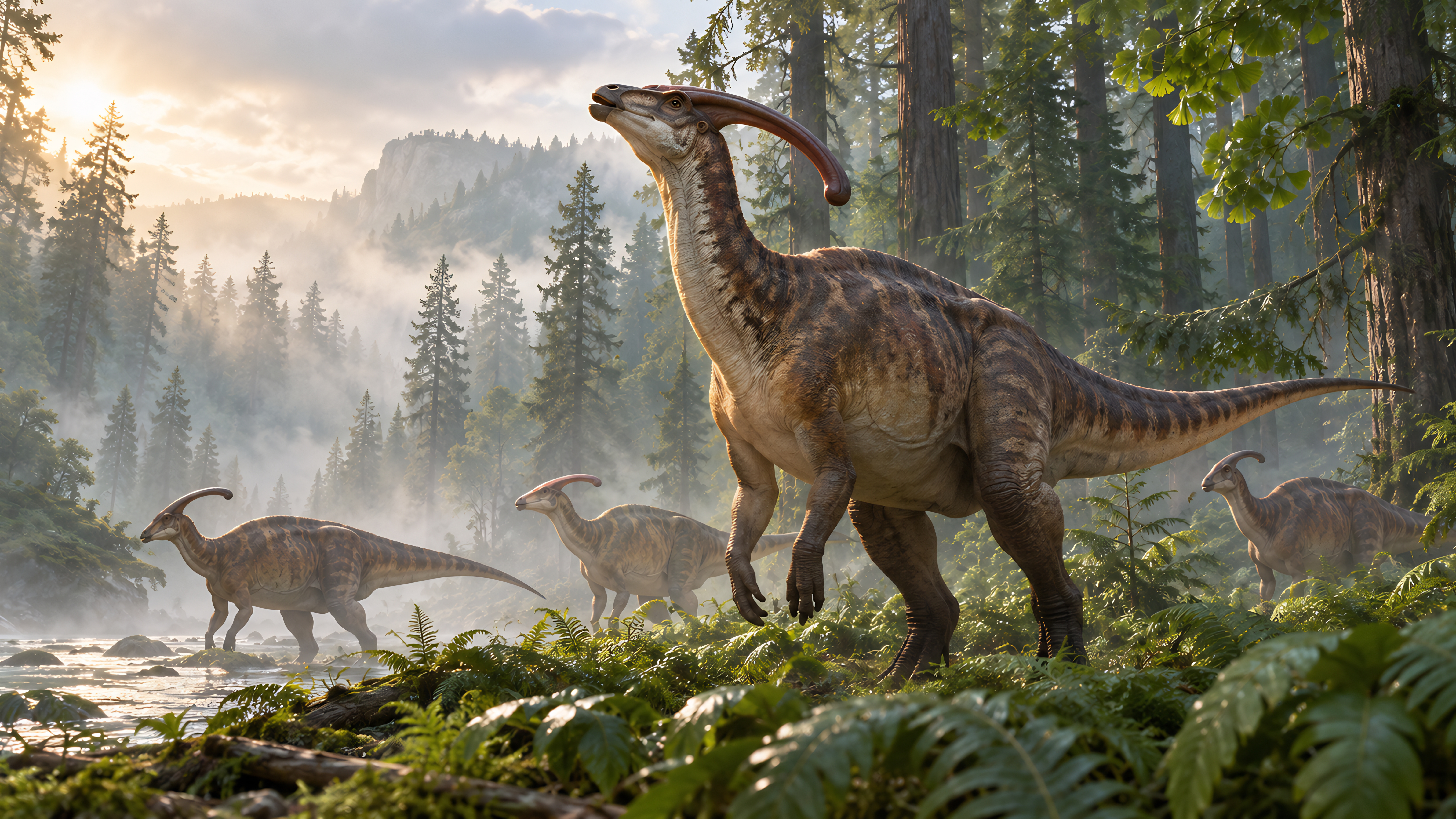
Parasaurolophus Calling

Parasaurolophus had a long hollow crest that may have worked like a horn for deep calls. Source ↗

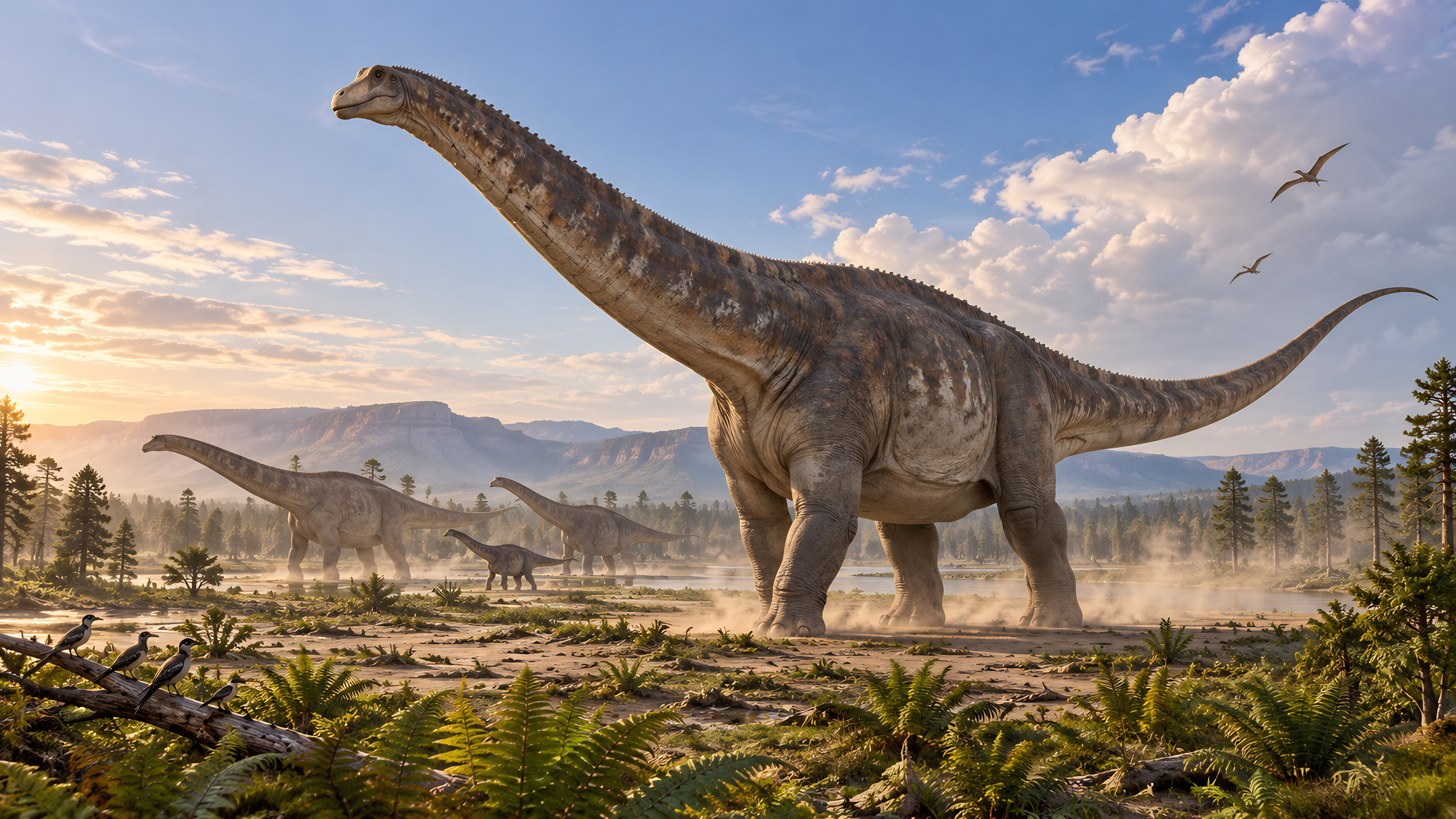
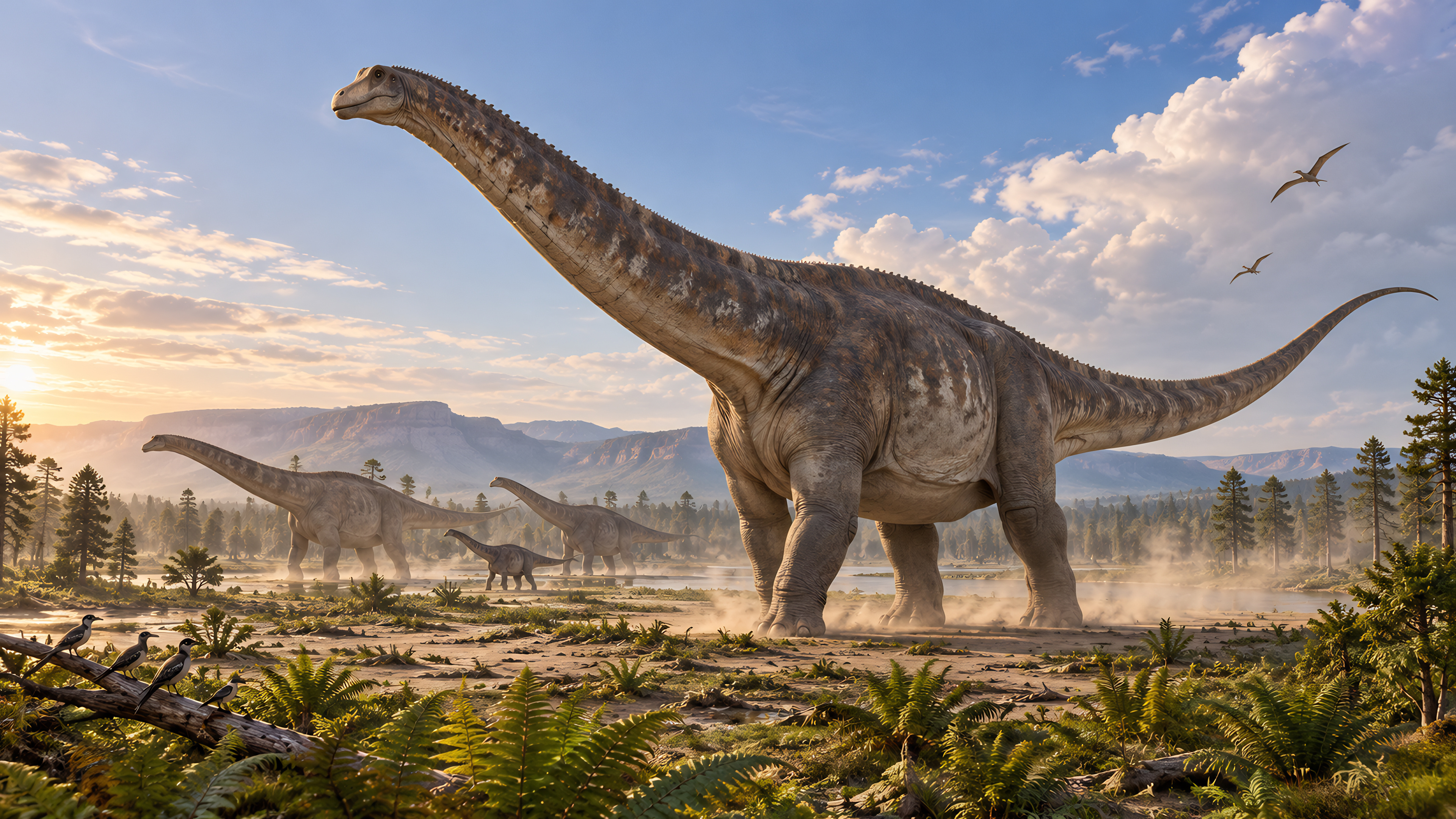
The Argentinosaurus March

One of the largest animals ever to walk the Earth. It is known only from partial bones, so its exact size is uncertain. Source ↗
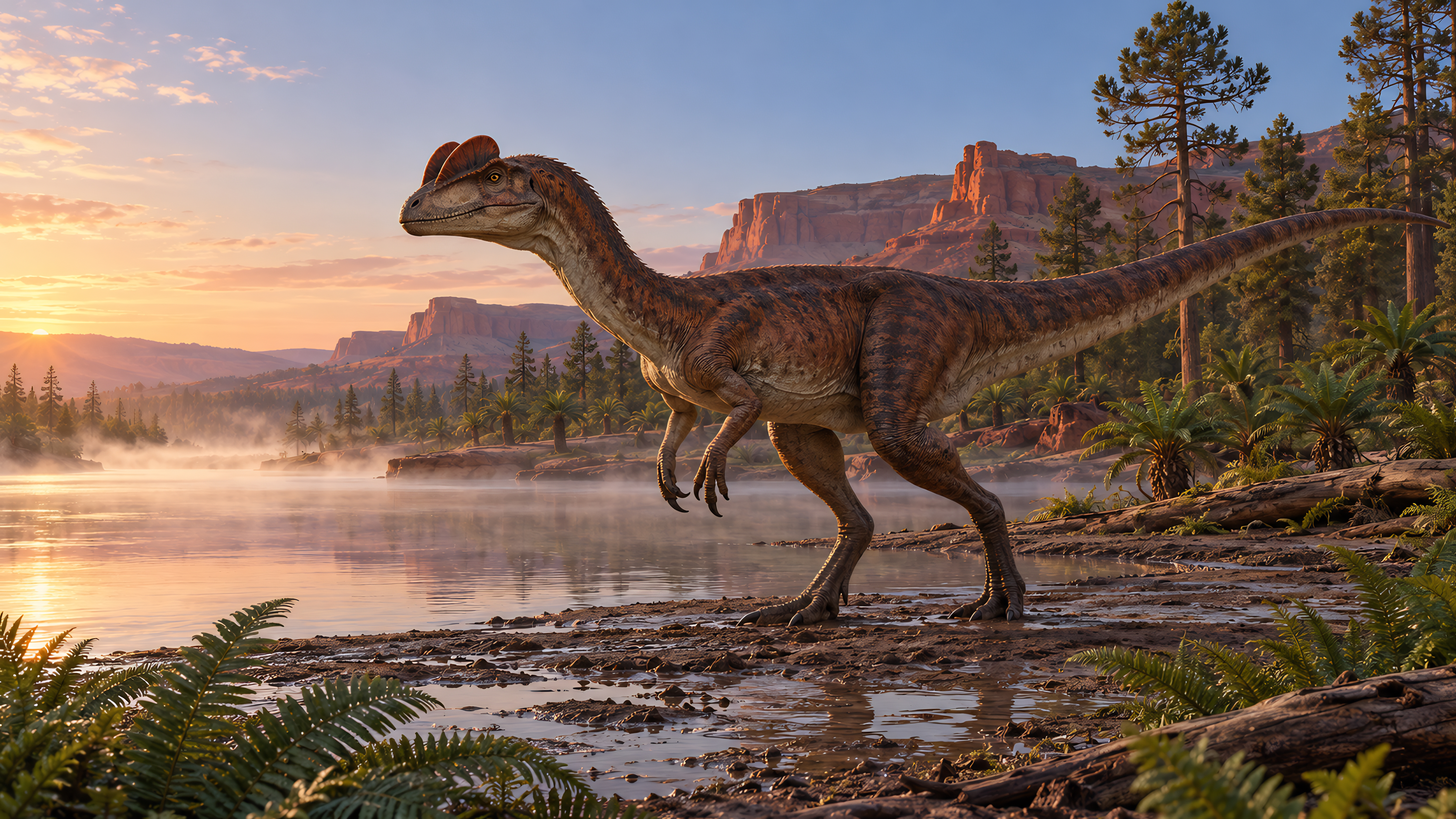
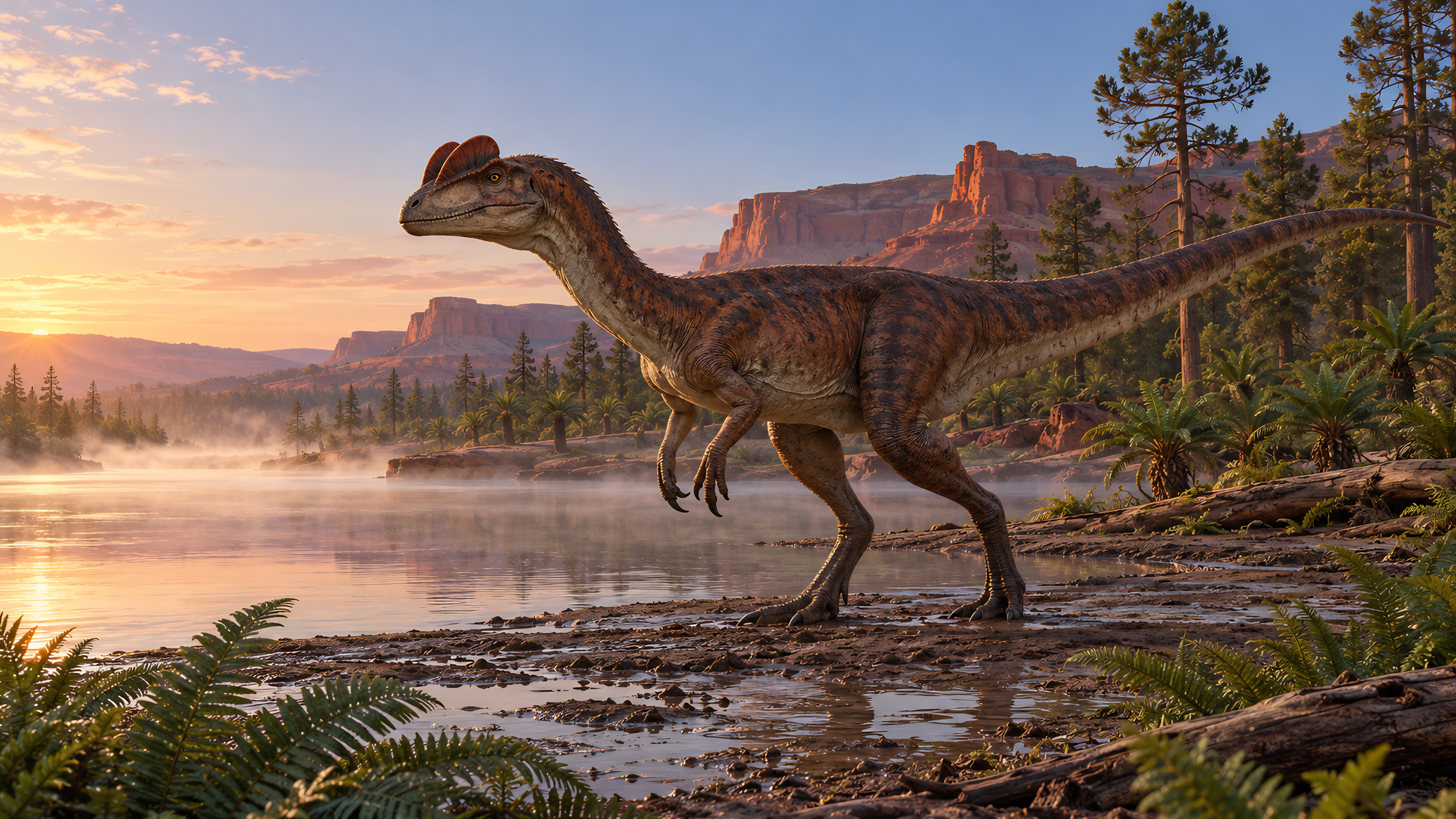
Dilophosaurus Crests

Dilophosaurus had two crests on its head. There is no evidence of a neck frill or venom spitting. Source ↗
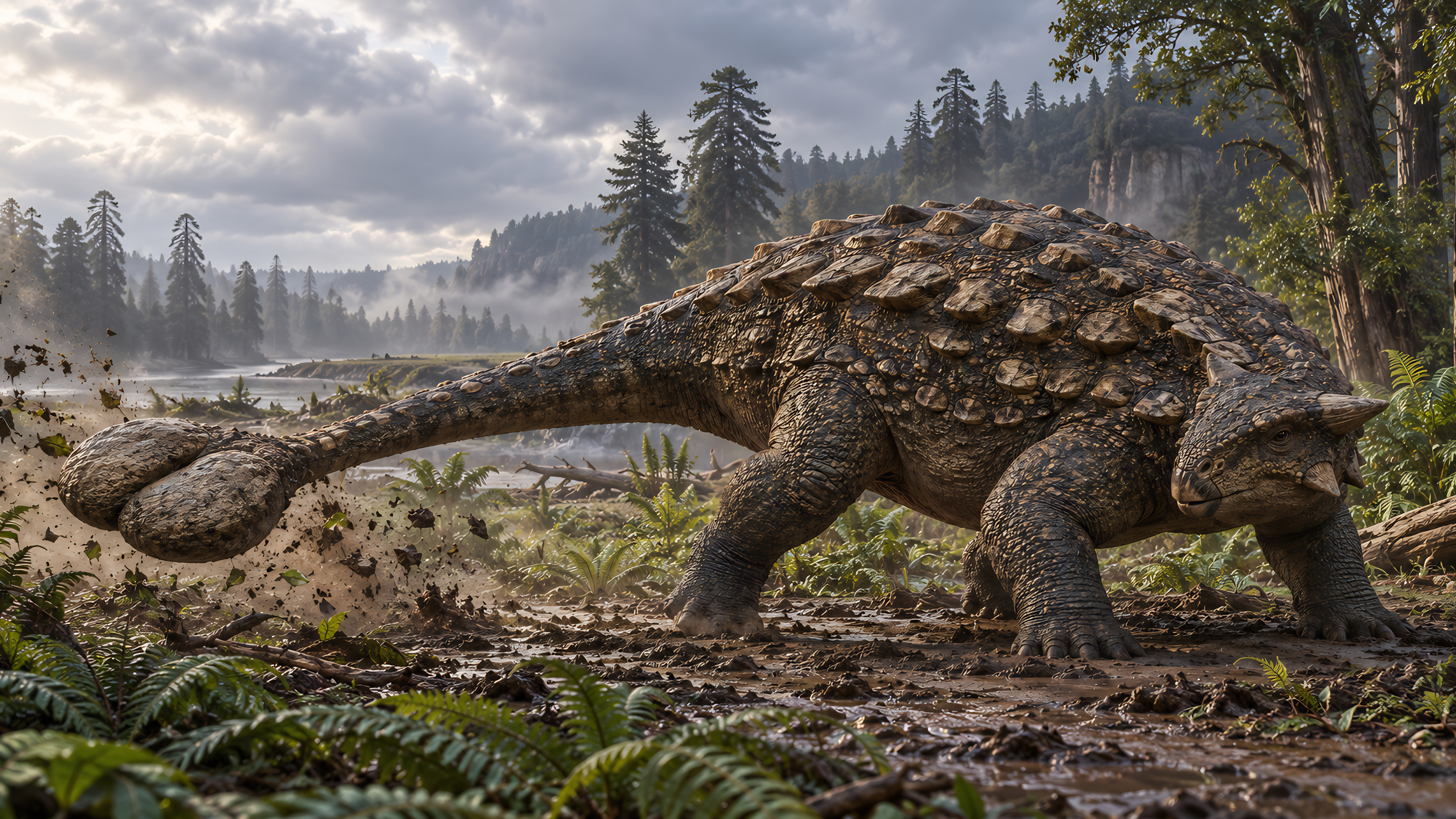
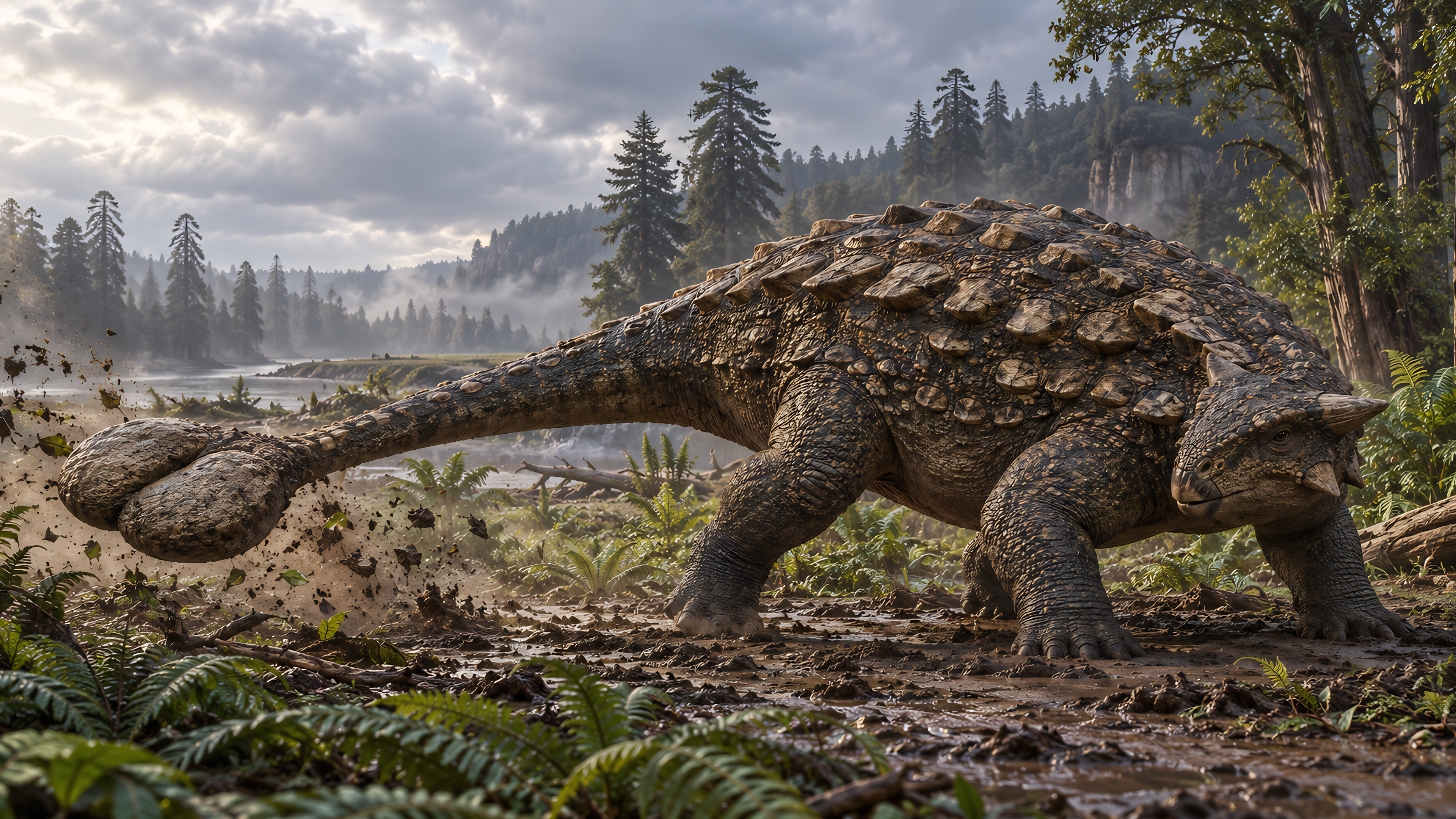
Ankylosaurus Tail Swing

Ankylosaurus was armoured from head to tail and carried a heavy bony club that it could likely swing in defence. Source ↗
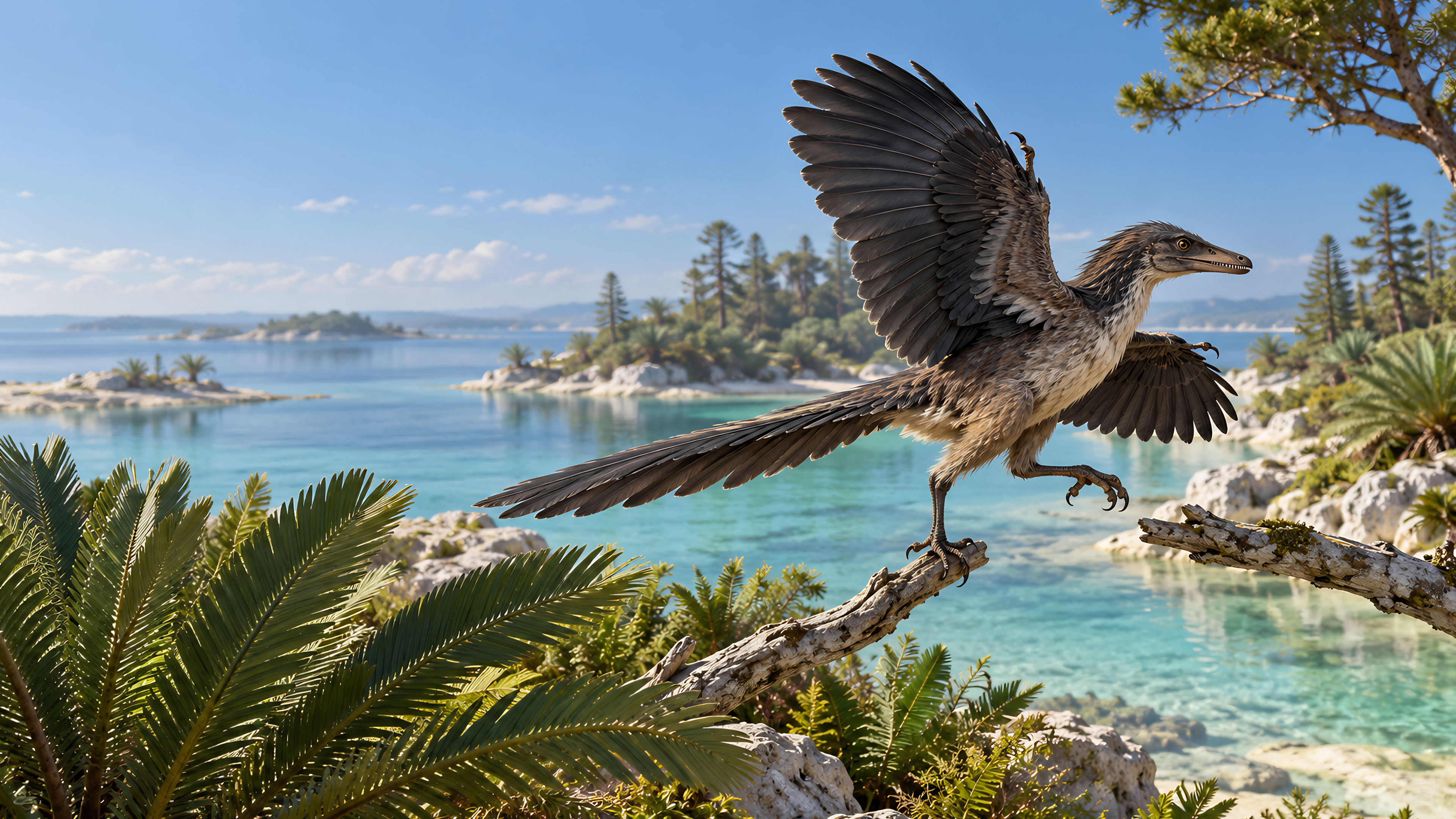
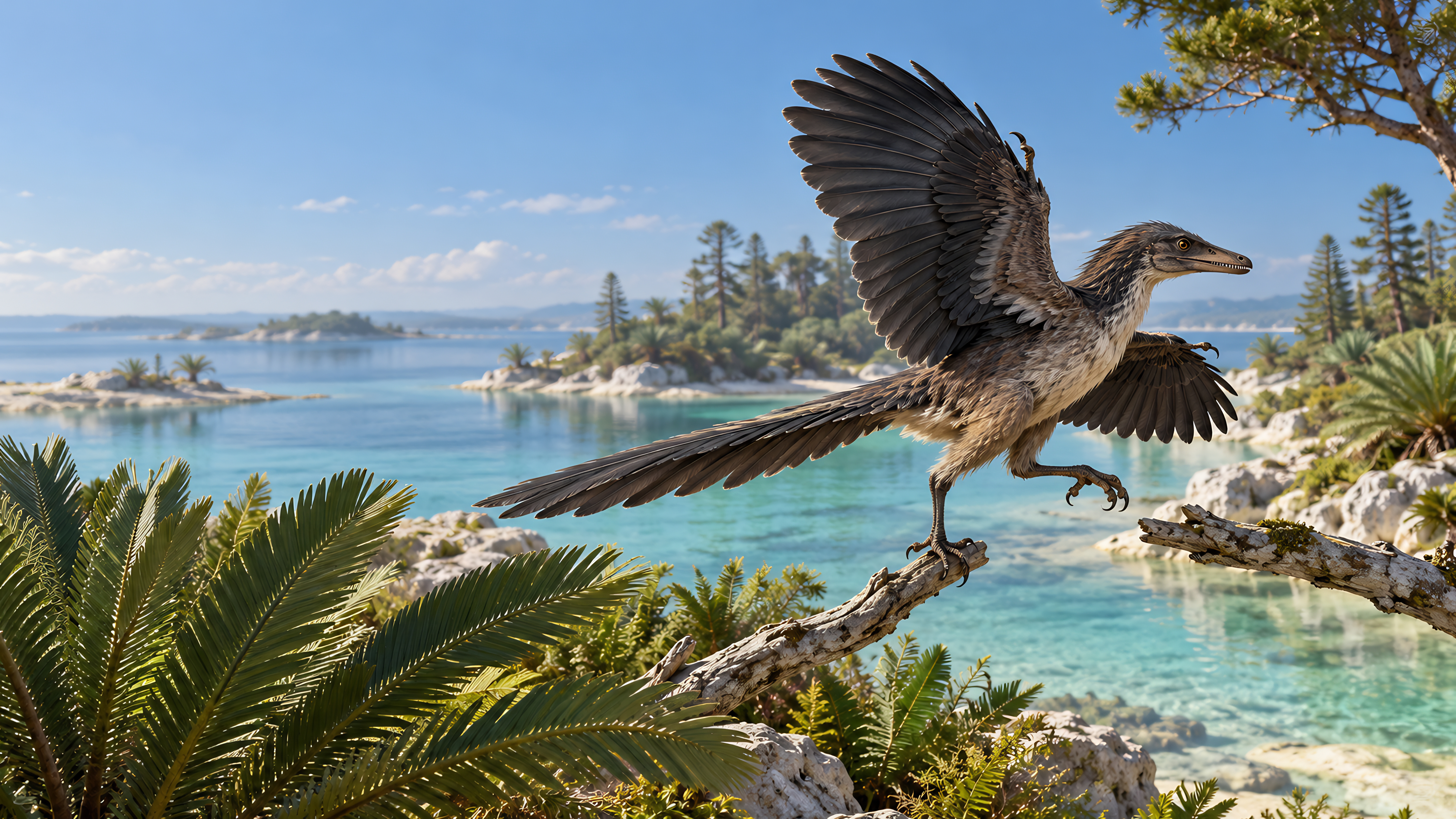
Archaeopteryx Lagoon

Archaeopteryx mixed real feathers with teeth, clawed fingers and a long bony tail, on the Jurassic islands of what is now Germany. Source ↗

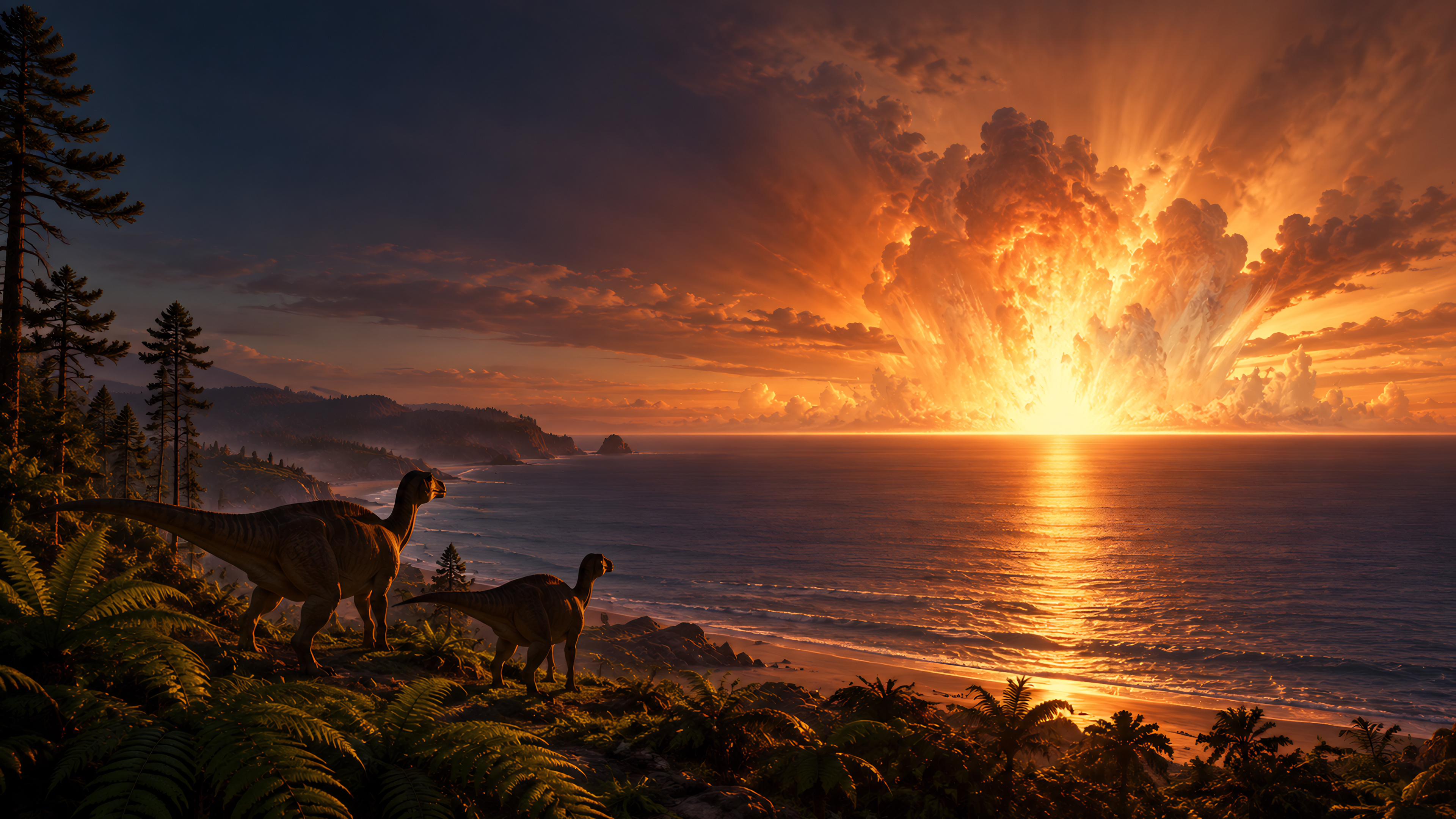
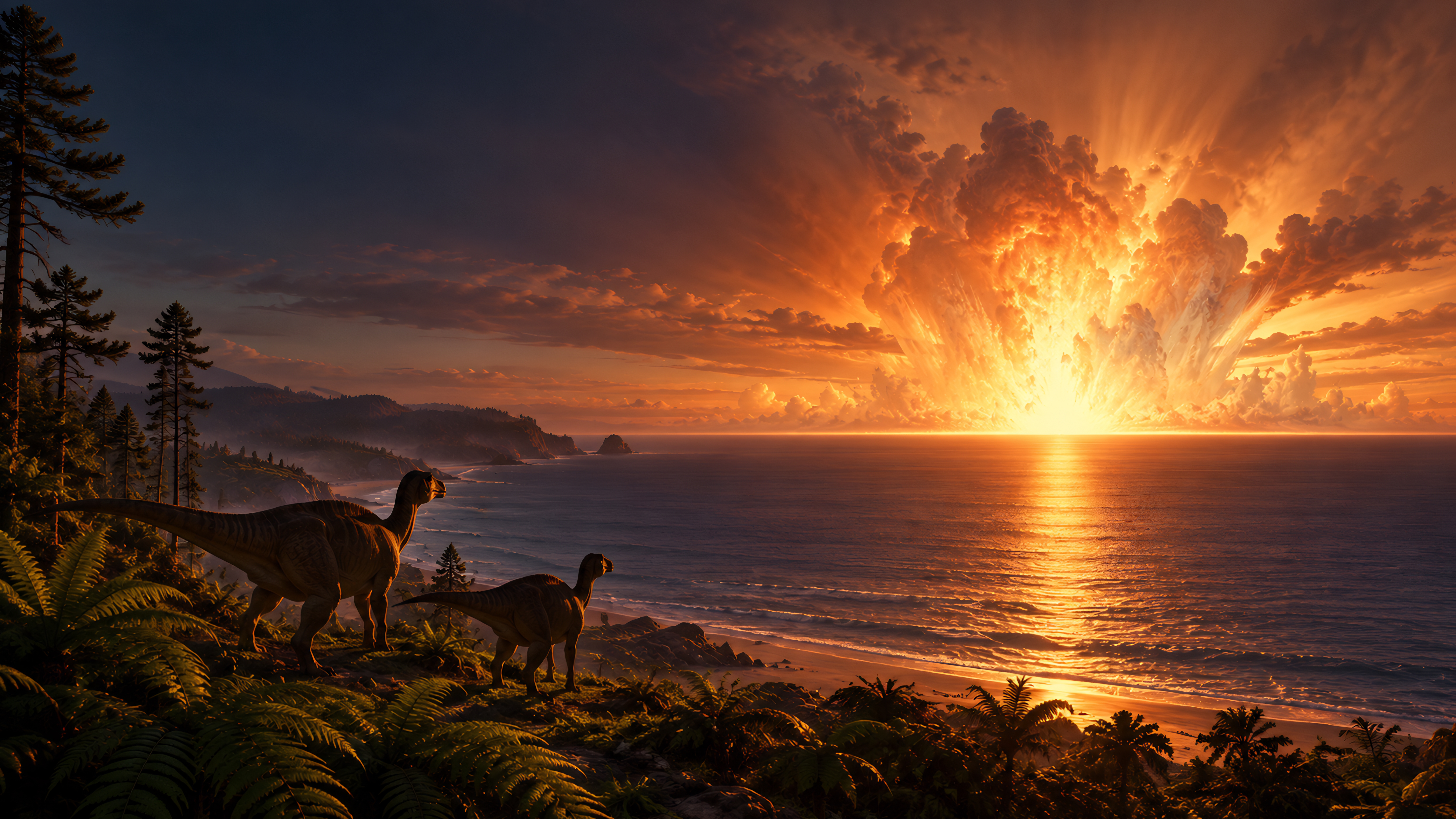
Chicxulub Dawn

The asteroid that ended the age of dinosaurs struck what is now Mexico's Yucatan, about 66 million years ago. Source ↗

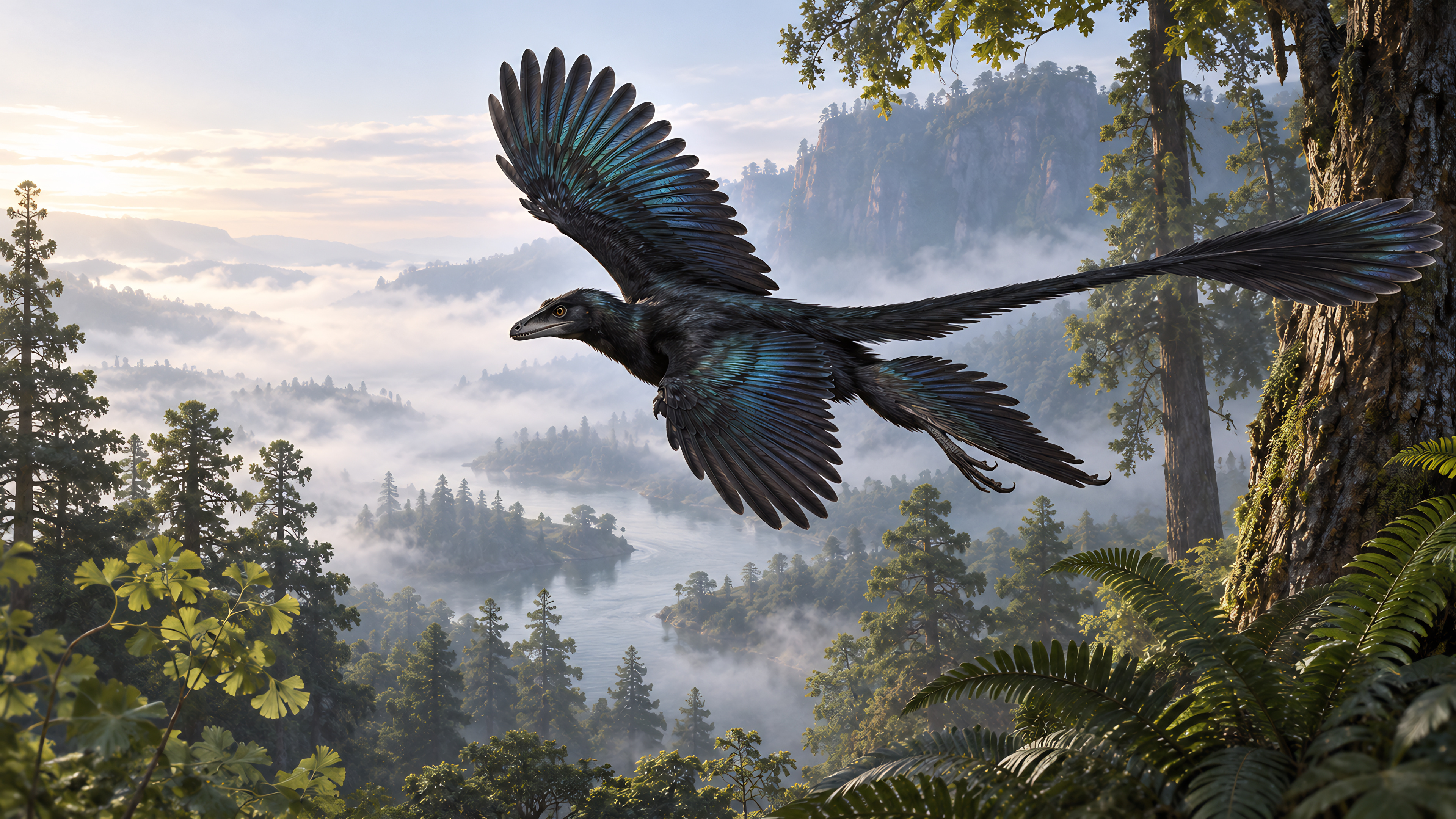
Microraptor Glide

Microraptor had long feathers on all four limbs, and fossil pigment shows glossy black plumage with a blue-green sheen. Source ↗

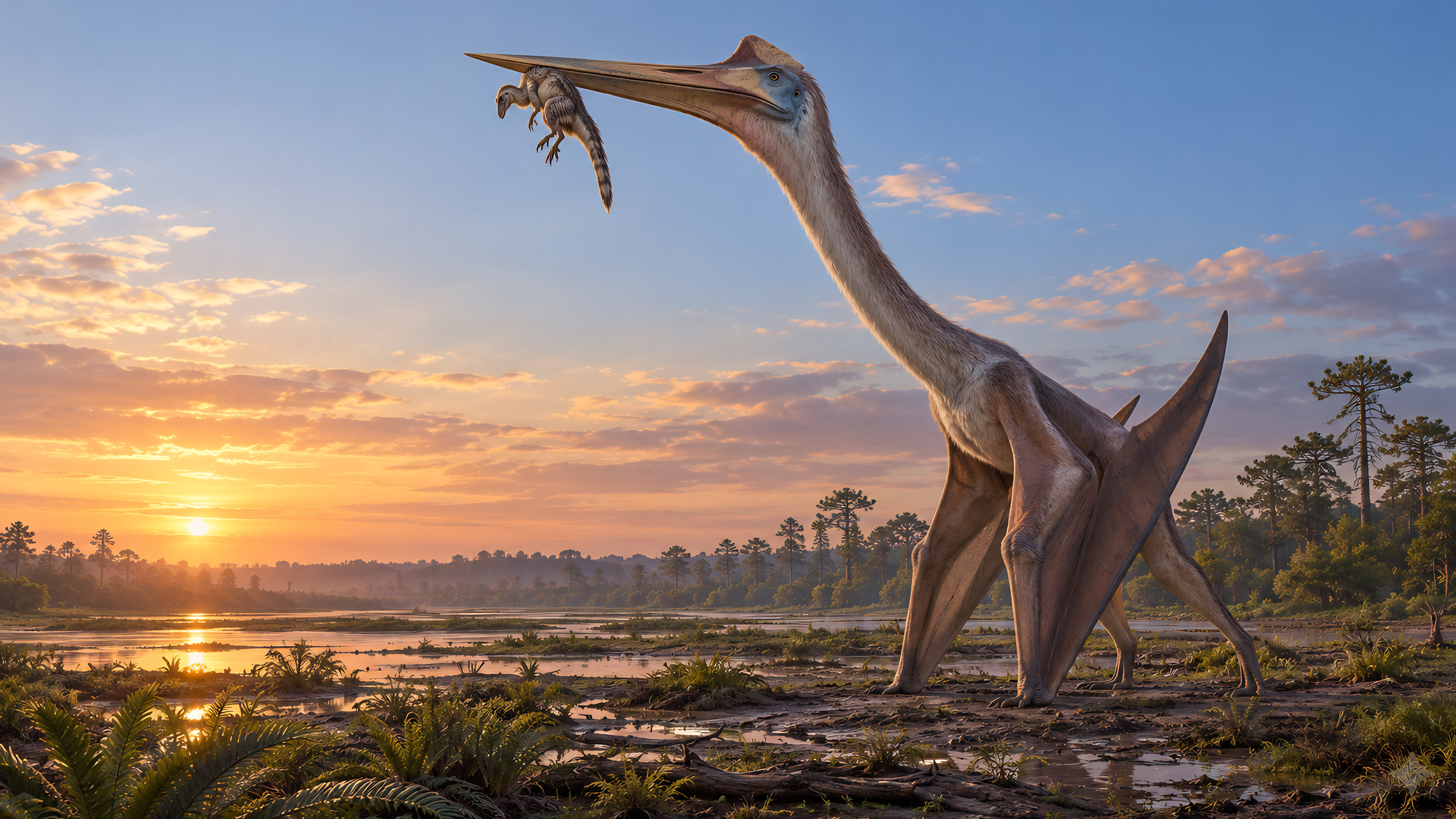
Quetzalcoatlus on the Hunt

A giant pterosaur as tall as a giraffe that hunted on foot. Its long neck and toothless jaws are from the fossils. Source ↗

Pachycephalosaurus Clash

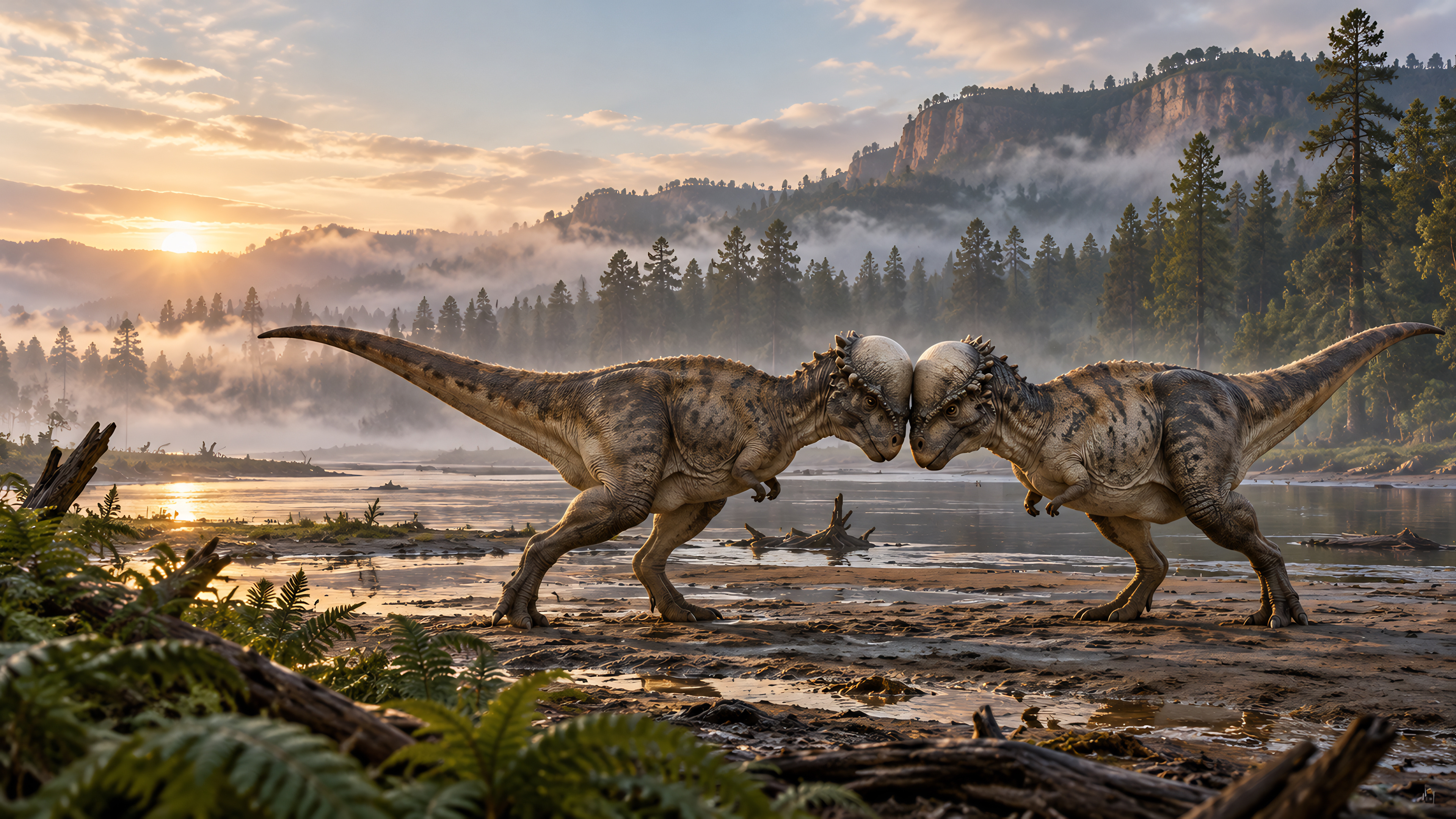
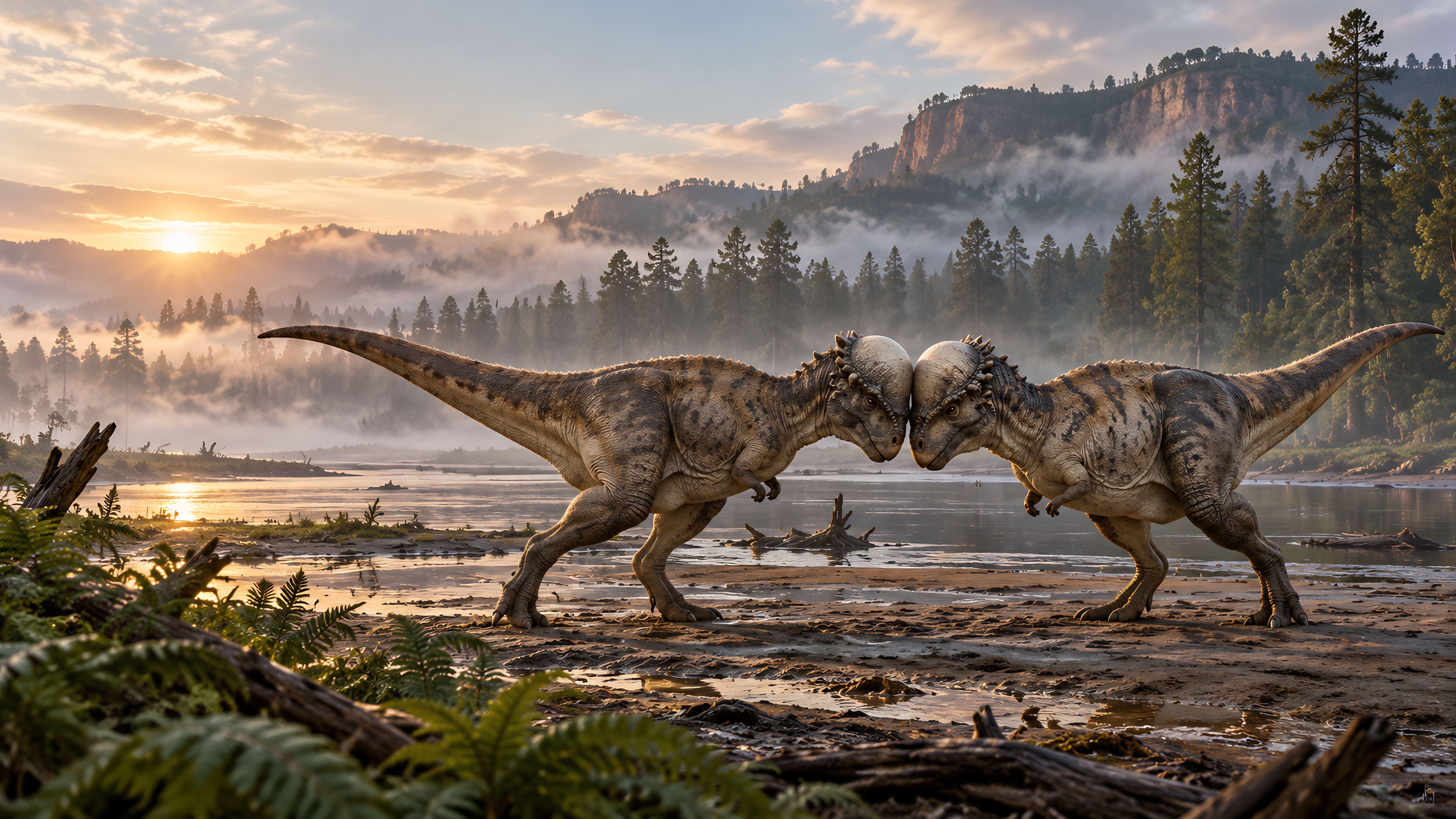
Pachycephalosaurus had a thick bony dome. Injuries on fossil skulls suggest rivals butted heads. Source ↗

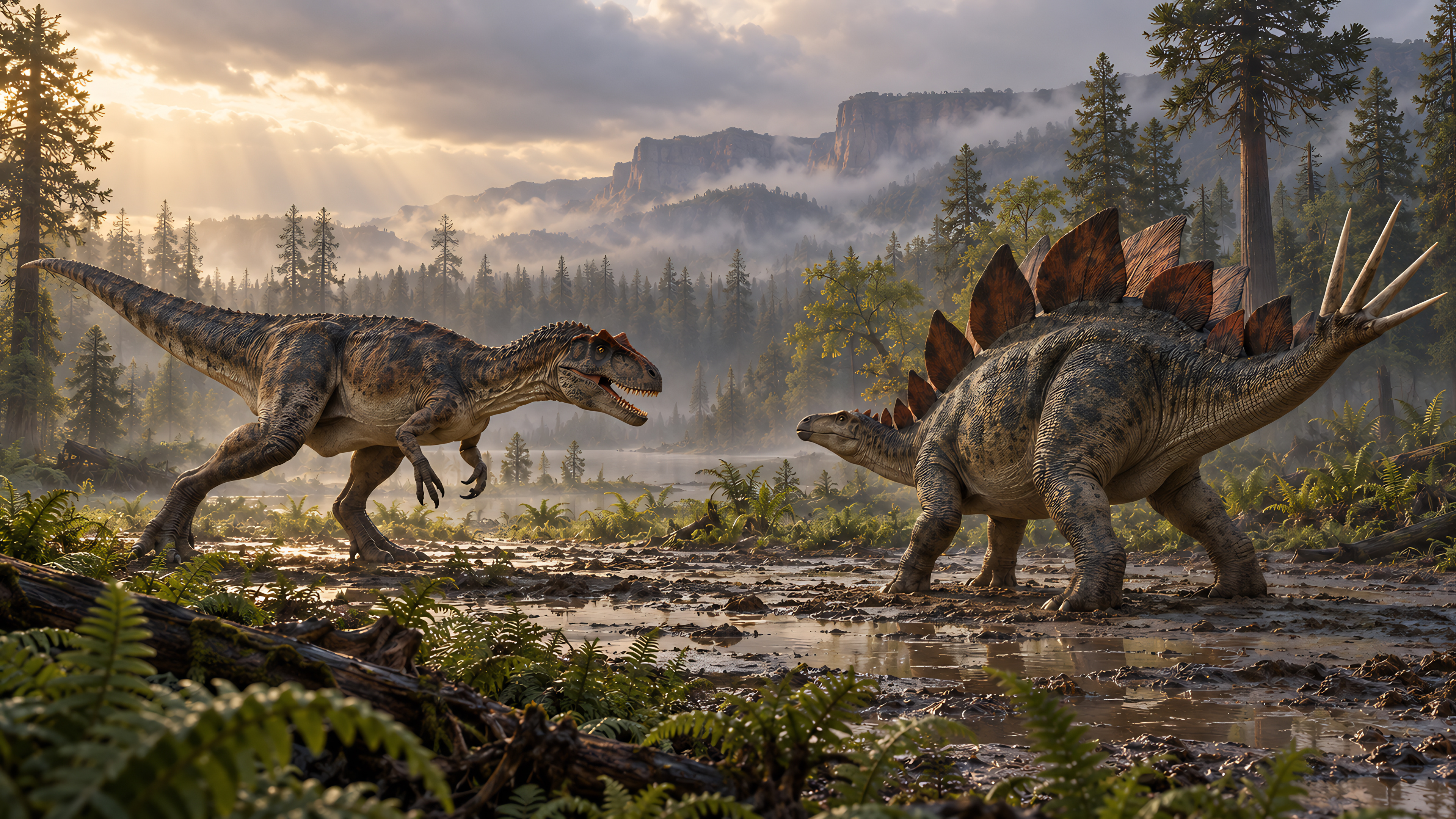
Allosaurus vs Stegosaurus

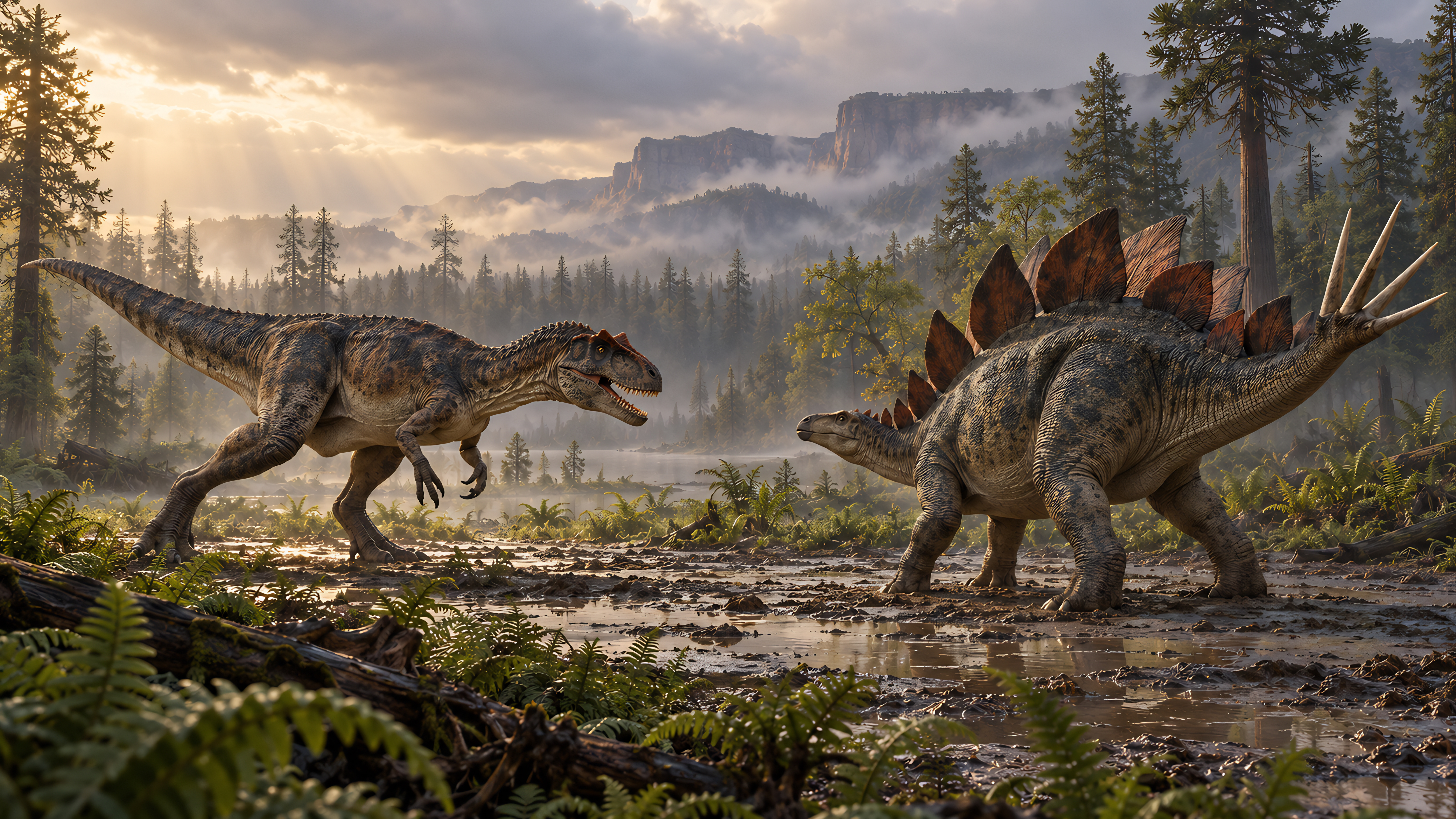
Allosaurus and Stegosaurus really lived side by side in Jurassic North America, and stegosaur tail spikes were a real defence. Source ↗
Maiasaura Nursery

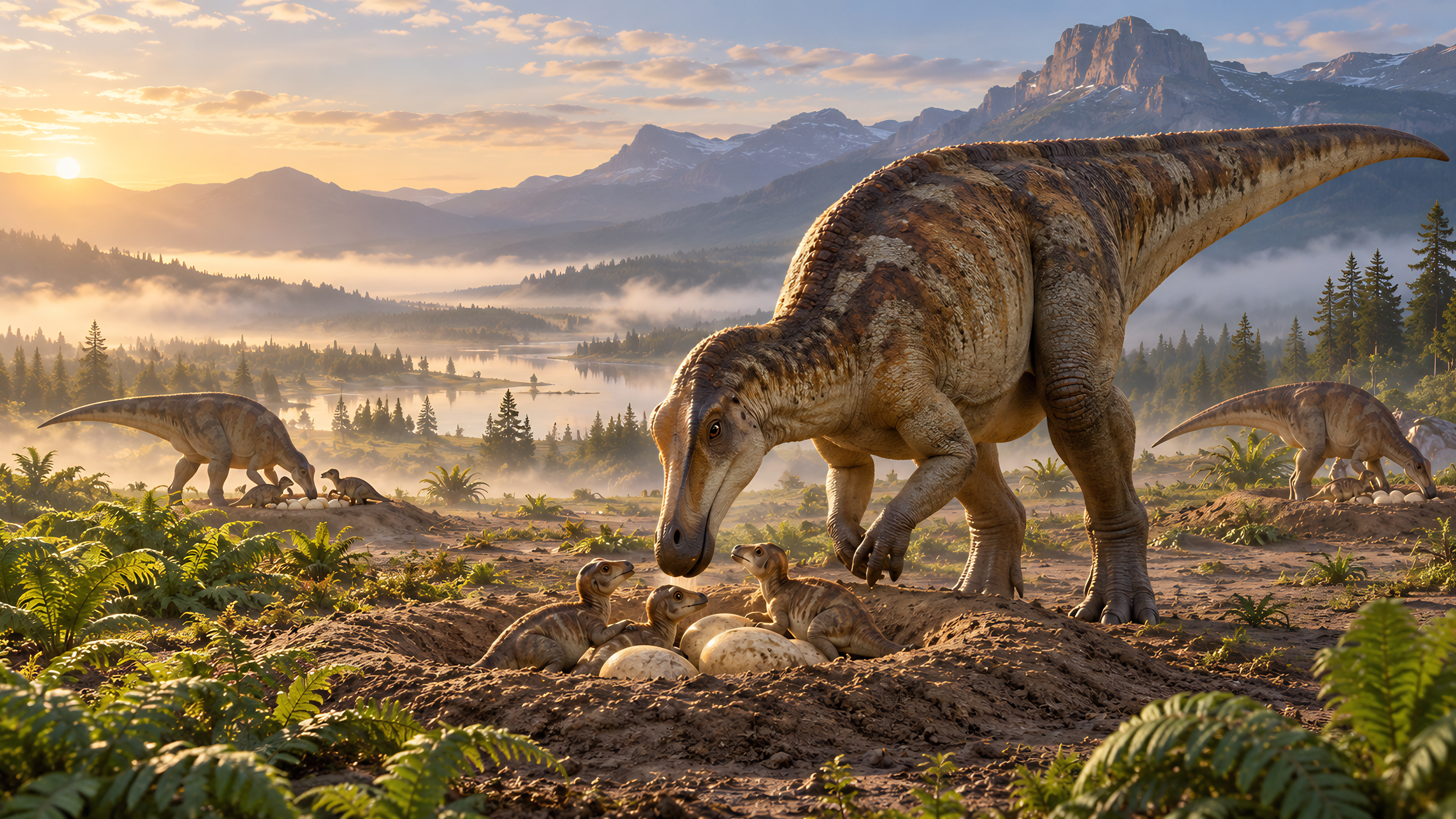
Maiasaura, the 'good mother lizard', nested in colonies. Fossil nests with eggs and young were found in Montana. Source ↗
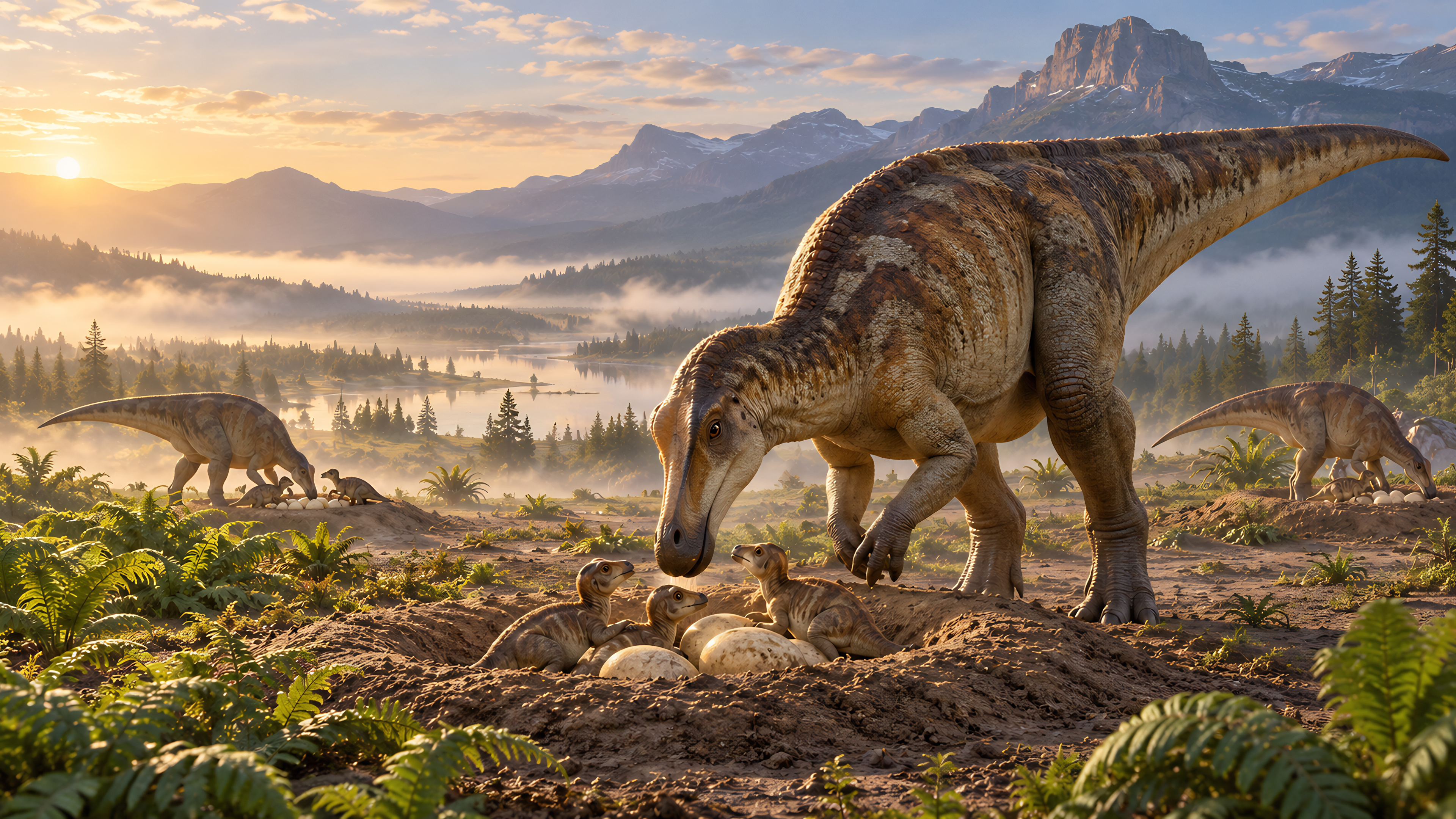
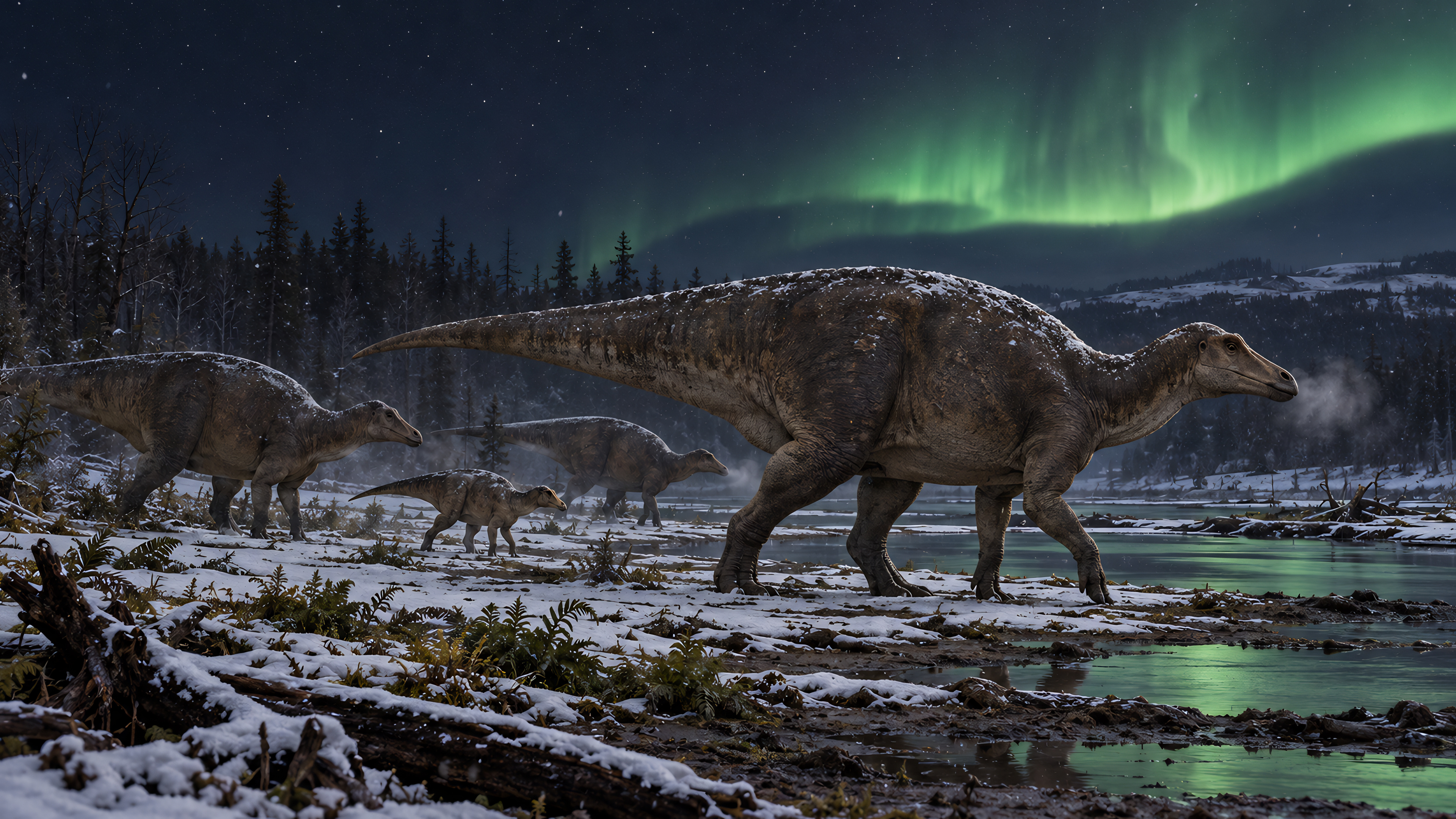
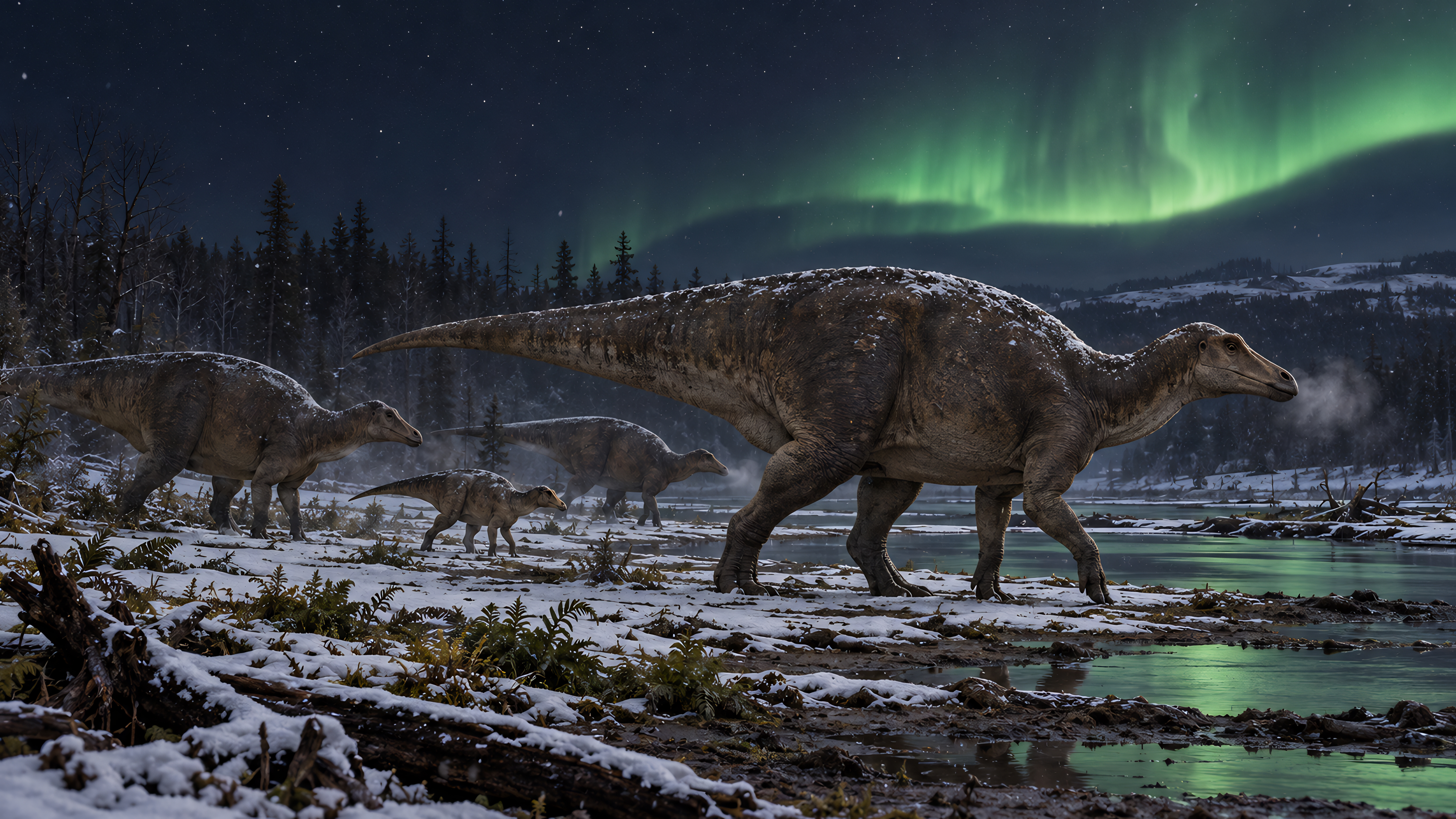
Polar Edmontosaurus

Duck-billed dinosaurs lived in Arctic Alaska, through long dark winters with occasional snow. Source ↗

Free to use as your wallpaper

These pictures are free for personal use: set them as the wallpaper on your computer, phone or TV, and share this page with anyone you like. Please don't sell them, print them for sale, or re-post them as your own work.

They are reconstructions, not photographs. © 2026 The Ancient Cosmos.